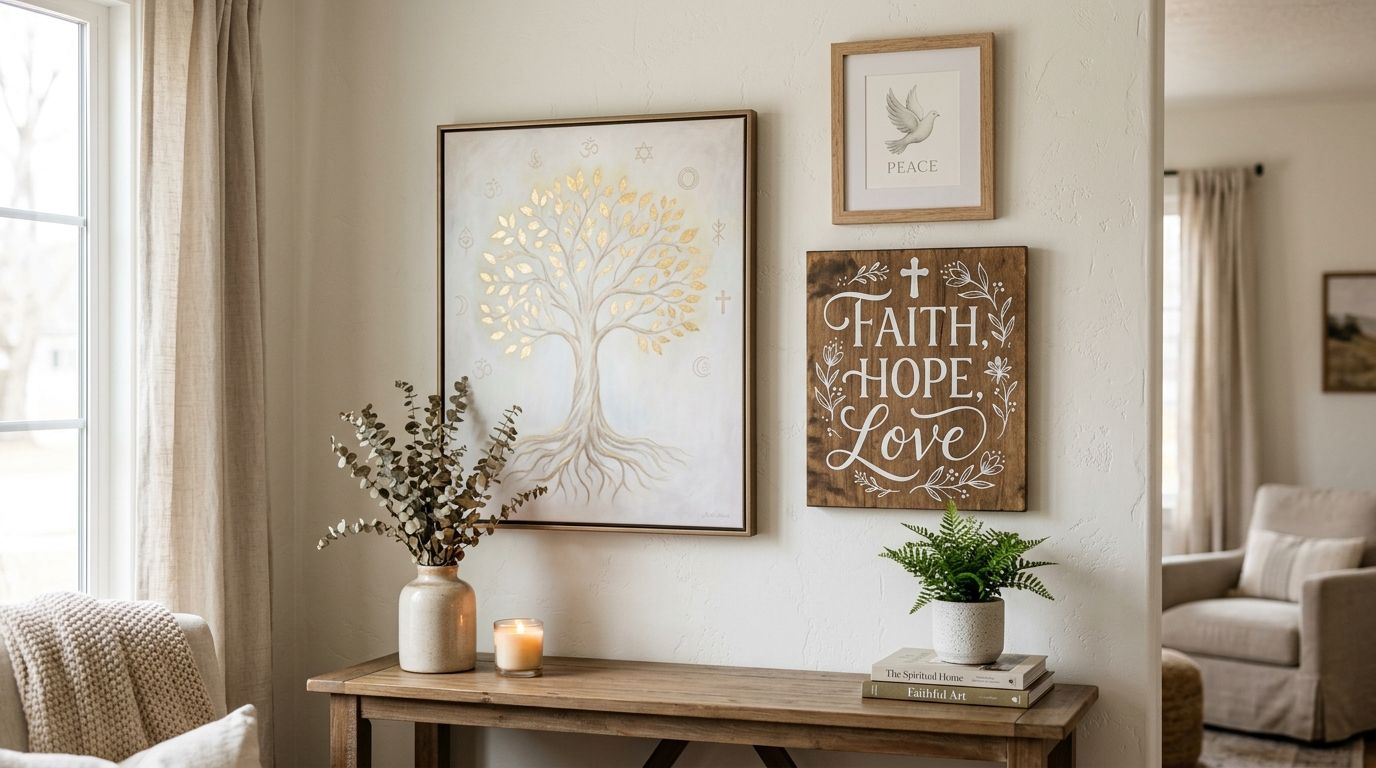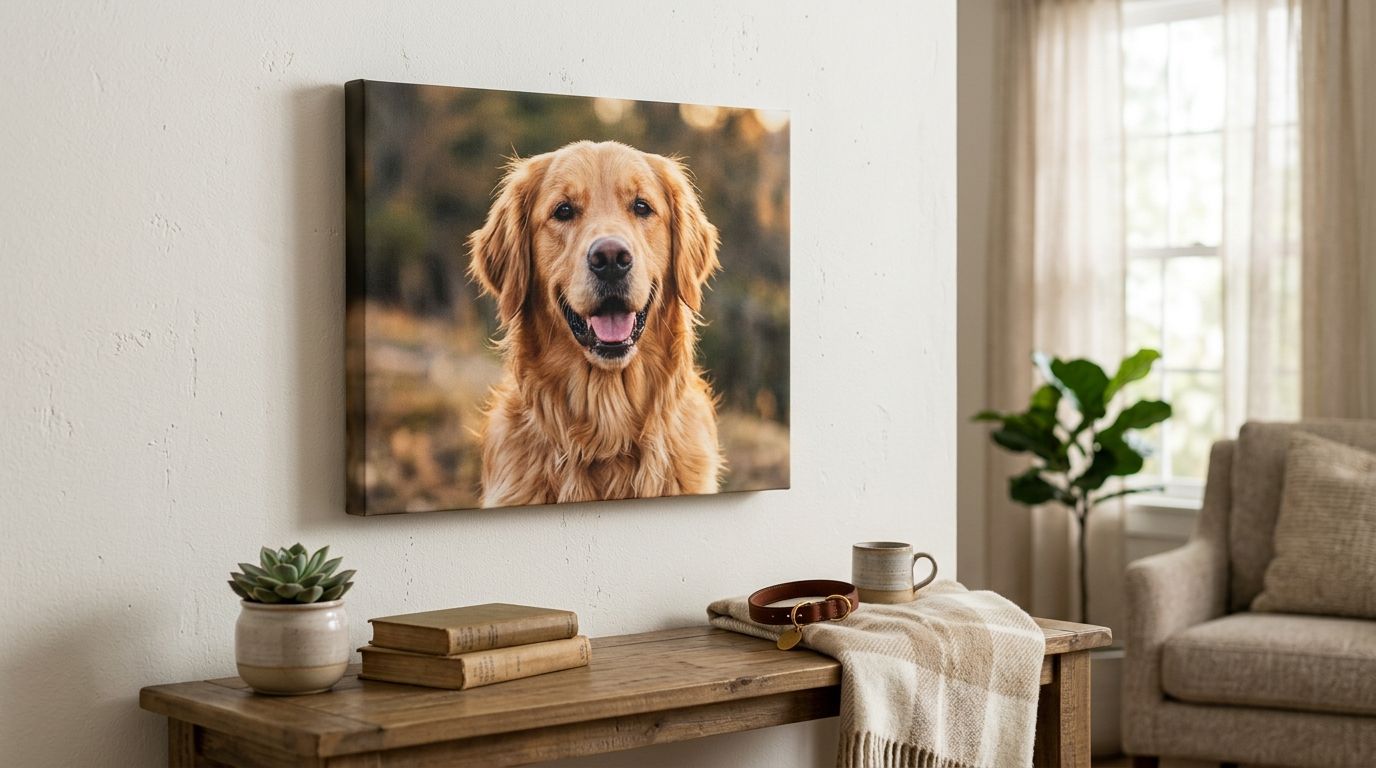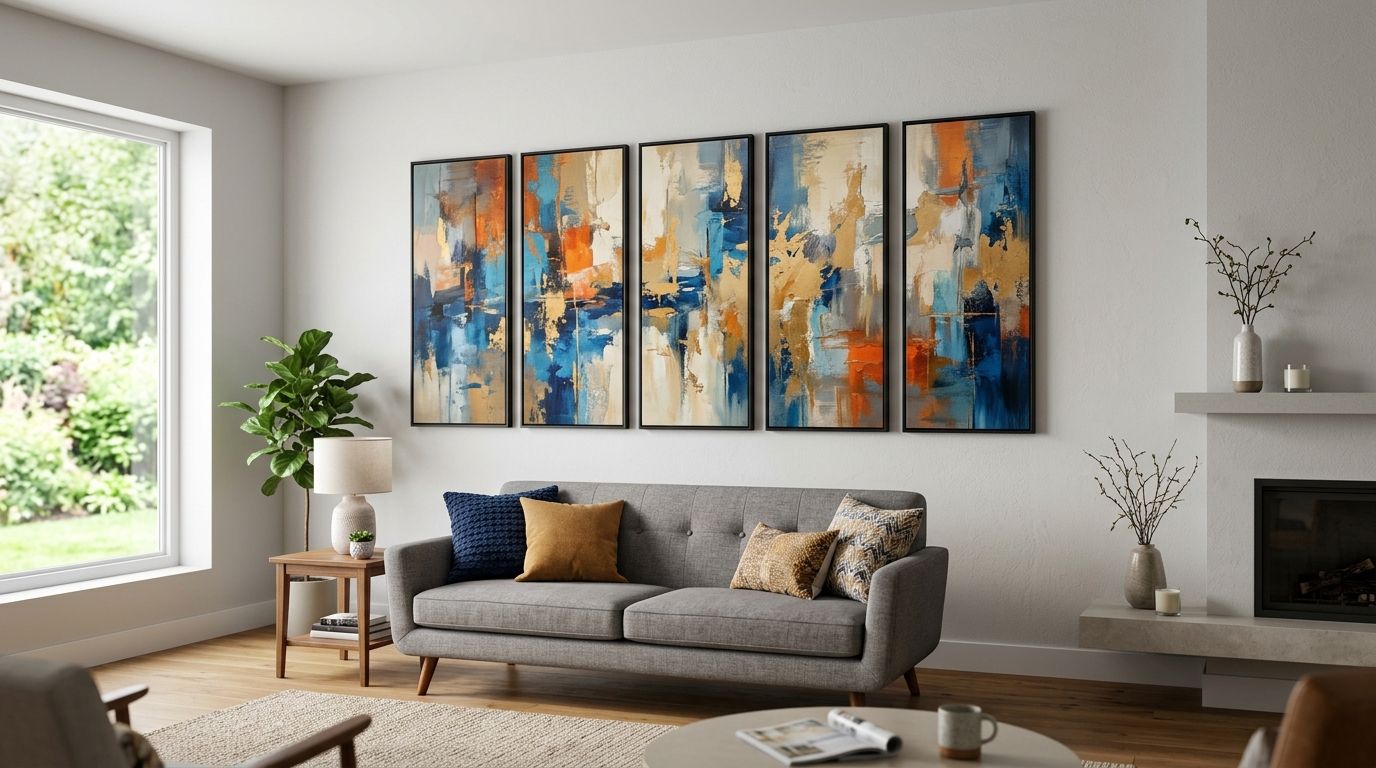
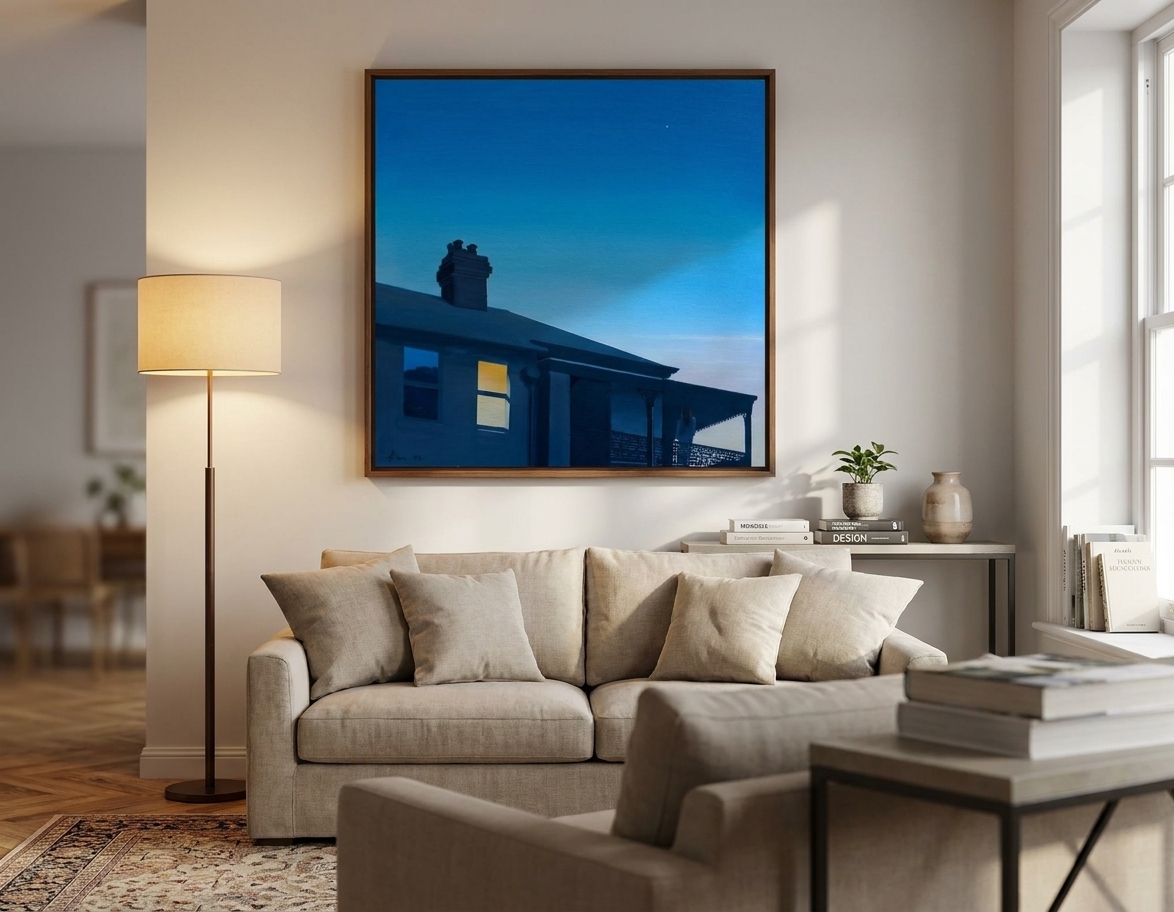
Choosing wall art for every room in your home comes down to four decisions: scale, mood, finish and placement — get those right and the piece works with the space instead of fighting it.
- Art should cover 60-75% of the furniture width below it — a 180cm sofa needs roughly a 110-135cm-wide piece.
- Hang art so the centre sits at 145-155cm from the floor, not measured from the ceiling.
- Original acrylic and oil pieces like Celeste and Reflections at Bongil suit living rooms; smaller 30x30cm canvases work for hallways and bathrooms.
- Framed glass glares under downlights — unframed canvas or matte varnish avoids it in 2026-built homes with recessed LEDs.
- Buy the largest piece your budget allows for the main wall first, then fill smaller rooms with 30-56cm works.
Why this matters
Most people buy wall art the way they buy a cushion — on impulse, based on colour alone — then realise six months later it looks lost on a big wall or crowds a small one. The fix isn't taste, it's measurement and sequencing. Get the scale and finish decisions right before you fall in love with an image, and the room resolves itself.
Wall art also does structural work in a room: it anchors a seating arrangement, sets the palette for cushions and rugs, and controls how a hallway or stairwell feels when you walk through it. Gioia Wall Art stocks a mix of curated prints, framed and unframed canvases, and original paintings from Australian and international artists — enough range to solve every room in the list below without repeating the same look twice.
What you'll need
- A tape measure and the exact width of the furniture or wall segment you're decorating
- Painter's tape to mock up the piece's footprint on the wall before buying
- A spirit level or a level app on your phone
- A photo of the room in natural daylight and under evening lighting
- A rough budget split: one statement piece, two to three supporting pieces
- Picture hooks rated for the frame weight (unframed canvas is lighter and more forgiving)
The steps
1. Measure the wall and the furniture beneath it
This step prevents the single most common mistake: art that's too small for the wall. Measure the width of the sofa, console table, bed headboard or empty wall segment first, not the wall itself.
Art should span 60-75% of that furniture's width. A 200cm sofa wants a piece (or grouped pieces) totalling 120-150cm wide. A single 40x40cm canvas above a 200cm sofa reads as an afterthought — expected outcome is a piece that visually balances the furniture beneath it, not floats in a sea of blank wall.
Common mistake: measuring the wall instead of the furniture, which leads to oversized art in small rooms and undersized art in large ones.
2. Match scale to the room, not just the wall
A formal living room or open-plan lounge can carry a large original painting — something in the 100x140cm range like Along the Reef holds its own on a double-height wall. A hallway, powder room or reading nook needs the opposite: 30x30cm to 56x76cm works that don't overwhelm a narrow sightline.
Bedrooms sit in between — art above a bedhead should be roughly the width of the bed frame, not the mattress. Expected outcome: the piece reads as intentional from across the room, not squeezed in.
3. Pick a mood before a colour
Colour matching is the trap. Rooms age faster than art trends, so pick the emotional register of the room first — calm and atmospheric for a bedroom, dynamic and bold for a living or dining space — then let colour follow.
An atmospheric piece like Celeste, an acrylic painting of pre-dawn light, suits a bedroom or reading corner because it lowers the energy of the room rather than competing with it. A high-energy abstract in the same spot fights the room's purpose even if the colours technically match the cushions.
4. Decide framed, unframed or canvas
Framing changes both cost and glare behaviour. Framed prints under glass look sharp in low-light hallways but throw reflections under downlights or near windows — a real problem in open-plan homes built or renovated in 2026 with heavy recessed LED lighting.
Unframed canvas with a matte or semi-gloss varnish, common across Gioia Wall Art's original paintings, avoids glare entirely and gives a more textured, gallery feel. Verdict: choose unframed canvas for rooms with strong overhead lighting, framed prints for corridors and low-light reading nooks.
5. Account for lighting at two times of day
Art that looks rich at 3pm can go flat and grey by 8pm under warm bulbs. Photograph the wall in daylight and again under evening lighting before committing — colour temperature shifts saturation more than people expect.
Warm 2700K bulbs push blues towards grey and boost reds and oranges; cool 4000K bulbs do the opposite. A piece heavy in ochre and warm tones, similar to Ochre, reads richer under warm evening light than a cool-toned abstract in the same spot.
6. Build a gallery wall for hallways and stairwells
Single statement pieces suit living rooms and bedrooms; hallways and stairwells often work better as a grouped composition of three to five smaller works. Lay the pieces on the floor first and keep gaps between frames consistent at 5-8cm.
Mix a landscape piece, an abstract, and a smaller accent work rather than three of the same style — the variation is what makes a gallery wall feel curated instead of cluttered. Expected outcome: a wall that guides the eye down the hallway rather than stopping it at one point.
7. Set a budget split before you shop
Decide upfront: one statement piece for the main living or dining wall, then two to three smaller supporting works for bedrooms, hallways or a study. Spending the entire budget on one large piece leaves every other room bare; spreading it too thin across ten small prints leaves no room with a real focal point.
An original painting in the $700-1,000 range for the main wall, paired with $300 accent canvases for secondary rooms, is a realistic split for most home decorating budgets in 2026.
8. Hang it, then live with it for a week before adjusting
Centre the piece at 145-155cm from the floor to the middle of the artwork — this is the standard gallery-hanging height and it works for almost every room except above furniture, where you drop to 15-20cm above the furniture top.
Live with the placement for a week before second-guessing it. Most "wrong" placements are actually right — it's the lighting or the surrounding decor that needs adjusting, not the art.


Troubleshooting
- The piece looks small on the wall after hanging. Add a second smaller work beside it to build width, rather than replacing the whole piece — this fixes the proportion without a full re-buy.
- Colours look washed out at night. The bulb temperature is likely too cool or too warm for the palette; test a 3000K bulb before assuming the art is wrong for the room.
- Glare bounces off the glass in a framed print. Move the piece off the direct sightline of a window or downlight, or switch to unframed canvas for that wall.
- A gallery wall looks cluttered instead of curated. Uneven gaps are almost always the cause — reset every gap to the same 5-8cm and re-check with a level.
- The frame finish clashes with the room's hardware. Match frame tone (black, timber, brushed metal) to door handles or light fittings, not to the furniture colour.
- The art feels disconnected from the rest of the room. Pull one colour from the piece into a cushion, throw or vase — one repeated colour link is enough to tie a room together.
Tools and resources
- Tape measure and painter's tape for wall mock-ups
- A spirit level or level app for gallery walls
- Gioia Wall Art for curated canvas prints, framed and unframed pieces, and original paintings across every size range covered above
- A daylight and evening photo of each wall before buying
- A written budget split before shopping, not after
What to do next
Start with the room that bothers you most — usually the main living wall — and apply steps one through four before touching anything else. Once that wall is resolved, the smaller rooms move faster because the budget and mood decisions are already made.
FAQ
What size wall art should I choose for a living room?
Living room art should cover 60-75% of the sofa or console width below it. For a 200cm sofa, that's roughly 120-150cm of combined art width, either as one large piece or a grouped composition.
How do I choose wall art for a small bedroom?
Keep bedroom art to the width of the bed frame, not the mattress, and favour calm, atmospheric pieces over bold abstracts. Smaller 30x30cm to 56x76cm works suit bedrooms with limited wall space.
Is framed or unframed wall art better?
Unframed canvas avoids glare under strong overhead or downlight lighting and suits open-plan rooms. Framed prints under glass work well in lower-light hallways and reading corners.
How high should I hang wall art?
Centre the artwork 145-155cm from the floor for standalone walls, or 15-20cm above furniture when hanging over a sofa, console or bedhead.
How much does original wall art cost in 2026?
Original paintings on Gioia Wall Art range from around $300 for smaller 30x30cm works to $1,600-$1,980 for large statement canvases, depending on size and artist.
How do I match wall art colours to my room?
Choose the mood of the room first, then let one colour from the artwork repeat in a cushion, rug or vase. Matching every colour exactly usually looks flat rather than curated.
How many pieces should a gallery wall have?
Three to five pieces works best for hallways and stairwells, mixing a landscape, an abstract and a smaller accent piece with consistent 5-8cm gaps between frames.
Can I use the same wall art style in every room?
No — match style to room function instead. Calm, atmospheric pieces suit bedrooms, while bold abstracts and large landscapes suit living and dining spaces.
One last thing
The piece that looks "too big" in the shop photo is almost always the right size once it's on the wall — small art is the more common mistake in 2026-built open-plan homes with higher ceilings and wider living walls. When in doubt between two sizes, buy the larger one.