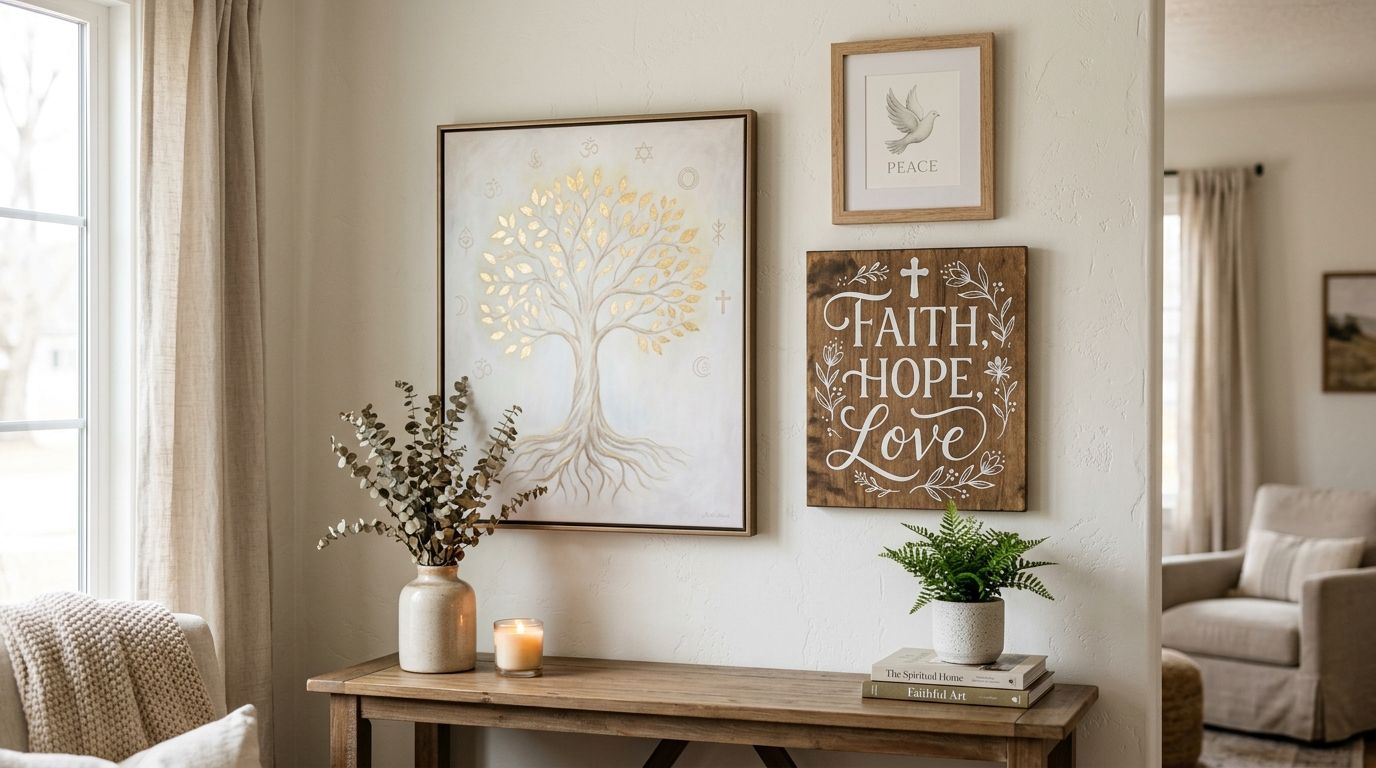
Spiritual wall art for faith-inspired homes is decor built around scripture, symbolism and quiet imagery, chosen to give a wall a genuine focal point for prayer, meditation or gratitude rather than pure styling. This segment shops differently to the average decor buyer: they're weighing reverence against clutter, and the wrong quote print turns a prayer corner into a gift-shop wall.
- Spiritual wall art works best as one calm focal piece per wall, not a cluttered gallery of quotes.
- Framed scripture prints suit formal prayer corners; canvas suits meditation nooks and bedrooms.
- Hang the piece at roughly 145cm to eye level for a genuine focal-point effect in 2026 homes.
- Gioia Wall Art's spiritual wall art range covers mandala, scripture and nature-inspired pieces.
- Mixing symbols from different traditions on one wall reads confused, not reverent — pick one thread.
Why this matters for faith-inspired homes
Faith-inspired homes need wall art that survives daily glances, not a single photo for social media. Style a meditation and mindfulness room around one still, spacious image and you already know why clutter kills the effect — the same principle applies to prayer corners, entryway scripture and spiritual wall art through the whole home in 2026.
This segment also mixes traditions more than most decor buyers expect. A household might want a scripture verse in the hallway, a meditation mandala in the reading nook and a calm nature abstract in the bedroom, all reading as one coherent home rather than three unrelated statements. Gioia Wall Art's spiritual wall art range works best for households that want one considered focal piece rather than a wall of decoration.
Get the tone and the placement right first — format choice comes second.
Decide the spiritual tone you want to set
Spiritual wall art splits into a handful of clear tones, and picking one before you shop keeps the whole room reading as intentional.
- Scripture and text-led — a single verse, mantra or blessing in clean typography
- Symbolic imagery — crosses, mandalas, the Om symbol, the Star of David, lotus flowers
- Nature as the sacred — sunrise abstracts, mountain ranges and ocean horizons read as reverent without naming a tradition
- Meditative abstract — soft gradients and muted palettes that calm a room without any literal symbol
- Original paintings — a hand-painted piece carries more weight in a dedicated prayer room than a print ever will
Match the piece to the room's function
A scripture print earns its place by the door; the same print in a busy kitchen just becomes wallpaper.
- Entryways and hallways: a welcoming blessing or a single grounding image greets everyone who walks in
- Bedrooms: calming abstracts or nature scenes support rest rather than reflection
- Home offices and reading nooks: a mantra or short verse keeps a work day anchored
- A dedicated meditation or prayer corner: this is where the boldest, most literal piece belongs
- Dining rooms: a gratitude-themed piece works well around a shared table
Pick a format that reads sacred, not decorative
Format changes how reverent a piece feels on the wall, and it's worth choosing on purpose rather than by default.
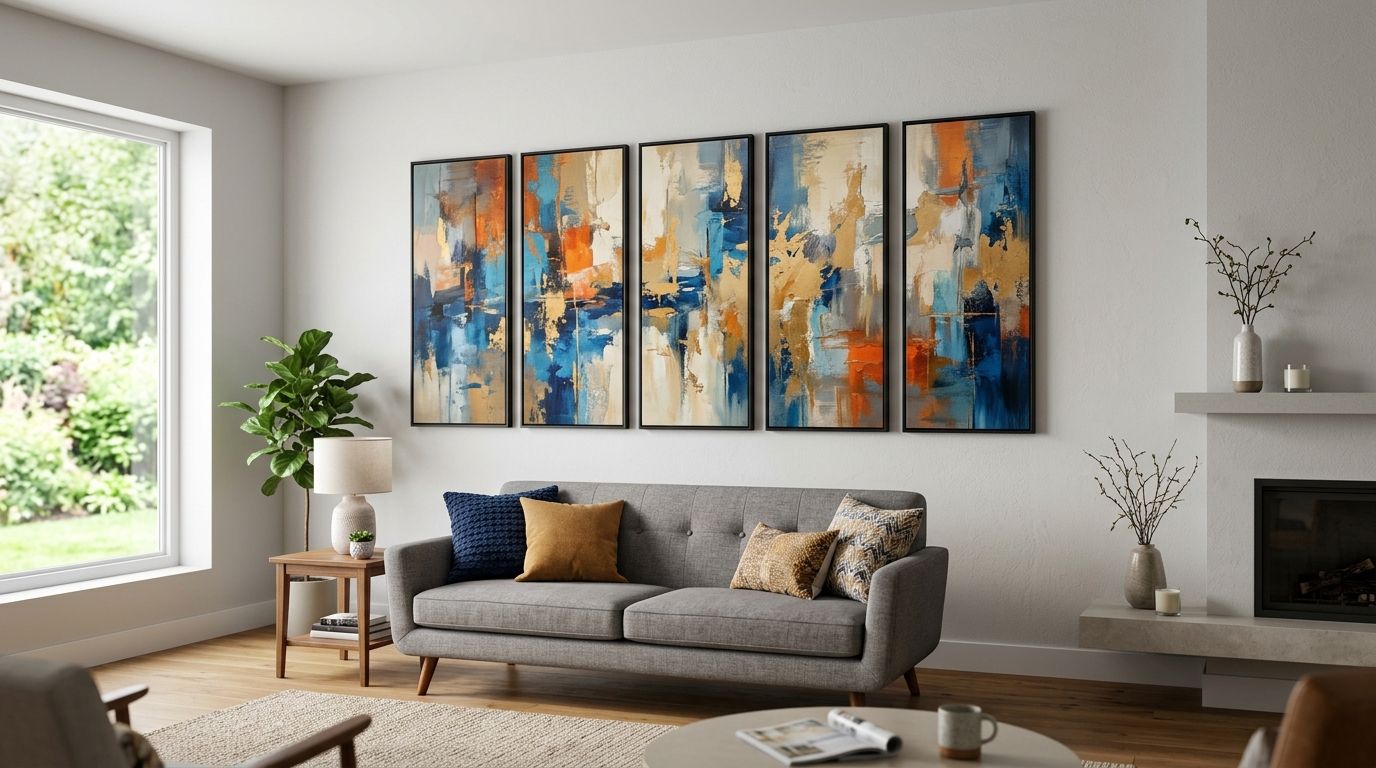
- Framed prints suit formal prayer corners and entryways — the frame reads considered, not casual
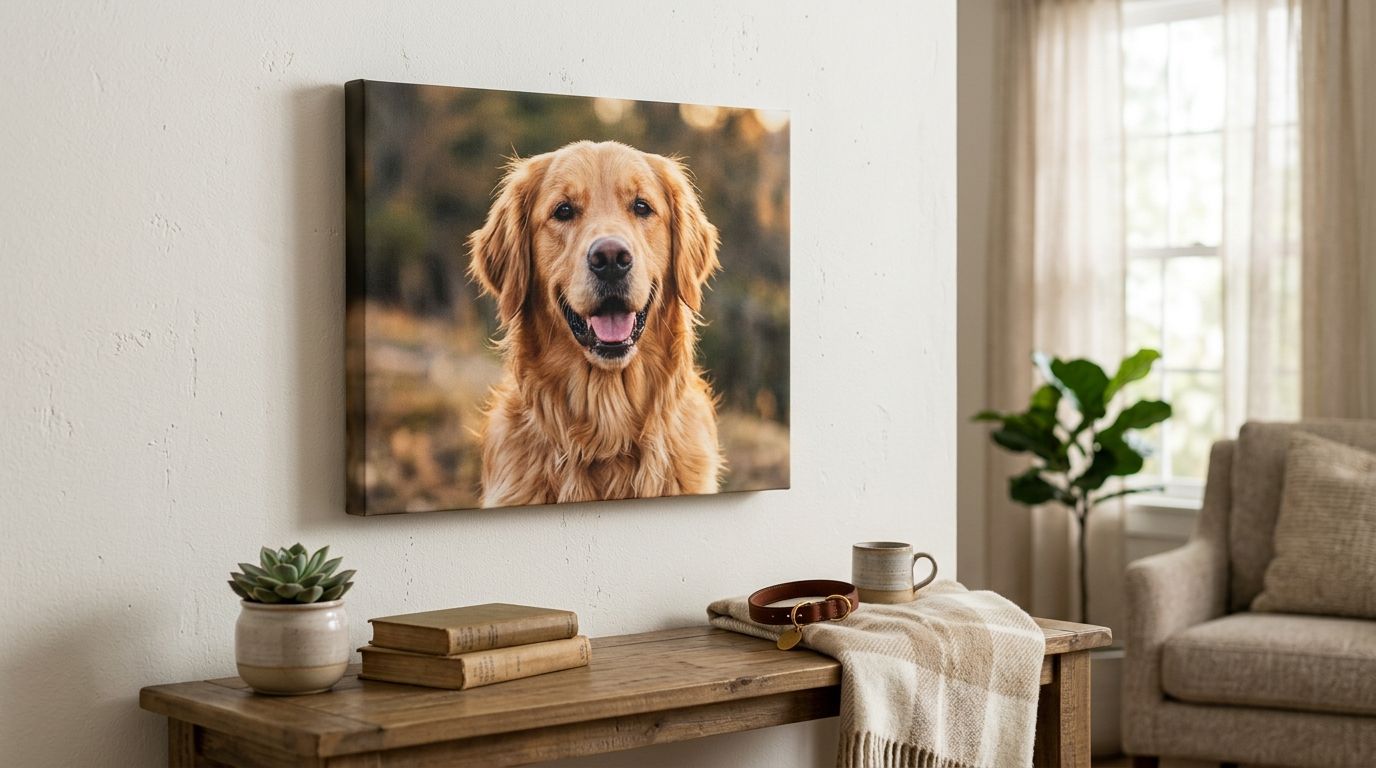
- Canvas prints work in meditation rooms and bedrooms where a softer, textile-like finish suits quiet spaces
- Unframed posters fit share houses and rentals building a rotating spiritual collection slowly
- Original paintings carry the most weight for a single statement piece in a dedicated prayer room
- Peel-and-stick wallpaper with a botanical or pattern motif can dress an entire meditation nook without a single nail
Gioia Wall Art stocks all five formats from one curated catalogue, which saves the separate framer, printer and gallery hunt most faith-inspired buyers end up doing in 2026.
Layer scripture, quotes and symbolism without clutter
One quote piece anchors a wall; three quote pieces start competing with each other for attention.
- Pick a single dominant quote or mantra piece and let everything else support it in colour, not text
- Pair a typography and quote print with one plain image rather than two more quotes
- Match font weight and colour across a wall if you're combining more than one text piece
- Leave at least 15-20cm of breathing room around a scripture print so it doesn't compete with furniture edges
- Save layered gallery walls for a secular room — spiritual walls read calmer with fewer, larger pieces
Handle symbolism across traditions carefully
Mixing symbols from unrelated traditions on one wall reads confused rather than reverent, even when each piece is beautiful on its own.
- Keep one wall to one tradition — a cross, a mandala and a tarot card on the same wall dilutes all three
- If the household draws from more than one practice, give each tradition its own wall or room instead of blending them
- Households leaning toward astrology and broader mysticism sit closer to the tarot, astrology and mystic decor category than traditional faith art, and the styling rules differ
- Ask before gifting spiritual wall art — a symbol sacred to one person can read as decoration-only to another
- An original painting from a named artist carries more respect for a tradition than a mass-produced symbol print
Size and placement for a genuine focal wall
A scripture print sized for a side table gets lost the moment it's hung as a room's focal point.
- Centre the piece at roughly 145cm from the floor to its middle — the standard eye-level hanging height used across Australian homes in 2026
- Size art to cover 60-75% of the furniture or wall section it sits above, the same ratio used for any statement piece
- Leave at least a hand's width of clear wall around a single focal print so it isn't crowded by shelving or light switches
- Test scale with painter's tape on the wall before ordering — a scripture print that looks right online often reads too small on an actual prayer corner wall
- For a bare feature wall with no furniture below it, size up rather than down; a small print on a big wall reads apologetic
Comparing formats for spiritual wall art
| Format | Best for | Key limitation |
|---|---|---|
| Framed print | Formal prayer corners, entryways | Heavier, needs picture hooks rated for the frame weight |
| Canvas print | Meditation rooms, bedrooms | Texture reads softer but can show sun-fade over years near direct light |
| Unframed poster | Rentals, share houses building a collection slowly | Needs separate framing or mounting to look intentional |
| Original painting | A single statement piece in a dedicated prayer room | One-off, so matching a second piece to it later is harder |
| Peel-and-stick wallpaper | An entire meditation nook or feature wall | Pattern-based, not suited to a single scripture or symbol focus |
Gioia Wall Art's canvas prints win for meditation rooms and bedrooms; its framed prints win for entryways and formal prayer corners.
Common mistakes faith-inspired homes make with wall art
- Overcrowding a wall with quotes. Three scripture prints crammed together compete for attention instead of settling a room.
- Choosing beige-on-beige typography that disappears into a rental wall. A print needs enough contrast to actually read as a focal point.
- Hanging the boldest piece somewhere it's rarely seen, like a laundry room, instead of the meditation corner or hallway it deserves.
- Skipping the size math. A print sized for a side table gets lost the moment it's the only piece on a full feature wall.
- Blending symbols from different traditions on one wall without a clear reason, which reads as decoration shopping rather than genuine faith practice.
FAQ
What is spiritual wall art?
Spiritual wall art is decor built around scripture, symbolism, mandalas or calming nature imagery, chosen to anchor a wall for prayer, meditation or reflection rather than pure styling. It differs from general decor in that placement and restraint matter more than trend.
Is spiritual wall art the same as religious art?
No — religious art typically depicts a specific faith's iconography, while spiritual wall art also covers non-denominational pieces like meditative abstracts and nature scenes. Both can sit in the same home if given separate walls.
What size scripture print works above a prayer corner?
Size the print to cover 60-75% of the furniture or wall section beneath it, the same ratio used for any statement piece. A print sized for a side table looks lost as a full focal point.
Can spiritual wall art work in a minimalist home?
Yes — a single quiet abstract or one scripture line with generous white space around it suits a minimalist home better than a cluster of pieces. Restraint is the design language both styles share.
What material suits a meditation room print best?
Canvas suits meditation rooms best because its textile-like finish reads softer than glossy framed glass under low light. Framed prints suit brighter, more formal prayer corners instead.
How do you style spiritual wall art in a rental?
Unframed posters and peel-and-stick options let renters build a spiritual wall art collection without drilling into walls. Add frames later once you own the space.
Does spiritual wall art need a religious symbol to work?
No — a calm nature abstract or a muted gradient can read as sacred through colour and stillness alone, without any literal symbol. Many faith-inspired homes mix both approaches.
How many spiritual pieces should one wall have?
One dominant piece per wall is the standard that reads calmest; two or more competing focal points make a spiritual wall feel busy rather than reverent. Support pieces should stay smaller and quieter.
One last thing: the biggest difference between a spiritual wall and a merely decorative one isn't the symbol — it's the empty space around it. A single scripture print with 30-40cm of clear wall on each side reads calmer than the same print squeezed between two others, and in 2026 that restraint is the easiest, cheapest upgrade a faith-inspired home can make.