Getting wall art size right is basic math, not guesswork: measure the wall, measure the furniture beneath it, then apply the two-thirds rule before you order anything for your home in 2026.
- What size wall art do I need? Cover 60-75% of the furniture width below it for visual balance.
- A single canvas over a queen bed should run 100-140cm wide to fill the headboard zone properly.
- Gallery walls need 5-10cm gaps between frames — tighter spacing reads cluttered by 2026 styling standards.
- Hang the centre of any piece at 145cm from the floor, the standard eye-level height in 2026.
- Skip small prints on double-height walls — scale up to an oversized canvas or a multi-panel set instead.
Why this matters
Undersized wall art is the single most common styling mistake in Australian homes right now. A 40cm print above a 200cm sofa doesn't read as minimalist — it reads like it shrank in the wash. Getting the proportions right the first time saves you a return, a second freight bill, and the awkward gap of nail holes you'll need to patch.
Gioia Wall Art curates pieces across dozens of sizes precisely because one canvas dimension never suits every wall. The rest of this guide walks through the exact measuring process so you order once and hang it once, in 2026 or any year after.
What you'll need
- A tape measure (metal, not fabric — fabric stretches and throws off centimetre measurements)
- Painter's tape or a roll of kraft paper to mock up the size before you buy
- A step ladder if the wall runs above 240cm
- Photos of the wall taken from across the room, not close up
- The exact width and height of the furniture piece sitting below the art (sofa, bed, console, dining table)
The steps
1. Measure the wall, not the gap you think you see
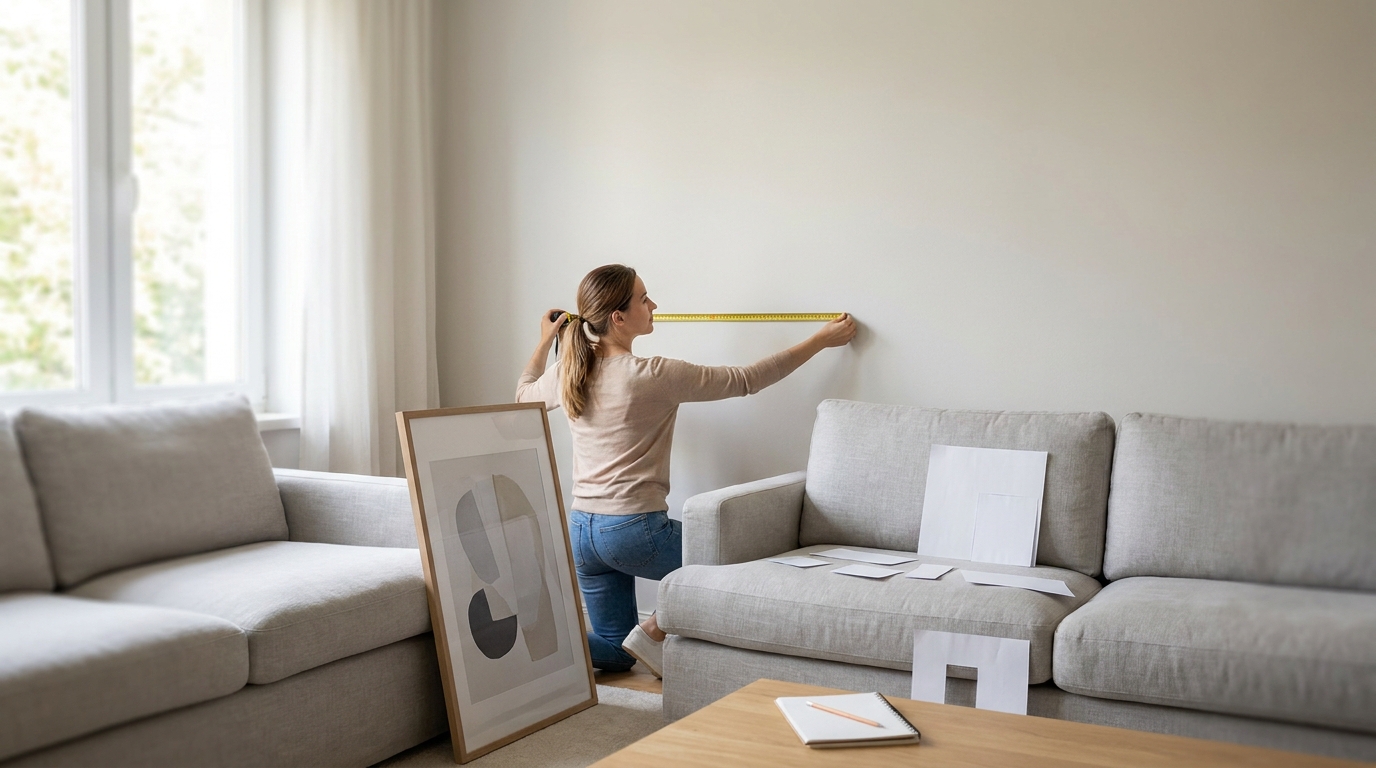
Run the tape from skirting board to ceiling and corner to corner. Most people eyeball this and underestimate by 20-30cm, which is exactly why so much art ends up too small. Write both numbers down before you look at a single product page.
Common mistake: measuring only the section between two windows and ignoring the full wall — art needs to relate to the whole plane, not just the blank patch.
2. Measure your anchor furniture
The sofa, bed, console table or dining table beneath the art is your reference point, not the wall itself. A queen bed frame runs roughly 150-160cm wide including the headboard; a three-seater sofa is typically 190-220cm. These numbers drive every decision that follows.
For above-the-bed sizing specifically, this is where most buyers go wrong — a single print that looks generous in a showroom photo often reads small once it's centred over a real headboard.
3. Apply the two-thirds to three-quarters rule
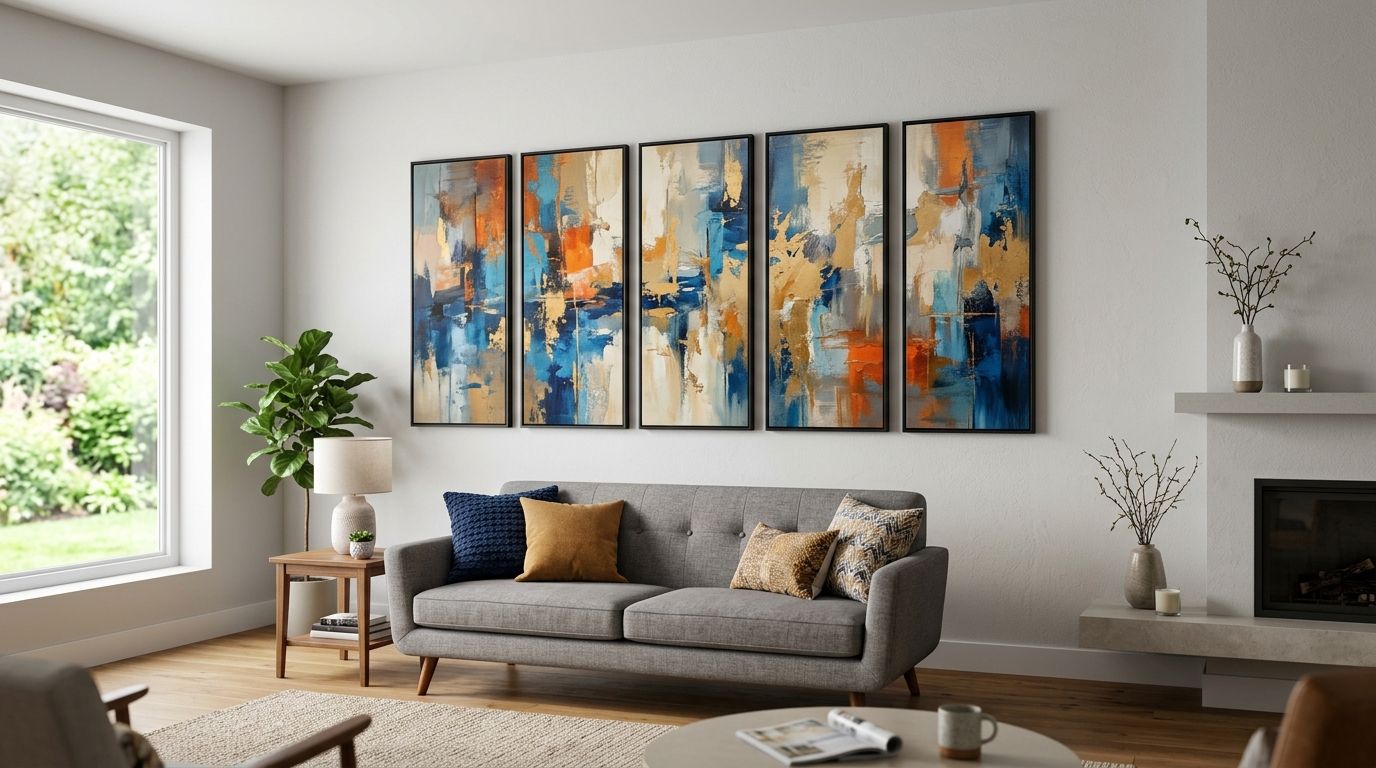
This is the rule interior stylists use and it solves 90% of sizing questions on its own. Your art (or the combined width of a gallery grouping) should span 60-75% of the furniture width beneath it. Over a 200cm sofa, that's a 120-150cm spread. Over a 160cm bed, that's roughly 96-120cm.
Go narrower than 60% and the piece looks lost. Go wider than 75% and it competes with the furniture instead of framing it.
4. Factor in viewing distance
A piece you'll see from 4-5 metres away (living rooms, staircases, open-plan zones) can carry more visual weight and finer detail without feeling oversized. A piece viewed from 1-2 metres (bedside walls, hallway nooks, home offices) needs bolder, simpler compositions because you're standing close enough to notice every brushstroke.
This is also why large canvas prints work in double-height entryways but overwhelm a 3-metre bedroom wall — distance changes what "right size" actually means.
5. Mock it up before you order
Cut kraft paper to the exact dimensions you're considering and tape it to the wall. Stand back, walk past it for a day, photograph it from across the room. This ten-minute step catches sizing mistakes that measuring tape alone misses, because proportion is partly a feeling, not just a number.
Common mistake: skipping the mock-up and relying on a product photo's scale, which almost never matches your actual wall or lighting.
6. Decide: one statement piece or a gallery wall
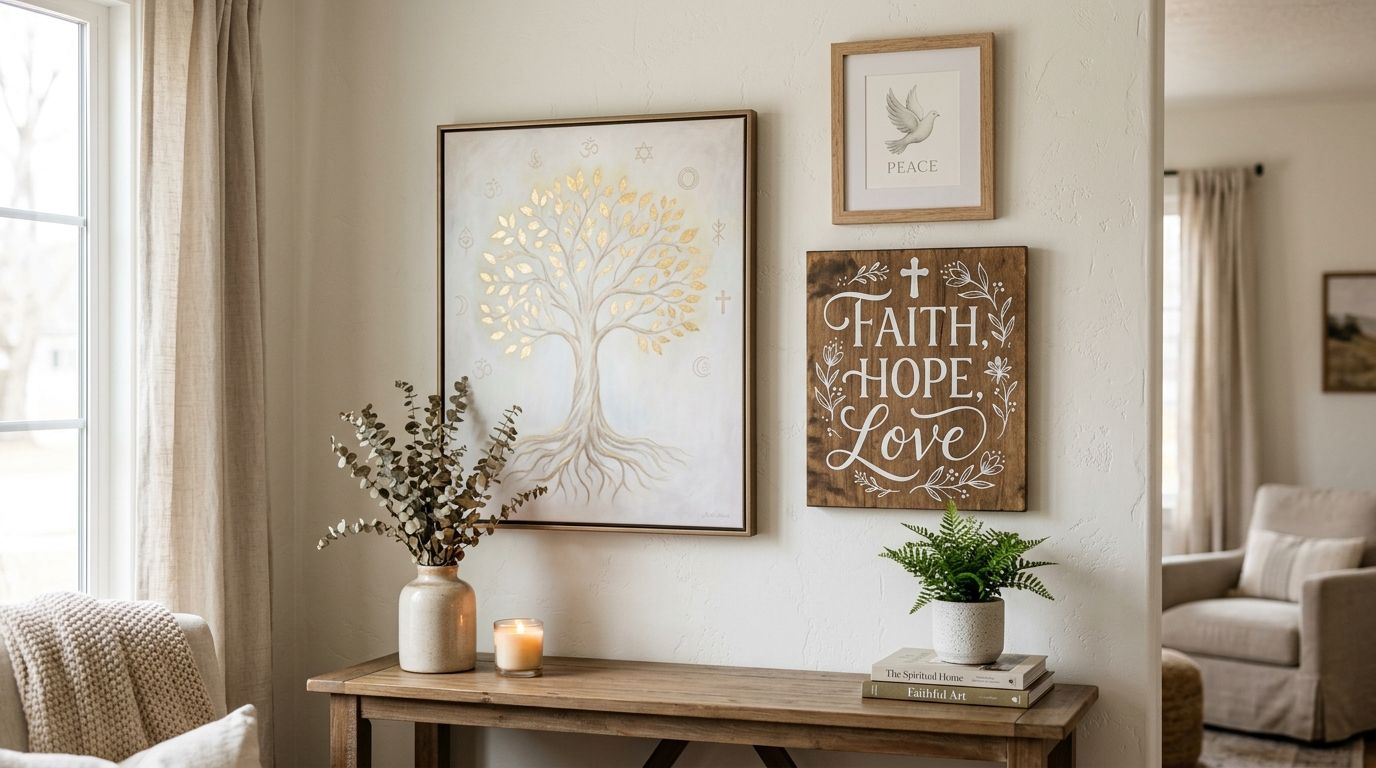
A single large canvas gives a room a calm, deliberate focal point — the safer choice for smaller walls or minimalist interiors. A gallery wall of 4-7 smaller framed prints suits wider walls and adds personality, but only if every frame sits within 5-10cm of its neighbours. Wider gaps make the grouping look like an afterthought rather than a curated collection.
7. Match scale to ceiling height
Standard 2.4m ceilings suit art sized to the furniture rule above. Ceilings over 2.7m or double-height voids need either an oversized single canvas (150cm+ on the long edge) or a vertically stacked pairing to fill the extra height without leaving a dead zone above the frame.
8. Hang at the correct height, then confirm
The centre of the artwork should sit at 145cm from the floor — this is the standard gallery height and it works whether the piece hangs solo or as part of a grouping. Over furniture, leave 15-25cm of clearance between the top of the sofa or headboard and the bottom of the frame.
Common mistake: hanging art at eye level for someone standing, which pushes it 10-15cm too high once you're seated on the sofa it's meant to complement.


Troubleshooting
The art looks like a postage stamp above the sofa. It's almost certainly under the 60% width rule — go up one size tier, or add a second piece beside it to widen the visual footprint.
The gallery wall feels cluttered. Check the gaps between frames; anything under 5cm reads busy. Pull every frame out 2-3cm and re-hang.
One large piece overwhelms a small bedroom. Swap to two smaller framed prints hung side by side, or a vertical piece instead of a wide horizontal one — vertical orientation uses less floor-to-ceiling wall real estate visually.
Mismatched sizes across a grouping look messy. Stick to one width across a horizontal run, or group in odd numbers (3, 5, 7 pieces) — even numbers of mismatched sizes are what makes groupings look accidental rather than styled.
Art is hanging too high. Bring it down until the centre sits at 145cm from the floor; re-measure with the piece already on the wall, not before hanging.
Tools and resources
- Metal tape measure and a spirit level for straight hanging
- Kraft paper or painter's tape for mock-ups
- Above-the-bed wall art sizing reference if you're working with a headboard wall specifically
- A second person to hold the piece in place while you step back and check proportion from across the room
What to do next
Once you've settled on dimensions, cross-check the room type — sizing rules shift slightly for staircases, open-plan living zones, and small apartments, so confirm against a room-specific guide before you finalise the order.
FAQ
What size wall art do I need for a standard living room?
For a living room, size the art to cover 60-75% of the sofa's width — on a 200cm sofa that's roughly 120-150cm of combined art width. A single canvas or a tight gallery grouping both work as long as the total spread lands in that range.
What size art should go above a queen bed?
A single piece over a queen bed should run 100-140cm wide, matching 60-75% of the headboard's width. Anything narrower than 90cm tends to look lost against a full headboard.
How high should I hang wall art?
Hang the centre of the piece at 145cm from the floor, the standard gallery height used across 2026 interior styling. Over furniture, leave 15-25cm clearance between the top of the sofa or bed and the bottom of the frame.
Is one large canvas better than a gallery wall?
Neither is universally better — a single large canvas suits smaller or minimalist walls, while a gallery wall of 4-7 pieces suits wider walls that can carry more visual detail. Choose based on wall width and how much personality the room already has.
How much gap should I leave between gallery wall frames?
Leave 5-10cm between frames in a gallery wall. Gaps under 5cm read cluttered, and gaps over 10cm make the grouping look disconnected rather than curated.
What size art works for a small apartment wall?
In a small apartment, a vertical or medium-format piece (around 60-90cm on the long edge) usually outperforms an oversized canvas, since it fills the wall without crowding the room's floor space.
Can I mix different sized frames in one grouping?
Yes, but keep the total footprint consistent with the furniture-width rule and group in odd numbers. Mismatched sizes in an even-numbered grouping tend to look unplanned rather than styled.
Does ceiling height change what size art I need?
Yes — ceilings over 2.7m usually need an oversized single canvas (150cm+) or a vertically stacked pairing to avoid a dead zone of blank wall above a smaller piece.
One last thing
The 60-75% rule holds for almost every wall, but the exception worth remembering is a narrow hallway or reading nook viewed from under two metres — there, a tall, narrow piece like a 35cm-wide vertical panel often reads better than anything wider, because you're never standing far enough back to appreciate horizontal spread anyway.