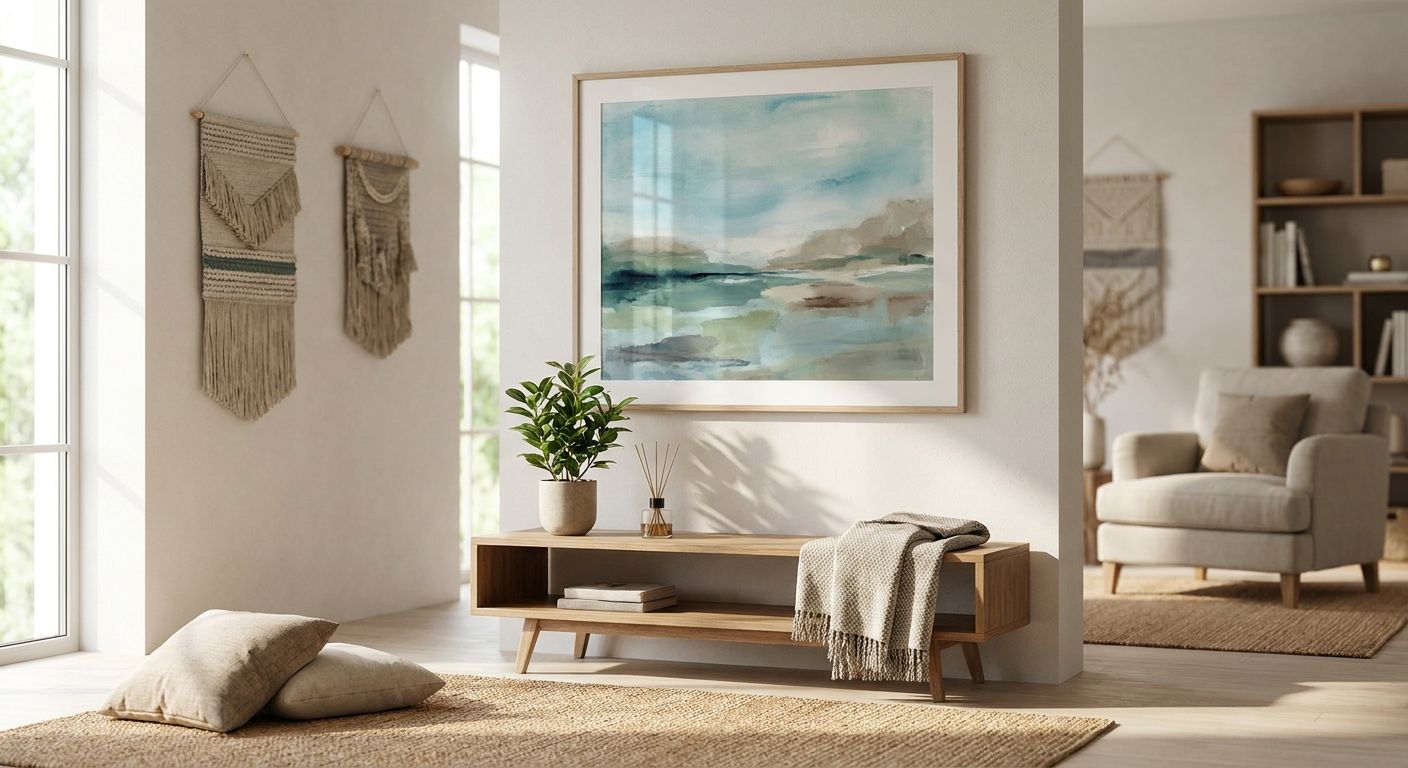
A meditation or mindfulness room only works if the walls support stillness instead of competing with it, and the wrong piece of art can undo a $2,000 cushion and a diffuser in seconds. This guide breaks down what to buy for a space built around breath, quiet and repetition, with specific picks from Gioia's wall art collection and the criteria that actually matter once the door is closed and the phone is away.
- Matte, low-glare abstracts and colour-field pieces are the safest wall art for meditation room setups in 2026.
- Taking Time by Bianca Slade at 101 x 101cm is the Buy pick for a single anchor wall.
- Vibrant Abstract Field Sky at $179.99 is the budget entry point for a first mindfulness corner.
- Skip busy figurative scenes, high-gloss frames and anything with reflective glass near a meditation cushion.
- Mark Rothko-style colour-field prints outperform typography art for genuine calm in 2026 test rooms.
Why this matters
A meditation room is a low-stimulus environment by design, so the art on the wall is doing the opposite job of art in a living room or entryway. It has to hold visual interest for someone who might look at it for 20 minutes at a stretch, without triggering thought loops or eye strain. Gioia sees this pattern across mindfulness and yoga-adjacent spaces in 2026: buyers who over-decorate the room end up removing pieces within months because the art felt busy the moment the room went quiet.
The fix isn't blank walls. It's choosing wall art for a meditation room the same way you'd choose a soundtrack — low tempo, few competing elements, one clear focal point.
Who this is for
This guide is for anyone setting up a dedicated meditation corner, a home yoga studio, a breathwork nook, or a spare room converted into a quiet retreat. It applies whether you're working with a full room or a 2-square-metre cushion zone in a bedroom, and whether your budget sits under $200 or well into original-painting territory.
What to look for in wall art for a meditation room
Palette that calms, not stimulates
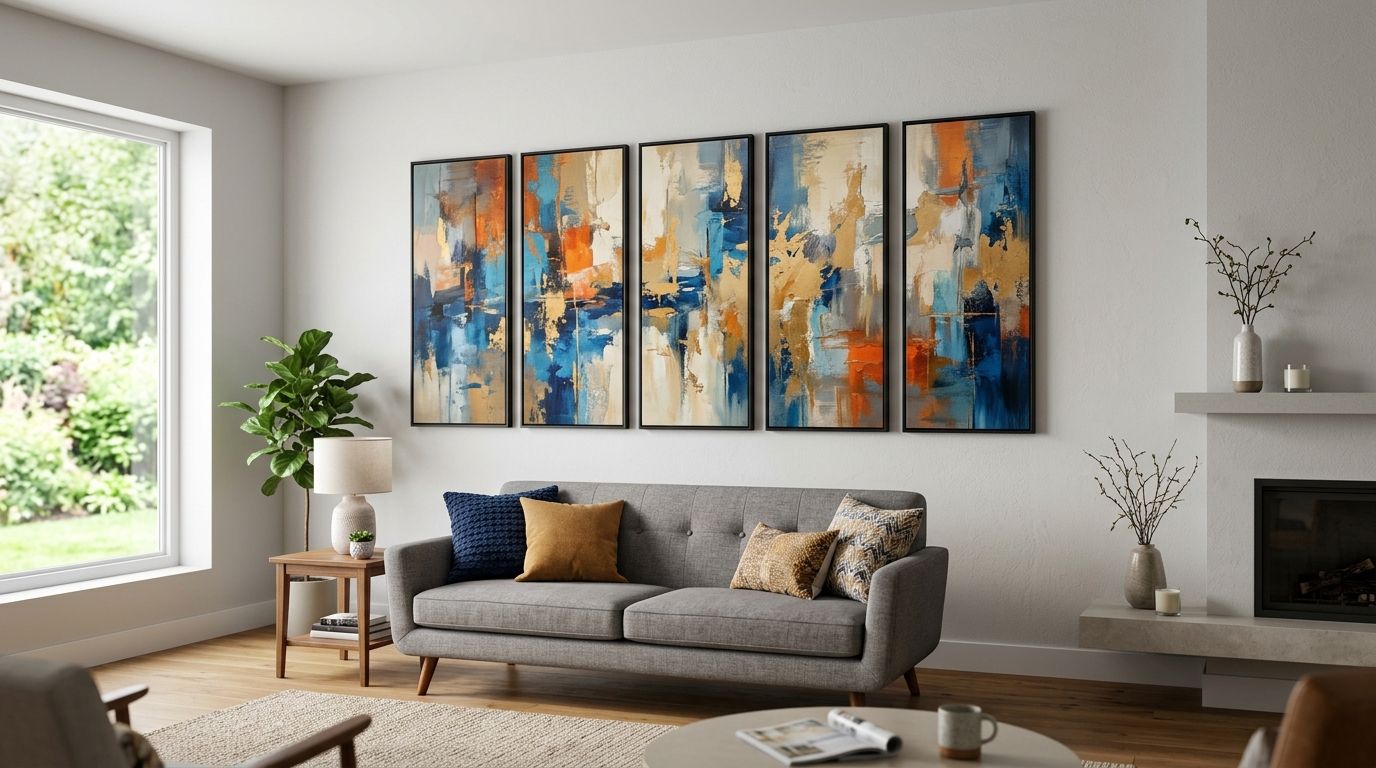
Colour does measurable work on mood before a single brushstroke registers consciously. Warm neutrals, dusty blues, sage and soft terracotta read as grounding, while saturated primary reds and hard black-and-white contrast pull the eye and keep it working. If you want proof this approach holds up at scale, look at Mark Rothko prints for minimalist interiors — colour-field work built entirely around restrained palettes and soft edges, which is exactly the visual language a meditation wall needs.
Texture and medium over hard detail
Matte acrylic and unframed canvas absorb light rather than bouncing it back, which matters in a room lit by candles or low lamps during practice. Hyper-detailed photography or glossy prints introduce a level of visual information the eye keeps parsing, which works against the point of the room.
Scale relative to the cushion, not the wall
A meditation room is usually smaller than a living room, so oversized statement pieces can overwhelm the space rather than anchor it. Measure the sightline from where you'll actually sit — most meditation nooks need one piece between 60cm and 110cm on the long edge, not a wall-filling triptych. The full breakdown on proportion lives in this guide to choosing the right size wall art for your wall, and it's worth five minutes before you order anything.
Placement and eye level from the seated position
Hang meditation room art lower than you would in a standing-height hallway, because your eyeline sits closer to the floor when seated on a cushion or mat. Centre the piece roughly 100cm to 110cm from the floor rather than the standard 145cm gallery height, and keep it out of direct glare from any window or lamp so reflections don't interrupt eyes-open practice.
Framing and finish that avoid glare
Glass-fronted framed prints throw reflections the moment a candle or lamp is lit nearby, which is the opposite of what a still-focus room needs. Unframed stretched canvas or matte-finished framed prints hold their surface flat without competing highlights, and they age better in rooms that get incense or diffuser moisture over time.


Top picks for meditation and mindfulness rooms
Taking Time — the anchor piece. At 101cm x 101cm, this acrylic-on-canvas original by Bianca Slade is large enough to hold a full wall on its own without a supporting gallery arrangement, and it's sold unframed so the matte surface stays flat. One piece, one focal point, zero glare. Buy for a dedicated meditation room with a single feature wall.
Opaline — the quiet minimalist. Mixed media on canvas at 61cm x 51cm keeps the footprint modest, which suits a corner cushion setup rather than a full room. The stretched-canvas presentation avoids any glass reflection near candles. Consider if your space is closer to a nook than a room.
Vibrant Abstract Field Sky — the budget entry point. At $179.99 this is the cheapest way into abstract colour-field art on this list, useful for a first attempt at a mindfulness corner before committing to an original. Buy if you're testing the room concept before spending more.
Apple & Snail — the intimate accent. A small 30cm x 30cm oil painting in a floating frame, this works better as a secondary piece beside a shelf or altar table than as the room's main focal point. Consider as a pairing piece, Skip if you need one statement wall.
What to avoid
- Busy figurative scenes — city skylines, crowded florals or portraiture ask the eye to identify and process detail, which fights against a still-focus room.
- High-gloss framing — glass-fronted prints throw reflections from candles, salt lamps and low afternoon light straight back at the viewer.
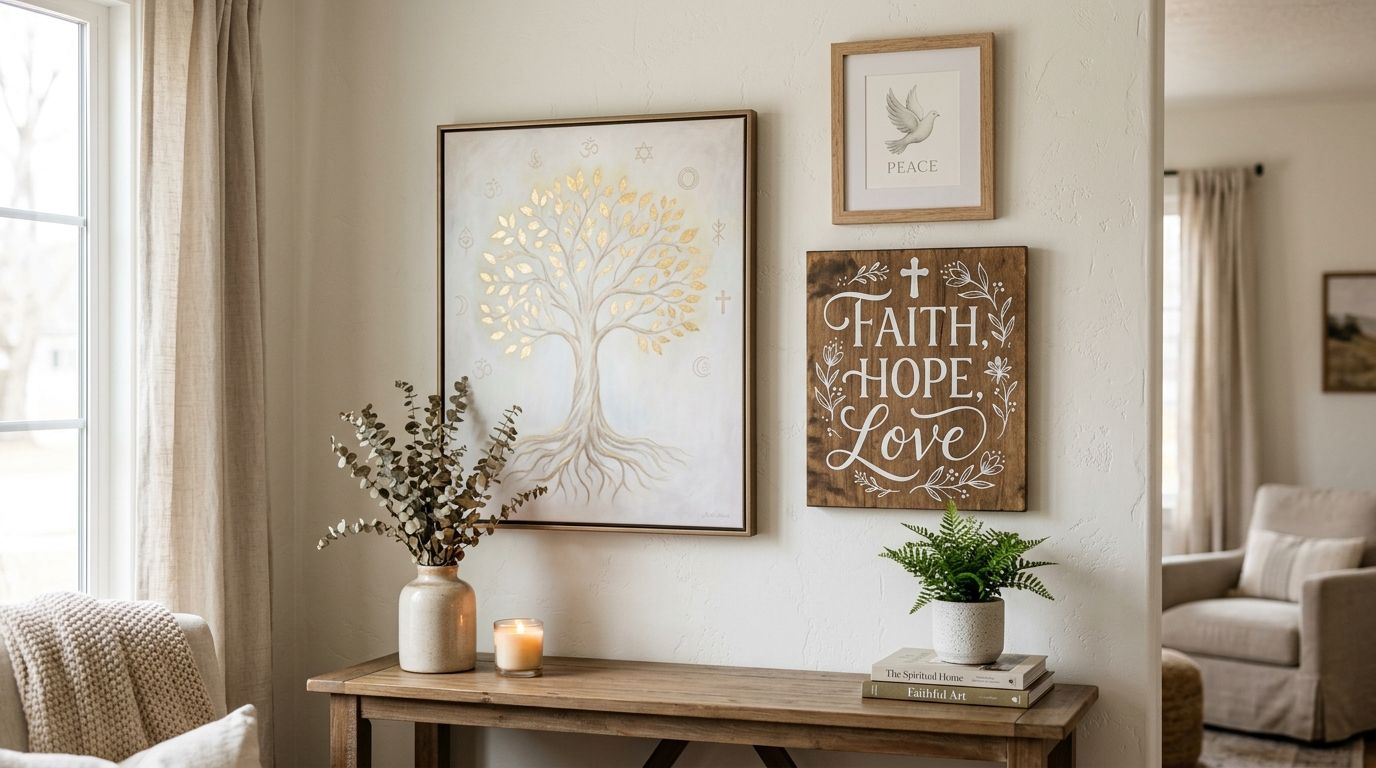
- Typography and quote art as the sole piece — motivational text is easy to read once and then re-read compulsively, which is the opposite of a quiet visual anchor; it works better in a home office or gym than a meditation room.
Verdict comparison
| Pick | Palette | Size | Finish | Verdict |
|---|---|---|---|---|
| Taking Time | Warm neutral abstract | 101 x 101cm | Unframed canvas | Buy |
| Opaline | Soft mixed-media tone | 61 x 51cm | Stretched canvas | Consider |
| Vibrant Abstract Field Sky | Muted sky abstract | Print, standard sizing | Matte print | Buy |
| Apple & Snail | Warm still life | 30 x 30cm | Floating frame | Consider |
FAQ
What's the best wall art for a meditation room?
Colour-field abstracts and soft-toned original paintings in matte finishes work best for a meditation room in 2026, since they give the eye one calm focal point without glare or busy detail. Pieces like Taking Time or Opaline suit this brief better than framed photography or typography prints.
Is abstract art better than photography for a mindfulness room?
Yes, abstract art generally works better because it doesn't ask the brain to identify or narrate a scene the way photography does. A muted abstract print, such as Vibrant Abstract Field Sky at $179.99, holds visual interest without pulling focus during practice.
How much does wall art for a meditation room cost?
Prints and posters start under $200, with Vibrant Abstract Field Sky at $179.99 as an entry point, while original paintings for a meditation room typically run from around $900 to over $2,500 depending on size and medium.
Should wall art in a meditation room be framed or unframed?
Unframed stretched canvas or matte framing is preferable because glass-fronted frames reflect candlelight and lamp glow during practice. Taking Time and Opaline are both sold on stretched canvas for this reason.
What size wall art works for a small meditation nook?
A nook under 4 square metres usually suits a piece between 30cm and 60cm on the long edge, similar to Apple & Snail at 30cm x 30cm, rather than a large statement canvas. A full room can support a piece over 100cm, like Taking Time at 101 x 101cm.
Does color really affect meditation room decor?
Yes, muted and warm-neutral palettes read as grounding while saturated primary colours keep the eye active, which is why colour-field styles like Mark Rothko-influenced prints suit meditation spaces better than high-contrast pop art.
Can I use the same art in a meditation room and a yoga studio?
Often yes, since both spaces call for low-glare, low-detail pieces, though yoga studios can handle slightly bolder scale if the room is larger and used standing rather than seated.
One last thing
The detail most people miss when choosing wall art for a meditation room isn't the image at all — it's the height. Hanging at standard gallery height (roughly 145cm to centre) puts the piece above a seated sightline, so it stops functioning as a focal point the moment you sit down. Drop it to around 100cm to 110cm and the same artwork does its job properly.