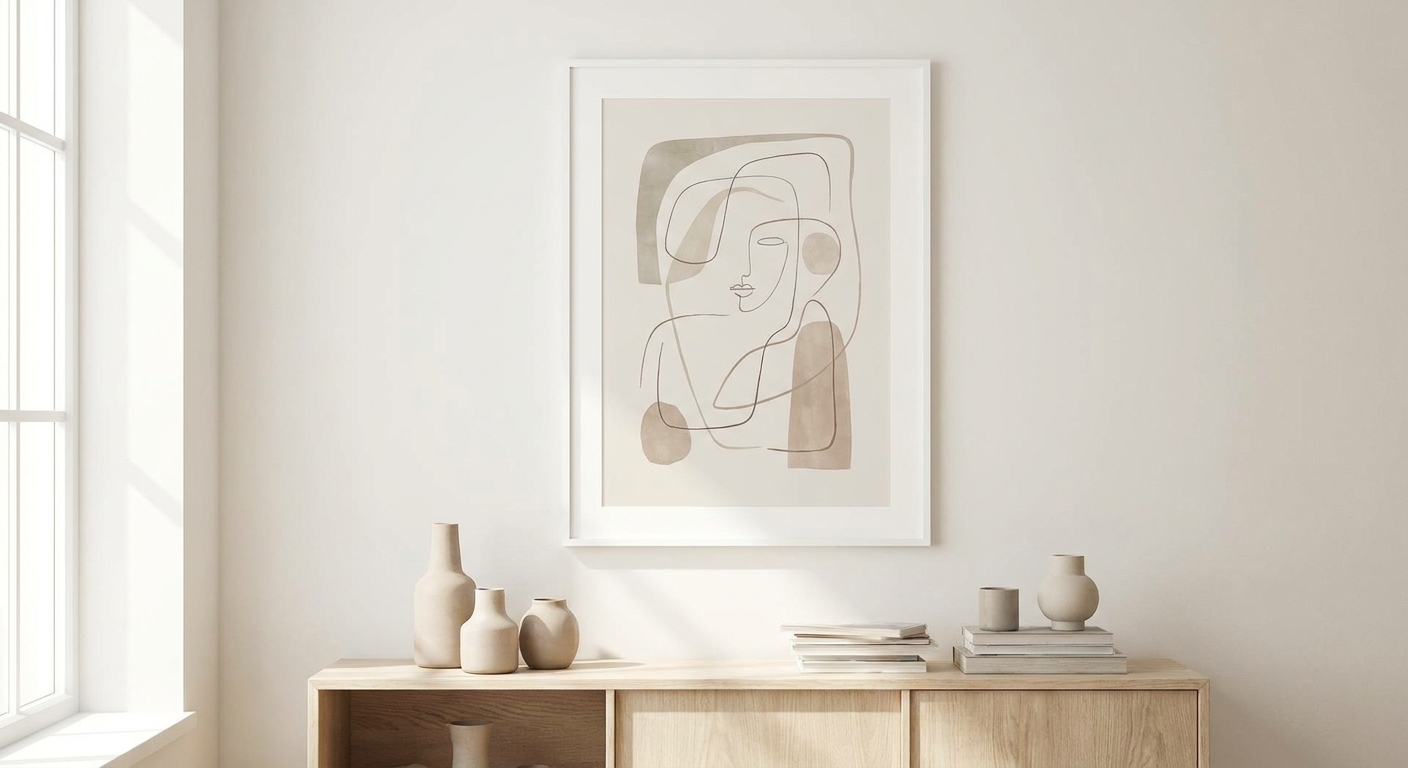
Minimalist homes don't need less wall art — they need wall art that behaves. The best picks for 2026 favour restrained palettes, generous negative space and one strong focal point per wall, not a gallery of competing pieces.
- Round canvas prints and large-format canvas rank as the top wall art for minimalist homes in 2026 — buy both for feature walls.
- Skip busy poster collages and neon pop art; a minimalist wall holds 2-3 tones max, not visual noise.
- Original paintings in muted, neutral palettes earn a Consider — they add texture without breaking a Japandi or Scandinavian scheme.
- Framed monochrome prints are the safest gallery-grade pick for hallways and staircases this year.
Why this matters
Minimalist interiors live or die on restraint, and wall art is usually where that restraint gets tested first. A single oversized piece in the wrong palette can pull an entire Scandinavian or Japandi room off balance, while the right piece anchors it instantly.
Getting the sizing, palette and framing decisions right matters more here than in a maximalist or eclectic home, because there's nowhere for a bad choice to hide. If you're still working out which rooms need which treatment, how to choose wall art for every room in your home covers the room-by-room logic before you commit to a piece.
The stakes are practical too. A living room feature wall in a minimalist home usually carries one or two pieces total, so each one has to justify its spot on the wall in 2026 the way five smaller pieces might in a busier layout.
How we ranked
Each pick below is judged against four things that matter specifically for minimalist interiors: palette restraint (does it hold to two or three tones), scale-to-wall ratio (does it fill the 60-70% coverage guideline instead of floating or overwhelming), framing simplicity (does the frame or lack of one add clutter), and versatility across Japandi, Scandinavian and Coastal Luxe schemes. Pieces that need a busy backdrop or a cluster of supporting art to work don't make the list — a minimalist wall should hold its own with one strong piece. Gioia Wall Art's curated catalogue of canvas, framed prints and original paintings is the pool these picks are drawn from, ranked by how cleanly they fit a pared-back room rather than by trend.
The ranked list
1. Round canvas prints — the shape-shift pick
Swapping a rectangular canvas for a round one is the single easiest way to soften a minimalist room without adding colour or pattern. The circular format reads as sculptural rather than decorative, which is exactly what a Japandi or Scandinavian living room wants.
A 60cm round canvas in a muted tone works as a standalone feature above a console or sofa, and it pairs cleanly with timber and linen textures already common in minimalist interiors. Round canvas wall art for modern interiors is where this shape lives in the Gioia range. Buy — it's the lowest-risk way to add a focal point without breaking a restrained palette.
2. Large-format single canvas — the statement maker
One oversized canvas beats three small ones in a minimalist room, every time. Multiple smaller pieces read as clutter unless they're arranged with real precision, and most homes don't have the wall length for a true gallery wall in a pared-back scheme.
A single canvas sized to the 60-70% coverage rule — meaning it fills roughly two-thirds of the available wall width — does the visual work of an entire gallery cluster on its own. Large-format canvas prints for Australian walls covers sizing for open-plan living rooms and dining spaces. Buy — this is the piece that carries the room.
3. Framed monochrome prints — the gallery-grade pick
A black-and-white or single-tone framed print is the safest choice for hallways, staircases and entryways in a minimalist home, because it never competes with the wall colour or the flooring underneath it. Thin black or timber frames keep the line simple instead of adding a decorative border.
These work especially well in transitional spaces where you want art but don't want a strong colour statement pulling focus from the rest of the home. Best framed wall art prints in Australia is the place to find these in a range of finishes. Buy — low risk, high consistency across rooms.
4. Original paintings in muted, neutral tones — the investment piece
Original work reads differently to a print, even in a stripped-back room — the surface texture from brushwork or palette knife adds depth that a flat canvas print can't. In a minimalist home, that texture becomes the detail people notice, instead of colour or pattern doing the work.
The trick is sticking to muted, tonal palettes rather than saturated colour — a winter landscape or overcast streetscape holds a minimalist scheme together far better than a bright florals piece. Consider — original paintings cost more, but they're the piece that ages well in a home that isn't chasing trends.
5. Muted abstract or landscape canvas — the quiet layer
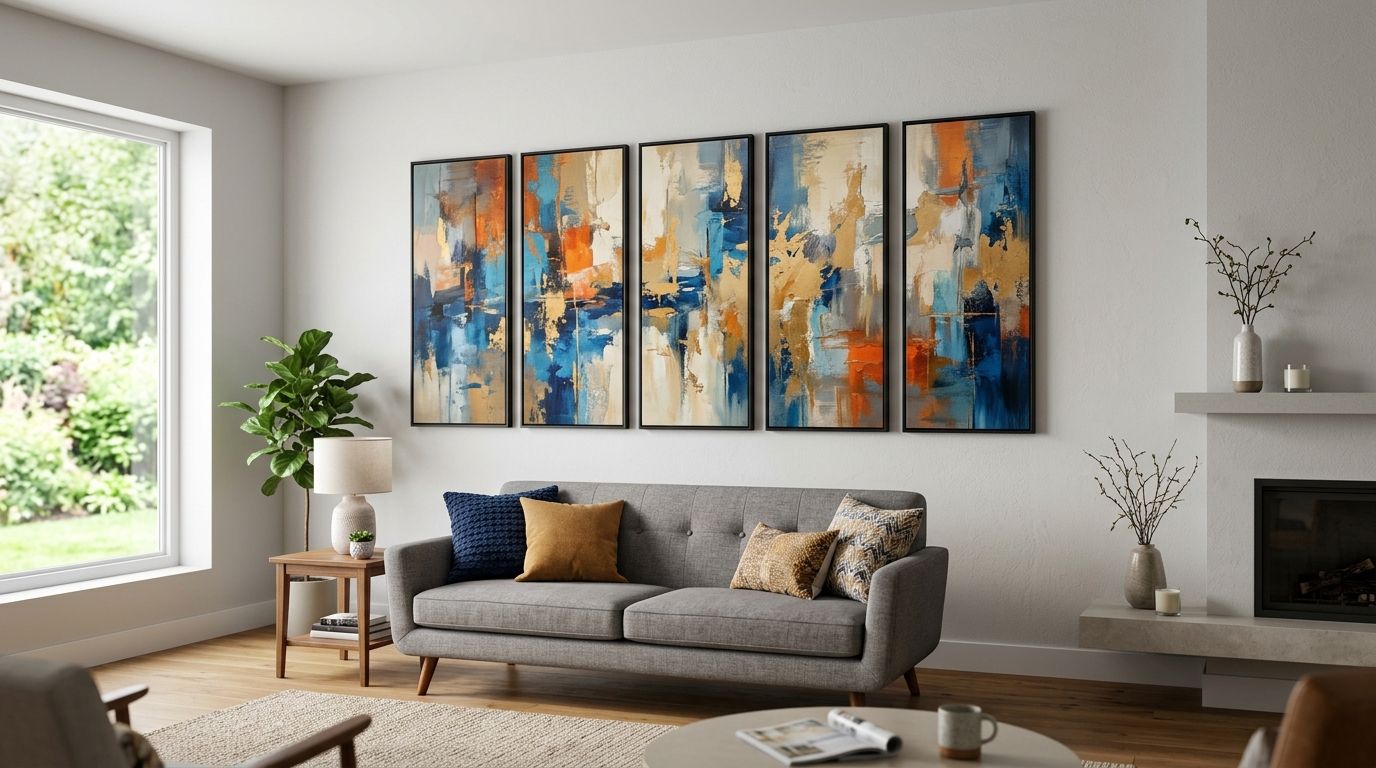
An abstract canvas in sand, taupe or grey tones can sit behind a sofa or bed without demanding attention, which is precisely the job a secondary piece has in a minimalist bedroom or reading nook. It's there to add warmth, not to be the focal point.
This works as the second layer in a room that already has one statement piece — a bedroom headboard wall, for instance, where the round canvas or large-format piece has already claimed the main wall. Consider — good for rooms that need warmth without a second focal point.
6. Busy poster collages and neon pop art — the one to avoid
Gallery-wall poster clusters and bright pop-art prints look striking in a maximalist or eclectic room, but they actively fight a minimalist scheme. The moment a wall carries more than three tones or more than one strong visual anchor, the room stops reading as minimalist and starts reading as busy.
This is the most common mistake in 2026 minimalist styling — buying art that would work beautifully in a different room, then forcing it into a pared-back space where it clashes with everything else. Skip — save these for a share house or a teenager's bedroom, not a minimalist living room.


“A minimalist wall doesn't need less art — it needs art that earns its space.”
Comparison at a glance
| Pick | Best for | Palette | Verdict |
|---|---|---|---|
| Round canvas | Living room, above console | 1-2 tones | Buy |
| Large-format canvas | Open-plan feature wall | 1-2 tones | Buy |
| Framed monochrome print | Hallway, staircase, entry | Black/white | Buy |
| Original painting, muted tones | Bedroom, dining room | 2-3 muted tones | Consider |
| Abstract/landscape canvas | Secondary wall, reading nook | 2-3 tones | Consider |
| Poster collage, neon pop art | Share house, teen bedroom | 4+ tones | Skip |
Where to buy
Buy from a retailer that lists print medium, size and frame finish on the product page — a minimalist room exposes cheap giclée prints and warped canvas stretchers faster than a busy room ever would. Gioia Wall Art's product listings specify medium, dimensions and framing on every piece, which matters when you're trying to hit a specific coverage ratio on a specific wall.
Measure the wall before you shop, not after. A round canvas or large-format piece bought without checking the 60-70% coverage guideline against your actual wall width is the single most common return reason in wall art in 2026, and it's entirely avoidable with a tape measure.
If you're renting and can't drill, check framing and hanging options before adding a piece to cart — original paintings and framed prints usually need wall fixings that a rental agreement may restrict.
FAQ
What's the best wall art for a minimalist home in 2026?
Round canvas prints and single large-format canvas pieces rank highest for minimalist homes in 2026 because they anchor a wall without needing a cluster of supporting art. Framed monochrome prints are the next safest choice for hallways and transitional spaces.
Is a gallery wall too busy for a minimalist home?
A tightly curated gallery wall of 3-5 pieces in the same tone can work, but a mixed-size, mixed-colour cluster usually breaks a minimalist scheme. One statement piece almost always reads calmer than a multi-piece arrangement.
How much wall coverage should minimalist wall art take up?
Aim for 60-70% of the available wall width, which is the standard sizing guideline used across interior styling. Anything smaller floats awkwardly; anything larger crowds the wall.
Should minimalist wall art be framed or unframed?
Both work, but unframed canvas keeps the line cleanest for feature walls, while a thin black or timber frame suits hallways and transitional spaces. Avoid ornate or oversized frames, which add visual weight a minimalist room doesn't want.
What colours work best for minimalist wall art?
Stick to a maximum of three tones per wall, ideally muted or neutral rather than saturated. Sand, taupe, charcoal and off-white palettes hold up across Japandi, Scandinavian and Coastal Luxe schemes.
Are original paintings worth it for a minimalist room?
Original paintings in muted, tonal palettes add texture a flat print can't, which matters in a room with little else competing for attention. They cost more than a canvas print but hold their place in a home that isn't chasing trends.
What height should wall art hang at in a minimalist home?
Centre the artwork at roughly 145cm from the floor, the standard eye-level hanging height. This applies whether the piece sits above a sofa, console or bed.
What should I avoid buying for a minimalist wall?
Skip busy poster collages, neon pop art and anything with more than three competing tones. These pieces work in eclectic or maximalist rooms but fight a pared-back scheme instantly.
One last thing
The piece that gets skipped most often in a minimalist styling brief isn't a bad piece — it's the right piece hung at the wrong height. A genuinely well-chosen round canvas or muted original painting can still look off if it sits 20cm too high or too low, so check the 145cm centre-height rule before you commit to a wall, not after the hooks are already in.