Salvador Dali prints turn a plain wall into a conversation starter, but picking the right one for a genuinely surrealist interior takes more than grabbing the first melting-clock poster you find online.
- Salvador Dali prints work best in rooms that already lean minimalist, Japandi or gallery-style, not busy maximalist spaces.
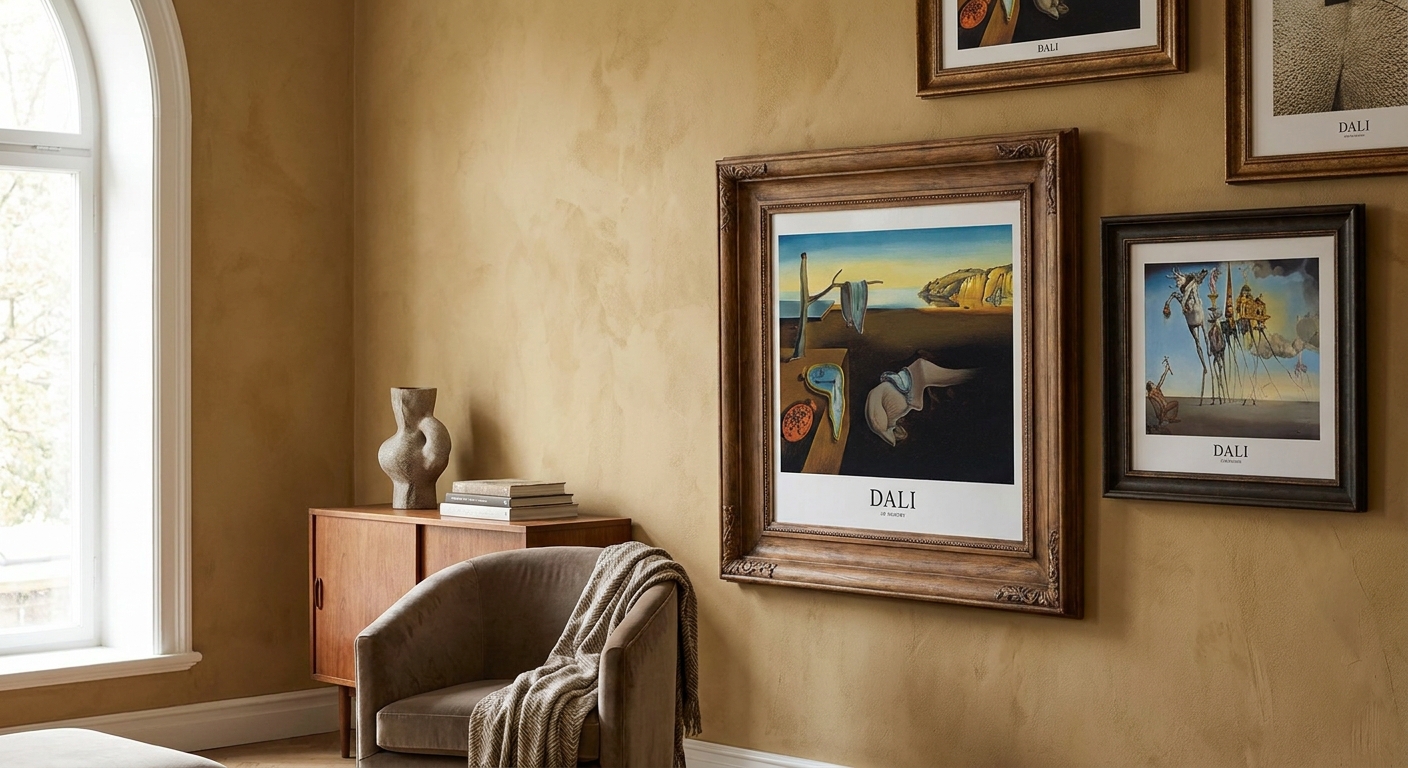
- The Persistence of Memory (1931) is the safest first pick for a feature wall — buy it framed, not as a bare poster.
- Canvas reproductions hold colour better than paper posters over a 2026-and-beyond timeframe, especially in sunlit rooms.
- Skip oversized prints in small rooms — surrealist imagery reads as chaotic, not dreamlike, when it overwhelms the wall.
- Pair one strong Dali-style statement piece with plain, symmetrical framing to keep the surrealism from tipping into clutter.
Why this matters
Surrealism is a hard style to get right on a domestic wall. The imagery is deliberately unsettling — melting clocks, floating elephants, distorted figures — and that only reads as "curated" rather than "random poster from a dorm room" when the framing, scale and surrounding decor are deliberate. A great Dali print in the wrong room looks like clutter. The same print, sized and framed correctly, becomes the one thing guests ask about.
Dali died in 1989, and his major works remain protected, which is why almost everything you'll find labelled "Salvador Dali print" online is a licensed or open reproduction rather than an original piece. That's fine for interior styling — you're buying the image and the atmosphere, not a collectible. What matters is print quality, framing, and whether the piece actually suits the room you're putting it in. Gioia Wall Art sources framed and canvas reproductions across surrealist, abstract and contemporary styles, so the criteria below apply whether you're shopping there or anywhere else.
Who this is for
This guide is for anyone building a surrealist, eclectic-gallery or design-forward interior who wants Dali's imagery to look intentional rather than novelty. Think apartment dwellers doing a statement feature wall, home-office owners who want a conversation piece behind their desk, and anyone styling a moody reading nook or hallway gallery wall where one bold, dreamlike image needs to anchor the space. If your room is already busy with pattern and colour, read the "what to avoid" section closely before you buy anything.
What to look for in Salvador Dali prints for surrealist interiors
Print medium — canvas vs paper vs poster
A canvas reproduction handles direct light and humidity far better than a paper poster, which matters in Australian living rooms that get strong afternoon sun. Paper posters fade and yellow within a couple of years under UV exposure; a properly printed canvas or framed archival print holds its tone through 2026 and well beyond. If the piece is going above a sofa or in a north-facing room, canvas or glass-framed paper wins every time.
Colour palette match
Dali's palette runs from warm desert ochres (The Persistence of Memory) to cool, watery blues (Swans Reflecting Elephants). Pick the print based on your room's existing tones rather than the other way around — a warm-toned print in a cool grey Scandinavian room will fight the space instead of completing it.
Scale relative to the wall
Surrealist imagery needs breathing room. A print that's too small on a large wall reads as an afterthought; one that's too large in a tight room reads as overwhelming rather than dreamlike. As a rule, artwork above a sofa or console should span roughly 60-75% of the furniture's width — check a proper right size wall art guide before you order.
Frame style
Ornate gold frames clash with most surrealist work unless you're deliberately going for a maximalist, baroque-surrealist look. A slim black or timber frame keeps the focus on the imagery and reads as considered rather than themed.
Reproduction quality
Cheap prints crush the fine detail in Dali's work — the tiny ants, the distant cliffs, the layered shadows that make the paintings unsettling in the first place. Look for high-resolution reproductions where those details are still visible up close, not just from across the room.
Where it sits in the room
A single Dali-style statement print works best as the one bold piece in a room, not stacked next to five other loud prints. If you're building a full gallery wall, one surrealist piece should anchor it while the rest stay quieter — a statement wall art for a feature wall approach works better than scattering surrealist imagery across multiple small frames.
Top picks: which Dali image to go for
The Persistence of Memory — the safe pick. Painted in 1931 at a modest 24 x 33 cm in the original, this is Dali's most recognisable work and the easiest to place in a room without overwhelming it — the desert palette (warm ochre, muted blue sky) pairs with almost any neutral interior. Reproductions are widely available in both canvas and framed formats. Verdict: Buy for a first surrealist piece, especially in a home office or hallway.
Swans Reflecting Elephants — the moody pick. Cooler blues and a more layered, double-image composition make this a stronger fit for bedrooms or reading nooks where you want atmosphere over boldness. It rewards a larger format because the double-take effect (swans that mirror into elephants) gets lost if the print is small. Verdict: Consider if your room already leans blue or teal.
The Elephants — the wildcard. Spindly-legged elephants against a stark, minimal sky make this the most graphic and least "busy" of Dali's famous images, which is exactly why it suits Scandinavian or Japandi rooms that usually avoid surrealist art altogether. It's a strong single statement piece rather than something to hang in a cluster. Verdict: Buy for minimalist rooms wanting one unexpected moment.
Metamorphosis of Narcissus — the advanced pick. Dense, layered and genuinely strange, this image needs a room with enough negative space around it to let the eye settle. It's not a beginner's Dali print — hang it where it's the only thing on the wall. Verdict: Consider, and only with a plain, uncluttered wall either side.
The Temptation of St. Anthony — the skip for most homes. Elongated, spindly-legged figures and heavy religious imagery make this one of Dali's most confronting works. It's a striking print for a dedicated gallery space or studio, but it fights against almost every mainstream interior style. Verdict: Skip unless you're building a genuinely gallery-style feature wall and know exactly what you're doing.
What to avoid
- Bare paper posters with no frame or mount. They look like they belong in a share house, not a styled room, and they curl and fade within a year or two.
- Oversized prints in small apartments. A 100cm-wide surrealist print in a room with 2.4m ceilings and narrow walls overwhelms the space instead of anchoring it.
- Mixing two or more surrealist pieces in the same sightline. One bold Dali print reads as curated; two competing for attention in the same room reads as chaotic.
Verdict comparison
| Palette | Best room | Scale needed | Verdict | |
|---|---|---|---|---|
| The Persistence of Memory | Warm ochre, muted blue | Office, hallway | Medium | Buy |
| Swans Reflecting Elephants | Cool blue, teal | Bedroom, reading nook | Large | Consider |
| The Elephants | Neutral, minimal | Scandinavian/Japandi living room | Medium-large | Buy |
| Metamorphosis of Narcissus | Warm, dense | Gallery-style feature wall | Large, isolated | Consider |
| The Temptation of St. Anthony | Dark, dramatic | Dedicated studio/gallery space | Large | Skip (most homes) |
FAQ
What's the best Salvador Dali print for a living room?
The Persistence of Memory is the safest choice for a living room in 2026 because its warm, muted palette suits most neutral interiors. Swans Reflecting Elephants works better if your room already leans cool-toned or blue.
Is Salvador Dali wall art still popular in 2026?
Yes, surrealist prints have stayed a steady interior trend into 2026, particularly in eclectic-gallery and Japandi-adjacent rooms. The appeal is the single striking statement piece rather than a full surrealist theme.
Should I frame a Dali print or leave it unframed?
Frame it. A slim black or timber frame protects the print from light damage and keeps the surrealist imagery looking intentional rather than like a dorm-room poster.
What size Dali print works above a sofa?
Aim for artwork spanning roughly 60 to 75 percent of the sofa's width. A print that's too small above a large sofa reads as an afterthought rather than a feature.
Are canvas prints or framed paper prints better for surrealist art?
Canvas holds colour better in sunlit rooms and needs no glass, while framed paper prints show finer detail behind glass. Choose canvas for bright rooms and framed paper for detail-heavy images like Metamorphosis of Narcissus.
How do I style a Dali print with other art on a gallery wall?
Let the Dali piece anchor the wall as the boldest image and keep everything else quieter in tone and colour. Two loud surrealist pieces in the same sightline compete rather than complement.
Is Salvador Dali's work in the public domain?
No. Dali died in 1989 and his major works remain under copyright, which is why most wall art versions are licensed or open reproductions rather than sold as originals.
What room suits The Elephants print best?
The Elephants suits minimalist or Japandi-style rooms because its stark, neutral composition doesn't compete with a quiet colour palette. It works well as a single statement piece rather than part of a cluster.
One last thing
The detail most people miss: Dali's original Persistence of Memory is smaller than a sheet of A3 paper — 24 x 33 cm — yet it's one of the most reproduced images in art history. Scale it up too aggressively for a big feature wall and you lose the intimate, unsettling quality that made it famous in the first place. A mid-size framed reproduction, hung with real negative space around it, does more work than an oversized canvas crowding the wall.