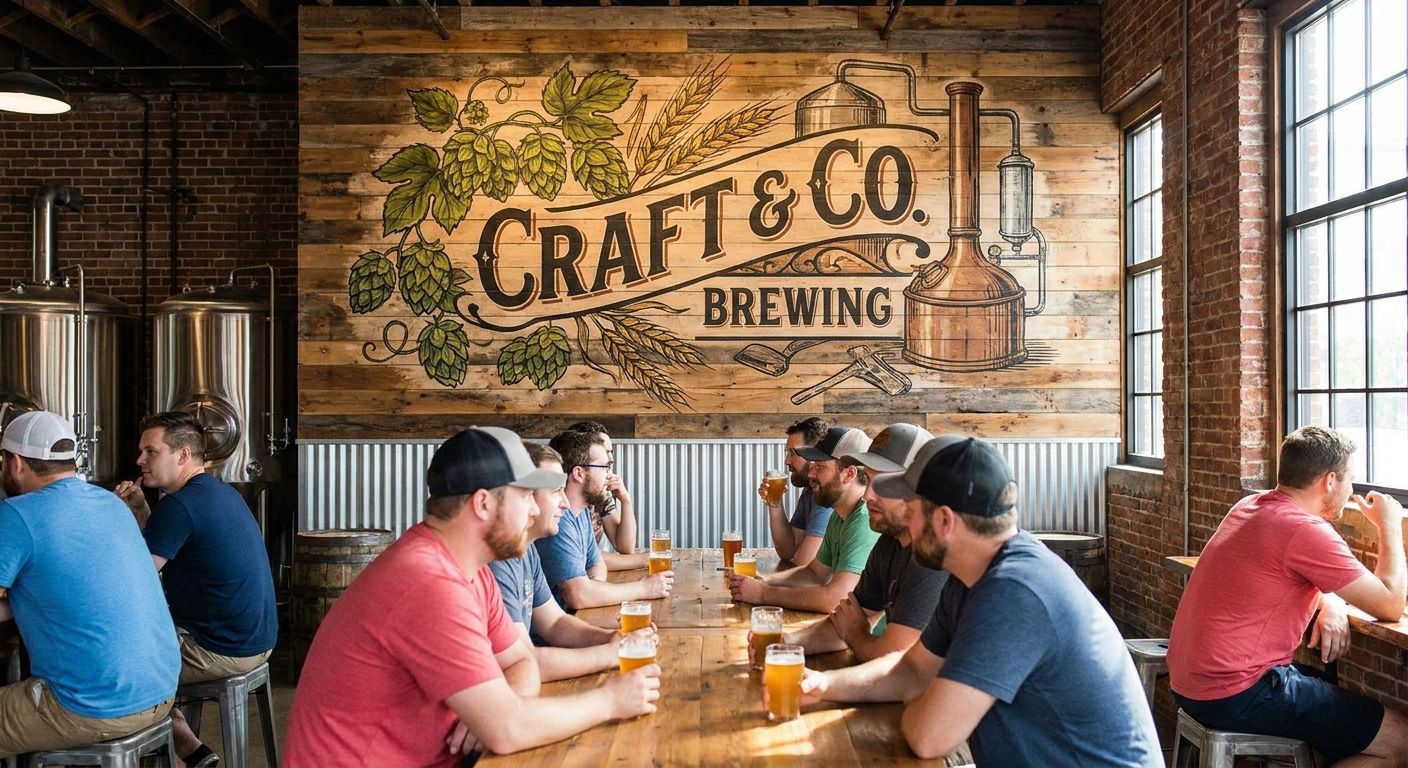
Wall art for a brewery taproom or craft beer bar has to survive foot traffic, spilled pints, and walls the size of a shed — a framed print built for a lounge room won't cut it.
- Wall art for brewery taprooms needs oversized scale, spill-tolerant materials, and imagery tied to place — canvas beats glass-framed prints here.
- Golden Lightning Strikes ($1,360) and Black Cockatoos with Banksia ($2,550) from Gioia Wall Art suit exposed-brick feature walls. Buy.
- Skip glazed frames near taps and steam vents — condensation and glare ruin the display within months of a 2026 fitout.
- Budget one statement piece per 3-4 metres of wall instead of scattering small prints across a warehouse-scale taproom.
Why this matters
A brewery's fit-out budget usually goes on the tanks, the bar, and the seating — wall art gets an afterthought and a handful of framed posters from a print shop. That's a mistake in 2026, when craft beer bars compete on atmosphere as much as beer list, and a bare 4-metre brick wall behind the taps photographs badly for every Instagram post a customer takes. Gioia Wall Art works with hospitality operators sourcing pieces for exactly this kind of space, and the brief is always the same: big, durable, and specific to the brand, not generic pub decor.
Who this is for
This guide is for brewery owners, taproom managers, and hospitality fitout designers sourcing wall art for craft beer bars, breweries, and beer gardens — spaces with tall ceilings, industrial finishes, and heavy foot traffic where standard home decor doesn't hold up.
What to look for in wall art for a brewery
Scale that matches warehouse-height walls
Most breweries operate in converted warehouses or industrial units with ceilings well above 3.5 metres, and a 60cm print looks lost on a wall that size. Go oversized — a single statement canvas at 100cm-plus, or a cluster of large pieces, reads as intentional rather than an afterthought. If your venue has soaring ceilings, treat the wall space like large wall art for high-ceiling homes — the same scale logic that works in a double-height living room applies to a taproom.
Materials that handle spills, steam, and humidity
Breweries run wet — condensation off cold-storage tanks, steam from the kitchen if there's a food menu, and the odd spilled schooner near the bar. Stretched canvas handles ambient humidity far better than a framed print under glass, which fogs and traps moisture behind the pane. Unframed or floating-frame canvas is the safer commercial pick.
Colour and texture that sits with brick, steel, and timber
Exposed brick, blackened steel, and raw timber dominate craft beer bar interiors, and wall art needs to hold its own against those textures rather than disappear into them. Warm ochres, deep charcoals, and bold abstract strokes read well against brick; softer botanical tones wash out. Look at how wall art for cafes and restaurants handles the same problem — hospitality spaces need art with enough contrast to hold up under low bar lighting.
Local or story-driven imagery that builds brand identity
A generic hops-and-barley print says nothing about your brewery specifically. Original paintings tied to place — Australian landscapes, native wildlife, regional colour palettes — do more work for brand identity than a stock illustration ever will, and they give customers something to talk about while they wait for a pour.
Framing built for commercial, high-traffic use
Glazed frames chip and crack near bar stools and foot traffic; unframed stretched canvas or a solid floating frame survives a knock much better. If a piece is going near seating or a walkway, mounting security matters as much as the art itself — get this wrong and you're re-hanging pieces every few months.
Cost that scales across multiple walls
A taproom fit-out often needs coverage across three or four feature walls, not just one, so budget per square metre rather than per piece. Mixing one or two originals with more affordable canvas prints keeps the visual impact high without blowing the art budget on a single 4-metre wall.
Top picks for breweries and craft beer bars
Golden Lightning Strikes — the energy pick. Alanah Jarvis's acrylic painting captures the moment light hits a landscape, at $1,360 for a 76cm-plus canvas that reads as a bold feature against exposed brick or blackened steel. Craft beer bars leaning into an industrial-moody aesthetic get instant visual anchor from this one piece. Buy.
Black Cockatoos with Banksia — the Australian-story pick. Susan Trudinger's textured, light-filled painting of native cockatoos among Banksia blooms gives a brewery a distinctly local identity at $2,550, and it works especially well near a bar area where guests linger and look closely at detail. Buy.
Ochre Rush — the warm-tone pick. Victoria Pynt's oil-on-linen piece at $1,900 leans into terracotta and rust tones that sit naturally with timber bar tops and raw brick. It needs framing before hanging, so factor that into install timing for a venue opening. Consider.
Where The Wild Things Grow — the wildcard. Tara Lewis's large abstract, inspired by Queensland ranges, comes in at $3,280 and covers serious wall real estate on its own — a single-piece solution for a brewery's biggest, hardest-to-fill wall. Buy if you've got one dominant feature wall to solve in one hit.
Apple & Snail — the budget-conscious pick. John Graham's oil painting at $900, with a floating frame at just 32.5cm square, is a smaller-format option for filling gaps between bigger pieces or dressing a smaller bar nook rather than a main taproom wall. Consider for secondary spaces, not the hero wall.


What to avoid
- Glazed frames near the bar or taps. They look sharp in a showroom photo, but steam and condensation fog the glass within a season, and glare under bar lighting kills visibility anyway.
- Small, scattered prints on big brick walls. A gallery wall of 30cm prints can work in a lounge room, but on a 4-metre industrial wall it just looks under-committed — go big or group tightly with intent.
- Generic beer-themed clip art. Hops illustrations and "cheers" typography prints are the wallpaper of every second craft beer bar — they don't build brand recall the way a distinctive original painting does.
“If the artwork can't survive a beer sloshed across the bar, it doesn't belong on a brewery wall.”
Before any of these pieces go up, check the hanging hardware is rated for the weight and the wall type — a stretched canvas at 100cm-plus needs proper D-rings and wall anchors, not a nail. The guide on hanging heavy canvas prints safely covers the load-bearing basics for exactly this kind of commercial install.
Verdict comparison
| Pick | Best for | Format | Price (AUD) | Verdict |
|---|---|---|---|---|
| Golden Lightning Strikes | Feature wall, industrial mood | Stretched canvas | $1,360 | Buy |
| Black Cockatoos with Banksia | Local brand identity | Stretched canvas | $2,550 | Buy |
| Ochre Rush | Warm-toned bar area | Oil on linen, unframed | $1,900 | Consider |
| Where The Wild Things Grow | One dominant wall | Large canvas | $3,280 | Buy |
| Apple & Snail | Small nooks, secondary walls | Floating frame | $900 | Consider |
A taproom fit-out in 2026 doesn't need every wall filled with an original — mixing one hero piece with more affordable canvas prints from Gioia Wall Art across secondary walls keeps costs sane while still landing the visual impact where it counts. If your venue leans more wine bar than beer hall, the same scale and material logic carries over — see wall art for wine lovers and home bars for the adjacent playbook.
FAQ
What's the best wall art for a brewery taproom?
Oversized stretched canvas with bold colour or texture works best for brewery taprooms in 2026, since it handles humidity and holds up against exposed brick and steel. Original paintings tied to place, like native wildlife or regional landscapes, add brand identity that generic prints don't.
Is canvas or framed art better for a craft beer bar?
Canvas is better for craft beer bars because glazed frames fog with condensation and glare under bar lighting. Unframed or floating-frame canvas survives spills and knocks from foot traffic far more reliably.
How big should wall art be for a brewery with high ceilings?
Go for pieces at 100cm or larger on walls above 3.5 metres, since smaller prints get visually lost. One large statement piece per 3-4 metres of wall reads as intentional rather than an afterthought.
Does humidity in a brewery damage wall art?
Humidity from cold-storage tanks and steam can fog glazed frames and warp unsealed paper prints. Stretched canvas handles ambient moisture far better and is the safer material choice for a working brewery.
How much does original wall art cost for a commercial space in Australia?
Original paintings for hospitality venues in Australia typically range from around $900 for a smaller floating-frame piece to $3,000-plus for a large statement canvas, based on pricing from Gioia Wall Art in 2026. Mixing one original with lower-cost canvas prints keeps a multi-wall fit-out affordable.
Can original paintings survive a working brewery environment?
Yes, provided they're positioned away from direct steam, taps, and high-splash zones and hung with commercial-rated hardware. Stretched, varnished canvas is more resilient than paper prints or glazed frames in these conditions.
What styles suit craft beer branding on walls?
Bold abstracts, warm ochre and earthy tones, and Australian landscape or wildlife pieces tend to suit craft beer branding better than literal beer-themed clip art. The goal is a distinctive visual identity, not decor that reads as generic pub theming.
Should every wall in a taproom have art?
No — concentrate budget on one or two hero walls with large statement pieces and leave secondary walls simpler or use smaller, more affordable canvas prints. Overfilling every surface in a brewery dilutes the impact of the feature pieces.
One last thing
The detail most brewery fit-outs miss isn't the art itself — it's lighting. A $2,500 original painting under flat fluorescent tube lighting looks flat and cheap; the same piece under a warm-toned spotlight angled at 30 degrees reads as a genuine feature. Sort the lighting plan before the art order goes in, not after.