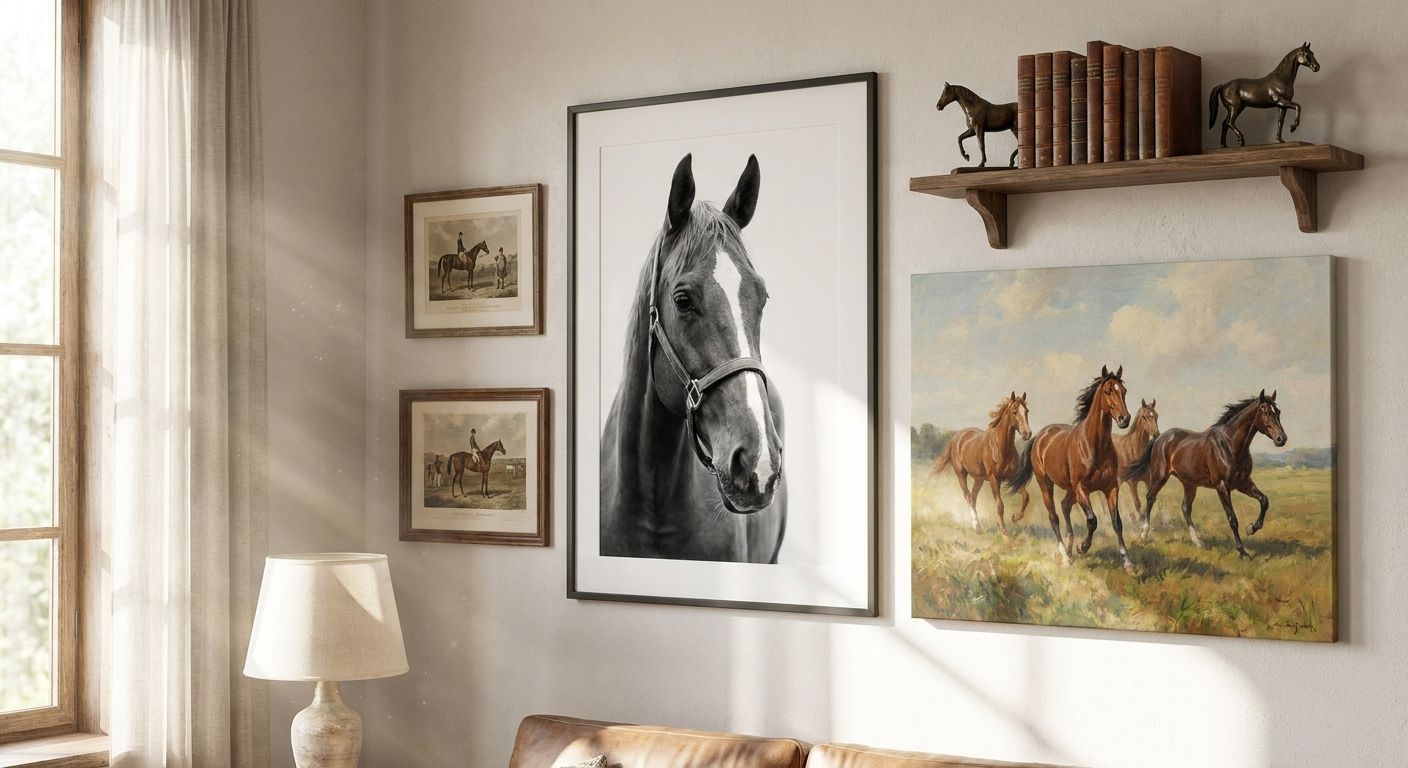
Horse and equestrian imagery brings movement, warmth and a country-luxe edge to a room, and getting it right in 2026 means matching the mood of the piece to your interior, not grabbing the first horse print you scroll past.
- Wall art for horse lovers works best as one statement piece per wall, not a cluttered gallery of small prints.
- Original equine-adjacent paintings on gioia.com.au span $380 to $4,890 depending on scale and medium in 2026.
- Black-and-white equestrian photography suits Hamptons and coastal rooms; bold brushwork suits farmhouse and industrial spaces.
- Undersized horse prints on large walls are the most common styling mistake equestrian buyers make.
Why this matters
Horse imagery is one of the few motifs that reads as premium at almost any budget — a $150 photographic print and a $3,000 original oil can both anchor a room if the scale and tone are right. Get the scale wrong, though, and even a beautiful piece looks like an afterthought above the mantel. The goal for 2026 isn't finding "a horse picture" — it's finding the right horse picture for your specific wall, light and colour scheme.
Who this is for
This guide is for anyone decorating around a genuine love of horses — riders, country-property owners, Hamptons and French Provincial homeowners, and anyone who wants the energy of a galloping horse without tipping into a hunting-lodge cliché. It covers what to look for, which formats work in which rooms, and what to skip. Browse the full Gioia Wall Art range before you commit to a size or finish.
What to look for in wall art for horse lovers
Movement over stillness
A horse standing still in a paddock photo reads as decoration; a horse mid-gallop reads as art. Movement gives the eye somewhere to travel across the canvas, which matters more in open-plan living areas than in a quiet study.
Tone matches your interior palette
Equestrian art leans heavily on browns, creams, charcoal and dust tones — great for Hamptons and French Provincial rooms, harder in a cool Scandinavian palette. Check the dominant tone of the piece against your walls and sofa before buying, not after it's hung.
Scale for the wall, not the frame
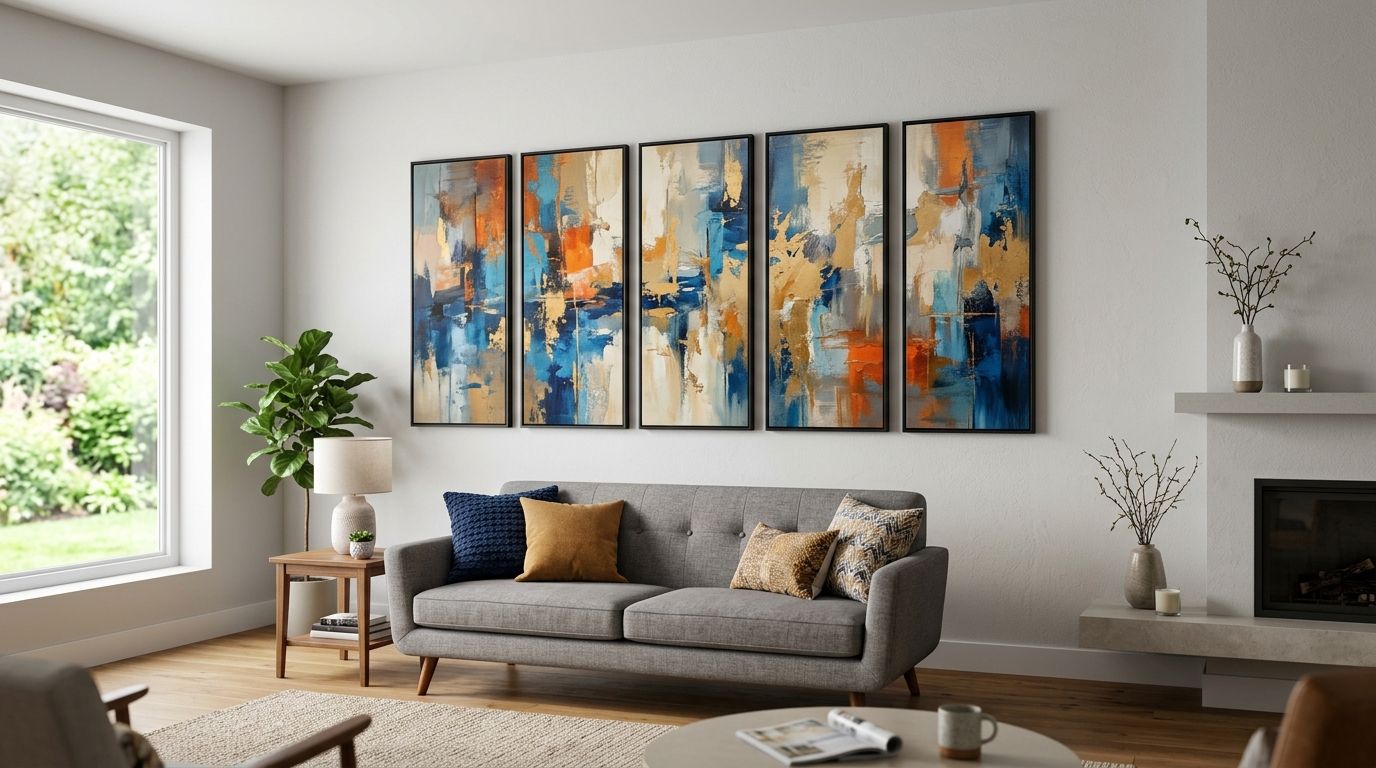
A 40cm print on a 3-metre living room wall disappears. The rule of thumb interior stylists use is filling roughly two-thirds to three-quarters of the available wall width above furniture — for horse art specifically, bigger almost always reads better because the subject has natural motion and mass.
Medium: photography, oil-style print, or original painting
Black-and-white photography suits coastal and Hamptons interiors. Oil-style reproductions and textured canvas suit French Provincial and modern farmhouse rooms. An original painting suits anyone who wants a one-of-a-kind piece rather than an edition print.
Framing and finish for horse-brown and neutral tones
A thin black or natural timber frame keeps equestrian art from feeling dated; heavy gilt frames push it toward traditional-lodge territory, which works only if the rest of the room commits to that look.
“A galloping horse print rarely has a bad focal point, which is why it works as the anchor piece in almost any room.”
Top picks
The classic pick — equestrian photography. Black-and-white or sepia-toned photographic prints of horses in motion are the safest entry point because they sit neutrally against almost any wall colour. One clean, large-format print above a console or sofa does more work than three small ones scattered across a wall. Buy if your room is coastal, Hamptons or minimalist.
The heritage pick — vintage-style equine paintings. Oil-style reproductions with visible brushwork and warm ochre-and-brown palettes suit country-luxe and traditional interiors, and they pair naturally with timber furniture and French Provincial detailing. Check the modern farmhouse wall art guide for palette pairings if your home leans that direction. Buy for farmhouse, French Provincial or traditional living rooms.
The statement pick — large-scale galloping horse canvas. For double-height living rooms or stairwells, a single oversized canvas beats a cluster every time — the large wall art for high ceilings guide covers proportion rules for exactly this scenario. Buy if your ceiling clears 2.7 metres and the wall runs uninterrupted.
The layer pick — pairing with other animal art. If your home already has dog or cat portraiture, a single horse piece can anchor a broader animal-art gallery wall rather than competing with it — see wall art for dog and cat lovers for grouping ideas. Consider this only if you're building a mixed-species gallery wall, not a single-species room.
What to avoid
- Undersized prints on feature walls. A 30-40cm horse print on a 3-metre wall looks like it wandered in from another room — go bigger or group it into a considered cluster instead.
- Stock-photo prints blown up past their resolution. Cheap horse photography enlarged beyond its native size pixelates at close range; check the print's maximum recommended size before ordering.
- Literal hunting-lodge clichés in a modern home. Antique brass frames and sepia hunt scenes only work when the rest of the room commits to that traditional look — dropped into a Scandinavian or minimalist space, they clash rather than anchor.
Verdict comparison
| Pick | Best room | Format | Verdict |
|---|---|---|---|
| Equestrian photography | Living room, hallway | Black-and-white or sepia print | Buy |
| Vintage-style equine painting | Farmhouse, French Provincial living room | Oil-style canvas | Buy |
| Large galloping horse canvas | High-ceiling living room, stairwell | Oversized canvas | Buy |
| Mixed animal gallery piece | Gallery wall with pet portraiture | Framed print or canvas | Consider |
Original paintings across the wider Gioia Wall Art collection in 2026 range from $380 for smaller studio works up to $4,890 for large statement originals — a useful budget anchor even when shopping specifically for equestrian pieces, since horse art sits in the same size-and-medium bands.
FAQ
What's the best wall art for horse lovers in a living room?
A single large-format equestrian photograph or canvas above the sofa works best in 2026, filling roughly two-thirds of the wall width rather than several small prints. Black-and-white photography suits coastal and Hamptons rooms; oil-style canvas suits farmhouse interiors.
Is a horse painting better than a horse photograph for wall art?
Neither is universally better — it depends on your interior style. Photography reads cleaner in modern and coastal rooms, while painted or oil-style textures suit French Provincial and farmhouse interiors.
How big should equestrian wall art be above a sofa?
Aim for roughly two-thirds to three-quarters of the sofa's width. A print that's too small above a sofa is the single most common styling mistake with horse wall art.
Does horse wall art work in a modern minimalist home?
Yes, if you choose black-and-white or muted-tone photography rather than warm ochre oil-style pieces, which read as more traditional. Keep the frame thin and the palette restrained.
Can you mix horse art with other animal wall art?
Yes — a single horse piece can anchor a broader gallery wall alongside dog, cat or bird portraiture as long as the frames and tones stay consistent across the grouping.
What colour palette works best with equestrian wall art?
Warm neutrals — cream, ochre, charcoal and timber tones — pair most naturally with equestrian imagery, especially in French Provincial and farmhouse rooms. Cooler grey-blue palettes suit black-and-white photographic versions instead.
Are original horse paintings worth buying over prints?
Original paintings cost more but give you a one-of-a-kind piece rather than an edition print, and originals on gioia.com.au in 2026 range from $380 to $4,890 depending on size and artist.
One last thing
Monochrome galloping-horse prints outperform coloured ones for a simple reason: stripped of colour, the subject reads as texture and motion rather than a specific palette, so it works against almost any wall colour you already own. If you only buy one piece from this guide, that's the safest bet for 2026.