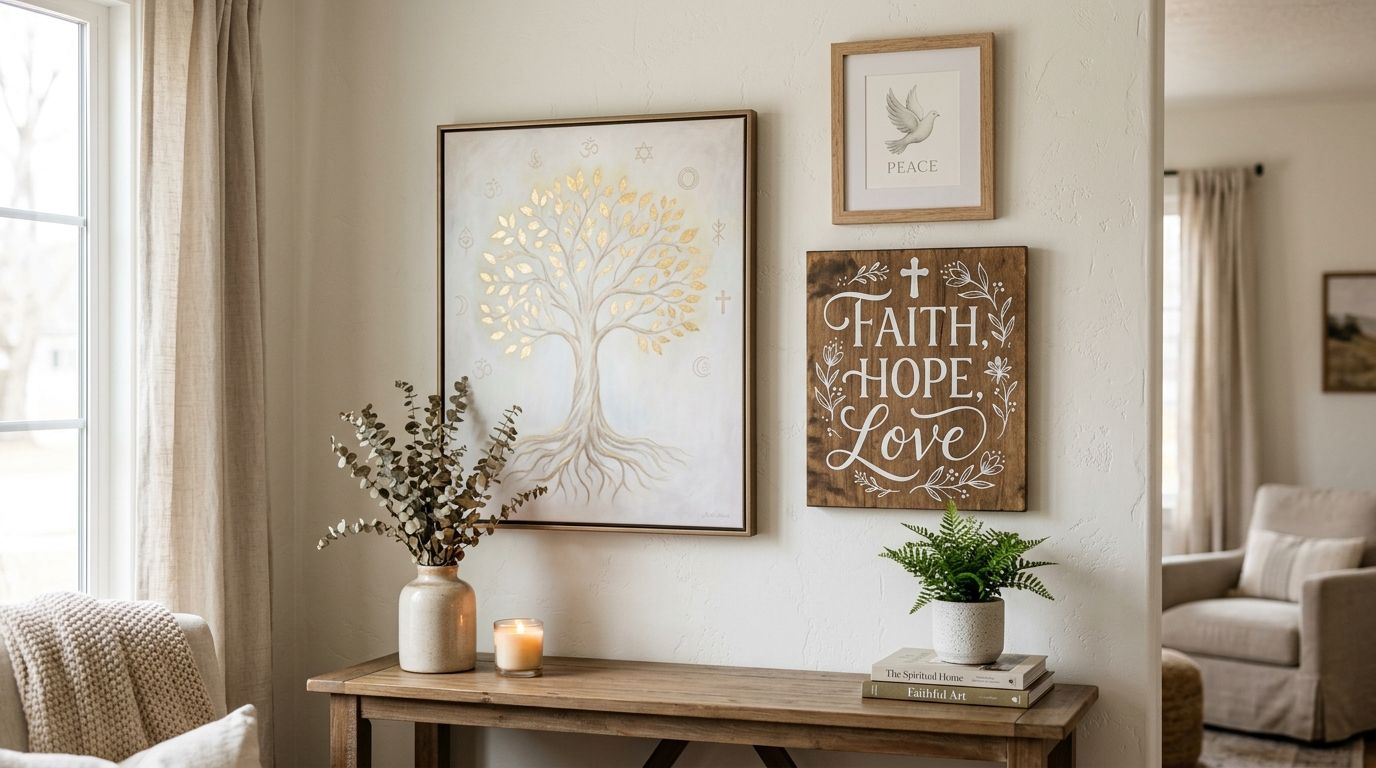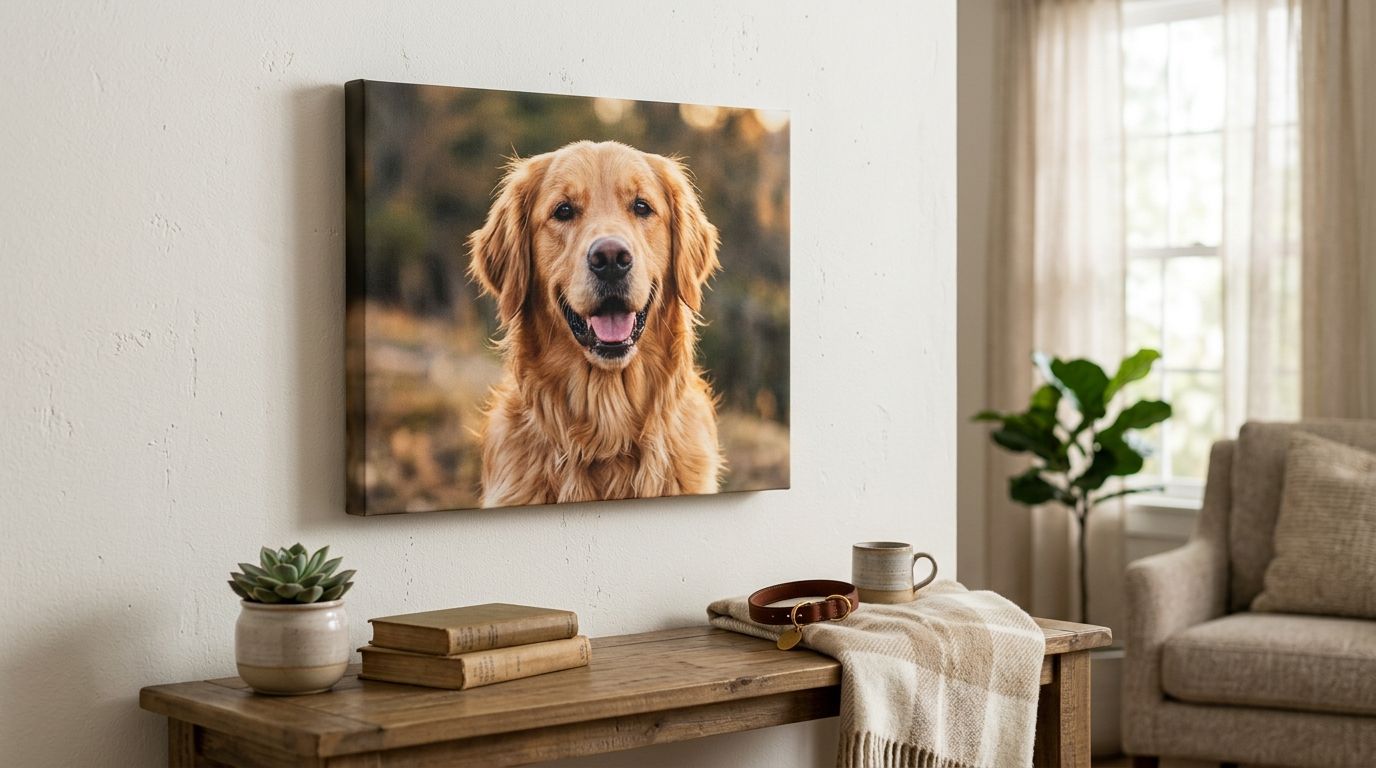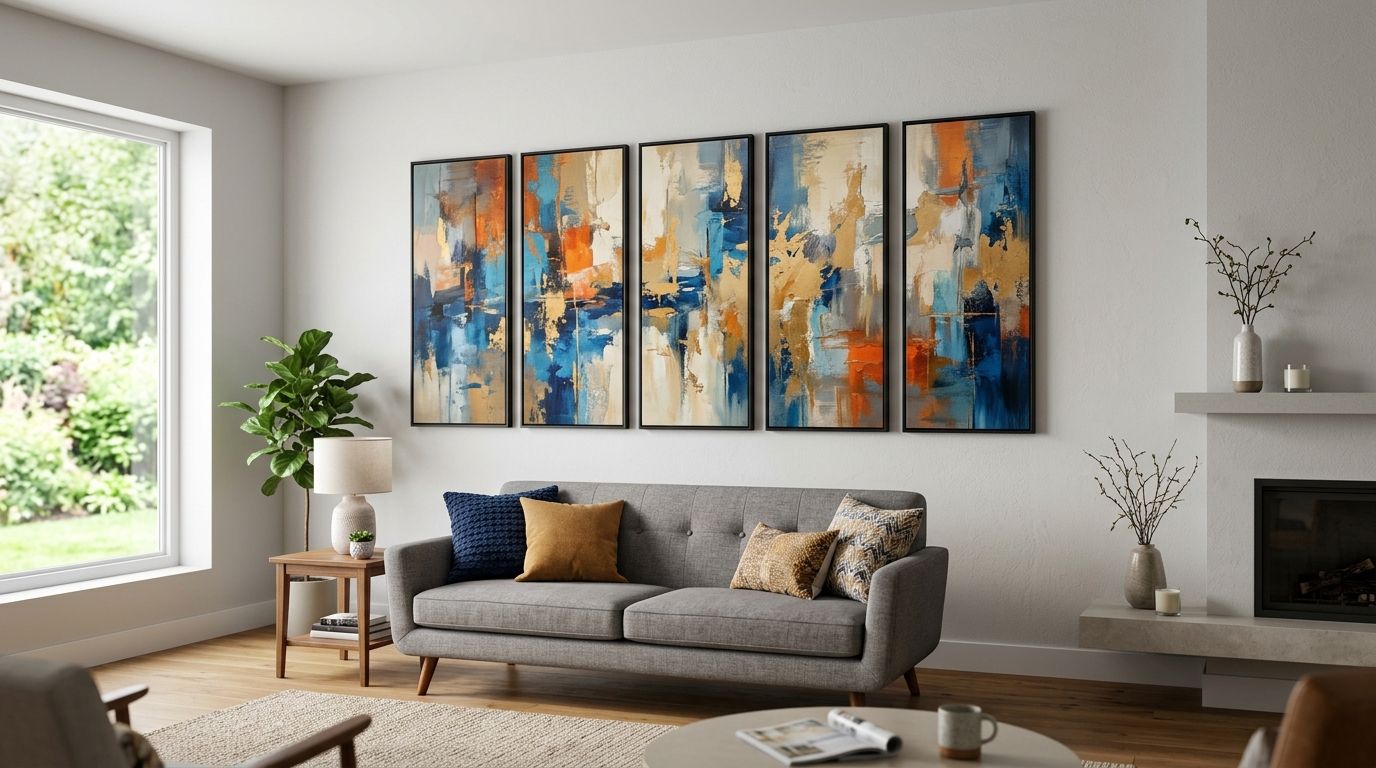
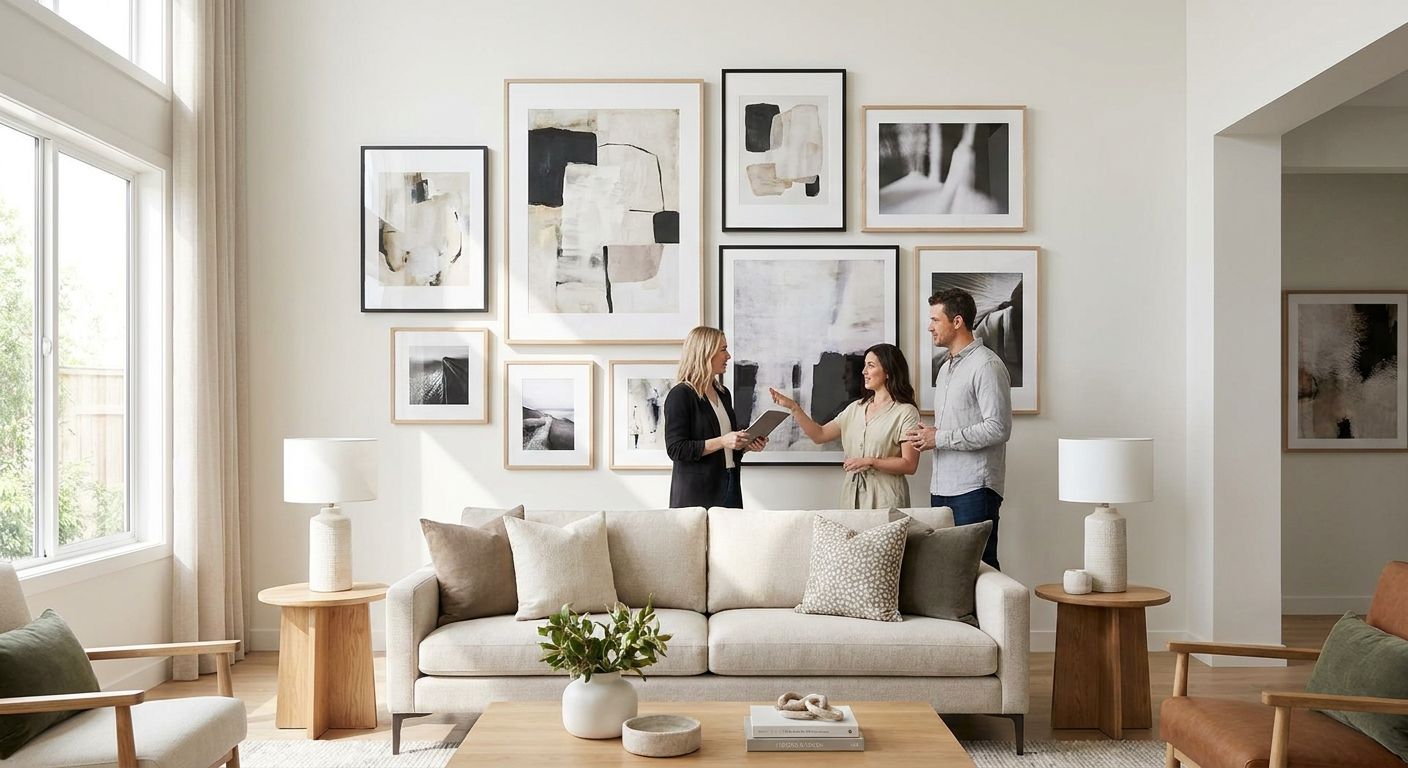
Wall art for display homes is artwork chosen to sell a lifestyle to hundreds of walk-through strangers rather than to please one homeowner for the next ten years, and that single difference changes the brief, the budget and the hanging plan. A display home or showroom has to read as "the life you want" within seconds, to a buyer pool with wildly different tastes, on a display schedule that repeats across multiple lots. Personal taste becomes a liability in this segment, not a feature.
- Wall art for display homes works hardest on three walls: the entry, the living room feature wall and above the sofa.
- Canvas prints outlast framed glass across a busy display home schedule with agents, tradies and buyer families moving through daily.
- Order matched art sets across a display village rather than one-off pieces per house to keep styling costs predictable in 2026.
- Gioia Wall Art's canvas range suits display homes needing broad-appeal, repeatable pieces across multiple lots.
Why wall art matters for display homes and showrooms
A display home gets more foot traffic in a single open weekend than a private house sees in a year, and every visitor is quietly answering one question before they read a single spec sheet: could I see myself living here? Wall art is one of the fastest ways to answer that question, faster than cabinetry finishes or floor plan flow, because it hits the eye before anything else registers.
Builders and display village managers also carry a constraint private homeowners never deal with. The same wall has to work for dozens of different buyers' tastes inside one display cycle, then get restyled and repeated across the next lot in the village. Gioia Wall Art works with exactly this brief: broad-appeal canvas that holds up to repeat handling and reads well in listing photography, not one precious piece for one household.
“A display home sells a lifestyle to strangers, not a home to one buyer, so the walls have to work for the crowd, not the curator.”
How to choose wall art for display homes in 2026
Display home styling in 2026 still runs on the same three constraints every display village manager knows: volume, durability and broad appeal. Work through these steps in order rather than picking art wall-by-wall.
Match the art to the display home's design brief
Every display home is styled to a theme before a single artwork goes up — Hamptons, coastal, Japandi, modern farmhouse — and the wall art needs to read as part of that theme within three seconds of walking through the front door.
- Pull the palette from the display home's cabinetry and flooring finishes first, then choose art to match, not the other way around
- Match the era of the artwork to the era of the build; a coastal new-build reads wrong with heavy gilt frames
- Stick to one dominant style per home — mixing three aesthetics on one floor plan reads as budget confusion, not curation
- Walk the display home empty before ordering, and note exactly where the eye lands first from the entry
- Check the builder's target buyer profile for the range — young family, downsizer, first-home buyer — and let that steer the mood
- For finished new-build homes rather than showrooms, the guide on best wall art for a new build home covers the same broad-appeal logic in a live-in setting
Scale your order across the whole display village
One-off framing runs are the single biggest line-item blowout in display home styling, because pricing and lead times both punish small, inconsistent orders placed house by house.
- List every wall across every lot in the village that needs art before placing a single order
- Standardise on two or three canvas sizes across the village so frames, hooks and wall space stay interchangeable
- Order matching but not identical pieces for repeat house designs, so the village doesn't look copy-pasted between lots
- Build a simple spreadsheet of wall, size and artwork so the styling team isn't re-measuring every changeover
- Batch orders quarterly rather than per-house to smooth out lead times across a busy display calendar
Choose materials that survive hundreds of walkthroughs
Framed glass and paper posters don't survive a six-month display schedule with agents, tradies and buyer families moving through daily; canvas is the one material built for that kind of repeat wear.
- Skip glass near entry doors and hallways, where accidental knocks are common during open inspections
- Choose stretched canvas over paper posters for anything staying up longer than one display cycle
- Keep delicate original paintings out of open inspection traffic unless the room is roped off
- Ask about UV-stable printing if the display home has large uncovered windows, since direct sun fades cheap prints within months
- Gioia Wall Art's canvas prints are built for exactly this kind of repeat rehanging between properties, not a one-and-done hang


Anchor the three sightlines that sell the home
Buyers form their first impression standing at the front door and looking straight through the home, so three walls do almost all the persuading.
- The entry wall, the first thing every visitor's eye hits stepping inside
- The living room feature wall, visible from the kitchen, dining and entry at once in most open-plan builds
- The wall above the sofa, the backdrop for every listing photo taken in the main living zone
- Skip transitional spaces like laundries and linen cupboards; buyers barely register them on a walkthrough
- Save bedroom walls for last, since most buying decisions form in the first three rooms toured
Keep the palette broad enough for a stranger's taste
A display home's art has to appeal to a buyer pool, not a single household, which means bold personal statements underperform neutral, broadly likeable pieces.
- Favour landscapes, abstracts and botanicals over portraiture or figurative work with a strong personal subject
- Test any statement piece by asking whether it would suit three different buyer demographics, not just the target one
- Avoid text-heavy or slogan art in display homes; it reads as personal rather than aspirational
- Choose warm neutral or tonal palettes that photograph well under the display home's existing lighting
- Save bold colour for one accent wall maximum per home, never the whole floor plan
Budget per property, not per piece
Pricing wall art house-by-house instead of village-wide makes a styling budget impossible to forecast and hard to defend to a builder client.
- Set a total styling budget per display home first, then divide it across walls by priority
- Weight the budget toward the three sightline walls above; secondary rooms get the leftover
- Negotiate volume pricing when ordering the same canvas size across multiple lots
- Track cost per wall, not cost per artwork, so reordering after damage doesn't blow the annual number
- Review the budget every display village cycle, not once a year
Plan the rotation between display stock changeovers
Display homes get restyled between builder promotions, seasonal refreshes and buyer feedback, and the art needs a rotation plan as much as the furniture does.
- Keep a stock list of what's hung where so changeovers don't start from a blank page
- Rotate seasonal accent pieces without touching the three anchor walls
- Retire and resell artwork showing obvious wear before it appears in listing photos
- Reuse strong performers across the next display village rather than sourcing new art from scratch each time
- Keep one universal backup piece per wall size on hand for quick damage replacement
Wall art options for display homes compared
| Option | Best for | Key limitation |
|---|---|---|
| Canvas prints | High-traffic sightline walls across a display village | Less premium feel than an original for luxury-tier builds |
| Framed prints | Secondary rooms and offices within the display home | Glass risk near entries and busy hallways |
| Original paintings | One signature piece in a luxury display home's living zone | Higher per-piece cost and delicate under open inspection traffic |
| Unframed posters | Budget display homes or short-run project home ranges | Reads cheaper in listing photography, needs frequent replacement |
| Peel-and-stick wallpaper | One feature wall to differentiate a repeat floor plan | Not suited to entries with heavy foot contact |
Canvas prints win on durability and repeatability for a display village; original paintings win on impact for a single luxury showroom feature wall.
Common mistakes display home stylists make
- Buying one artwork per house instead of per wall — this leaves secondary rooms bare in listing photos and undersells the floor plan.
- Choosing art that matches the stylist's taste, not the buyer profile — a display home isn't a personal home, and broad appeal outperforms personal favourites every time.
- Using framed glass at entries — the first wall buyers pass is also the one most likely to get knocked during an open inspection.
- Skipping a rotation plan — art left up past its display cycle looks tired in a segment where "new home" is the entire pitch.
- Under-scaling art for open-plan living zones — a small canvas on a large feature wall reads as an afterthought rather than a styling decision.
FAQ
What's the best wall art for display homes?
Canvas prints in broad-appeal landscape, abstract or botanical styles work best for display homes in 2026 because they survive repeat handling and photograph well for listings. Avoid personal or text-heavy art that narrows buyer appeal.
Should display homes use canvas prints or framed prints?
Canvas prints are the better default for display homes, especially near entries and hallways, because framed glass risks damage from open inspection traffic. Framed prints still work in secondary, lower-traffic rooms.
How much wall art does a display home need?
Most display homes need art on at least three sightline walls: the entry, the living room feature wall and above the sofa. Secondary rooms can carry lighter, smaller pieces or none at all.
Is original art worth using in a display home?
Original art works as a single signature piece in a luxury-tier display home's living zone, but it costs more per piece and needs protection from open inspection traffic. Canvas prints are the safer choice for volume styling across a village.
How often should display home art be rotated?
Rotate accent pieces at each seasonal refresh or builder promotion, and keep the three anchor walls stable between full display cycles. Retire anything showing visible wear before it appears in new listing photography.
What size wall art works best above a display home sofa?
Size the piece to roughly two-thirds the width of the sofa so it anchors the seating zone without overwhelming it. Undersized art above a sofa is one of the most common styling misses in open-plan display homes.
Does wall art affect how buyers perceive a display home?
Yes, wall art shapes first impressions before a buyer reads a single spec sheet, because it's one of the first things the eye registers walking through the entry. Broad-appeal, well-scaled art supports the lifestyle a display home is built to sell.
Can the same wall art be reused across multiple display homes?
Matched but not identical canvas sets can be reused across a display village to control cost, as long as sizing and placement stay consistent. Identical art on every lot can make the village feel copy-pasted rather than curated.
One last thing
The entry wall does more selling than any other wall in the house, because it's the only one every single visitor sees before they've formed an opinion about anything else. Style that wall like it's the only one that matters — for the first four seconds of a walkthrough in 2026, it is.