Real estate stagers and agents choose wall art to help strangers picture themselves living somewhere else, not to express anyone's personal taste. This is what actually earns wall space in a 2026 staging job, and what kills a listing photo.
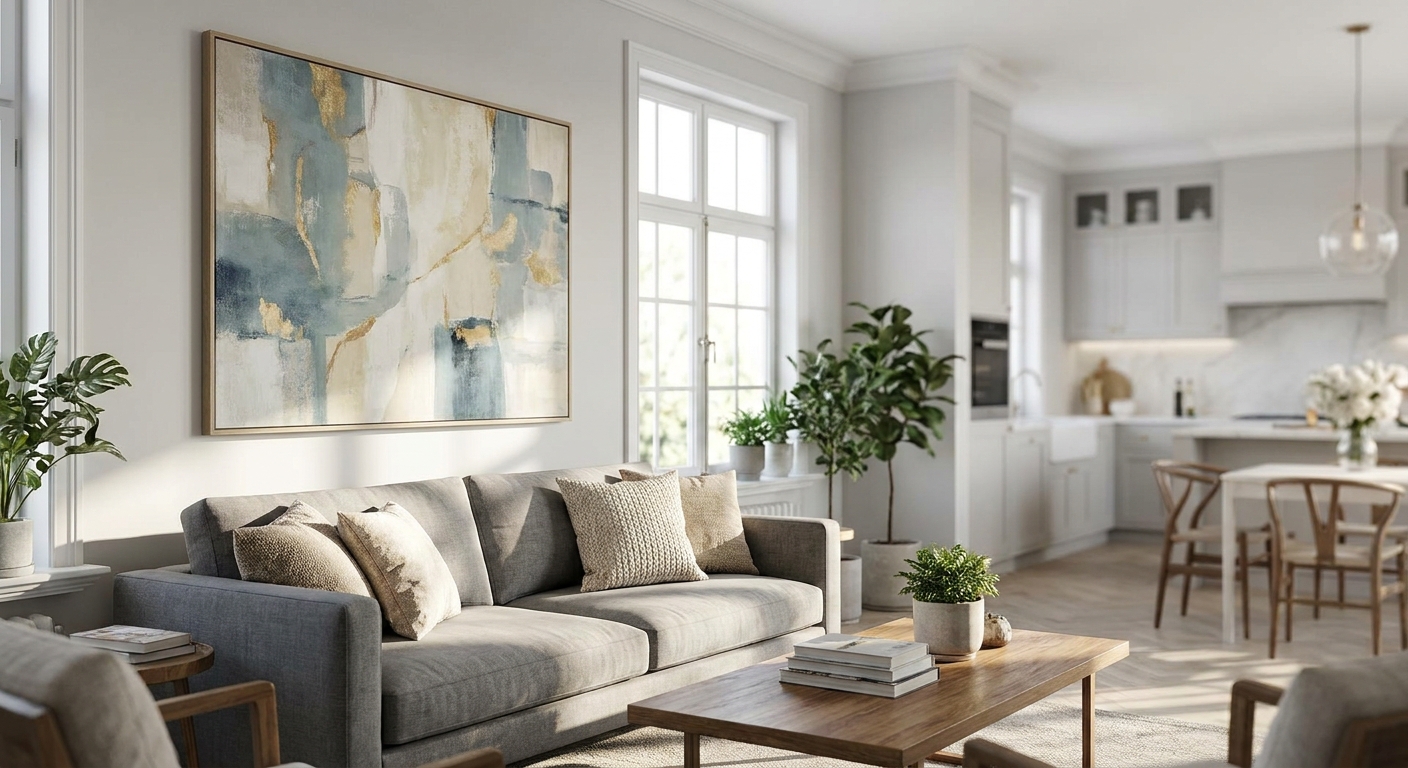
- Large abstract or landscape canvases win for open-plan staging in 2026 — buy for broad buyer appeal.
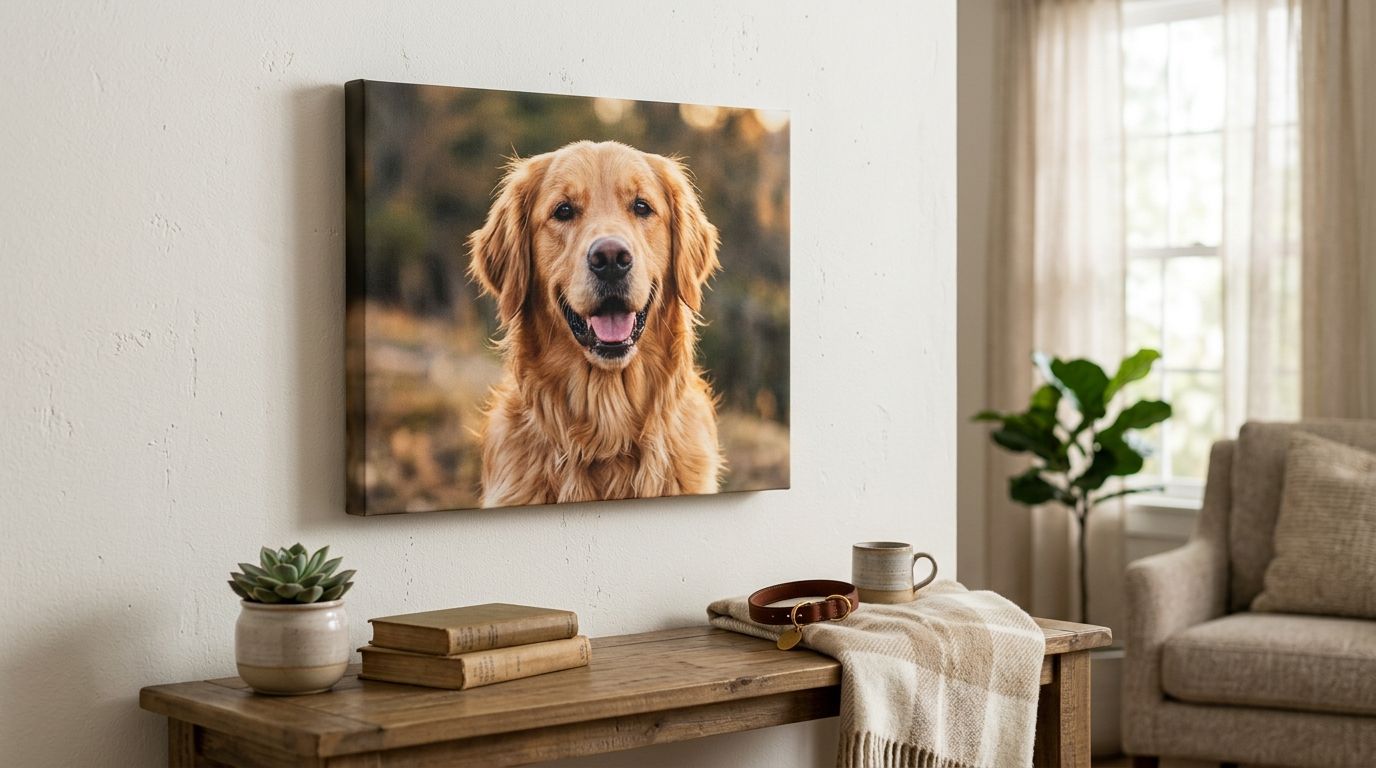
- Skip family photos and trend-led prints; they read as 'someone else's home' to a buyer.
- A single large canvas beats a matching pair in a listing's hero shot — one focal point, not two.
- Original paintings from $410 to $5,500 suit luxury listings; standard canvas prints suit a one-off vendor sale.
Why this matters
A staged wall either moves a buyer's eye through a room or stops it at the doorway. Listing photos get scanned in seconds on Domain and realestate.com.au, and a wall that reads cluttered or too personal reads that way in a thumbnail before anyone opens the floor plan. Agents don't need art that photographs well on its own — they need art that photographs well next to a price. That's a different brief to decorating a home someone actually lives in, and it's one of the few variables a stager fully controls before a 2026 open home.
Who this is for
This is written for agents commissioning styling, professional stagers working several properties at once, and vendors staging their own home before listing. All three share one constraint: the room has to read "this could be yours," not "this is mine." In an open-plan living and dining zone, where most buyers form their first impression, browsing Gioia Wall Art's canvas prints for open-plan living spaces narrows the brief faster than a personal mood board ever will.
What to look for in wall art for real estate staging
Neutral, broad-appeal palette
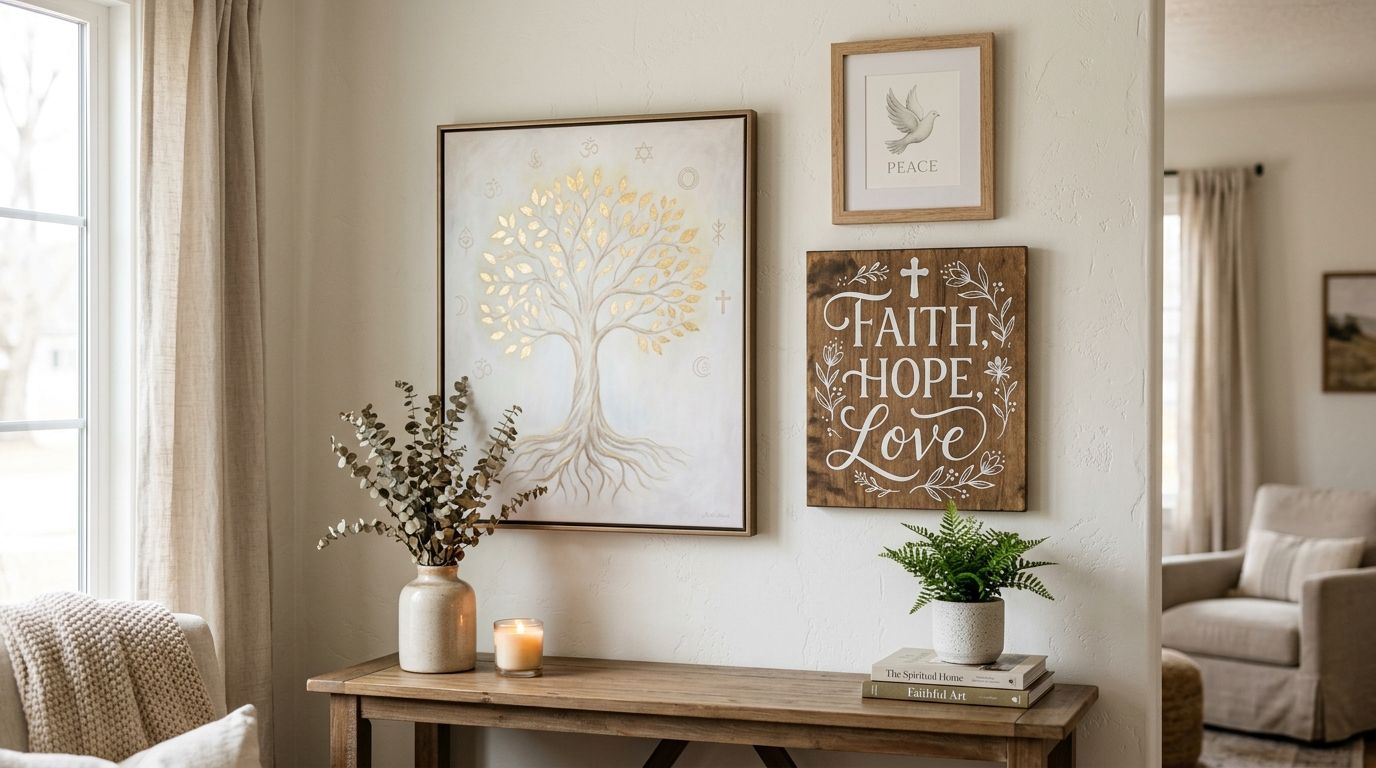
Buyers project their own furniture and mood onto a room, and supersaturated colour or a subject with strong personal meaning — family photos, a specific football team, religious imagery — works against that. Stick to landscapes, abstracts and architectural studies in tones already in the room: sand, charcoal, sage, ink blue.
Scale that matches the wall, not the room
A small print on a large wall photographs as an afterthought and makes the wall look bigger and emptier than it is, which is the opposite of what staging is for. As a rule of thumb, art above a console or sofa should cover roughly 60-75% of the available wall width.
“If a print doesn't read from six feet away, it's too small for a listing wall.”
Ready-to-hang turnaround
Staging jobs run on a listing date, not a production timeline. Canvas and framed prints that arrive ready to hang save the week a custom framing order would eat into, which matters when a shoot is booked for a specific Saturday in 2026's tight listing calendars.
Cost that survives multiple listings
Stagers reuse the same pieces across properties; agents and vendors usually don't. Canvas prints in the low hundreds make sense for a one-off vendor sale, while a stager running six properties a year gets more value from fewer, higher-quality pieces that travel well between jobs.
Frame finish that reads in photos
Ornate or heavily distressed frames photograph as dated in wide-angle listing shots, even inside a period home. A slim black or natural timber frame reads current in 2026 listing photography and works across more interior styles than an owner's personal frame choice would.
Placement that directs the eye toward the room's best feature
Art hung opposite the entry, above a fireplace, or at the end of a hallway does double duty — it fills a gap and pulls the buyer's eye toward the feature the agent actually wants photographed.
Top picks for staging jobs
The safe pick — open-plan living canvas. A single large-format abstract or landscape canvas over the sofa, sized to roughly 70% of the wall width. Gioia Wall Art's open-plan canvas range is built around exactly this brief, and it's the wall buyers spend the most time looking at during a walkthrough video. Buy for any open-plan living and dining zone.
The dining room anchor. One confident framed print above the sideboard or feature wall, sized to at least 90cm wide behind a table set for six — undersized art here is the single most common mistake in staged dining shots. See wall art for dining rooms for room-specific sizing. Buy — dining rooms photograph better with one strong piece than three small ones.
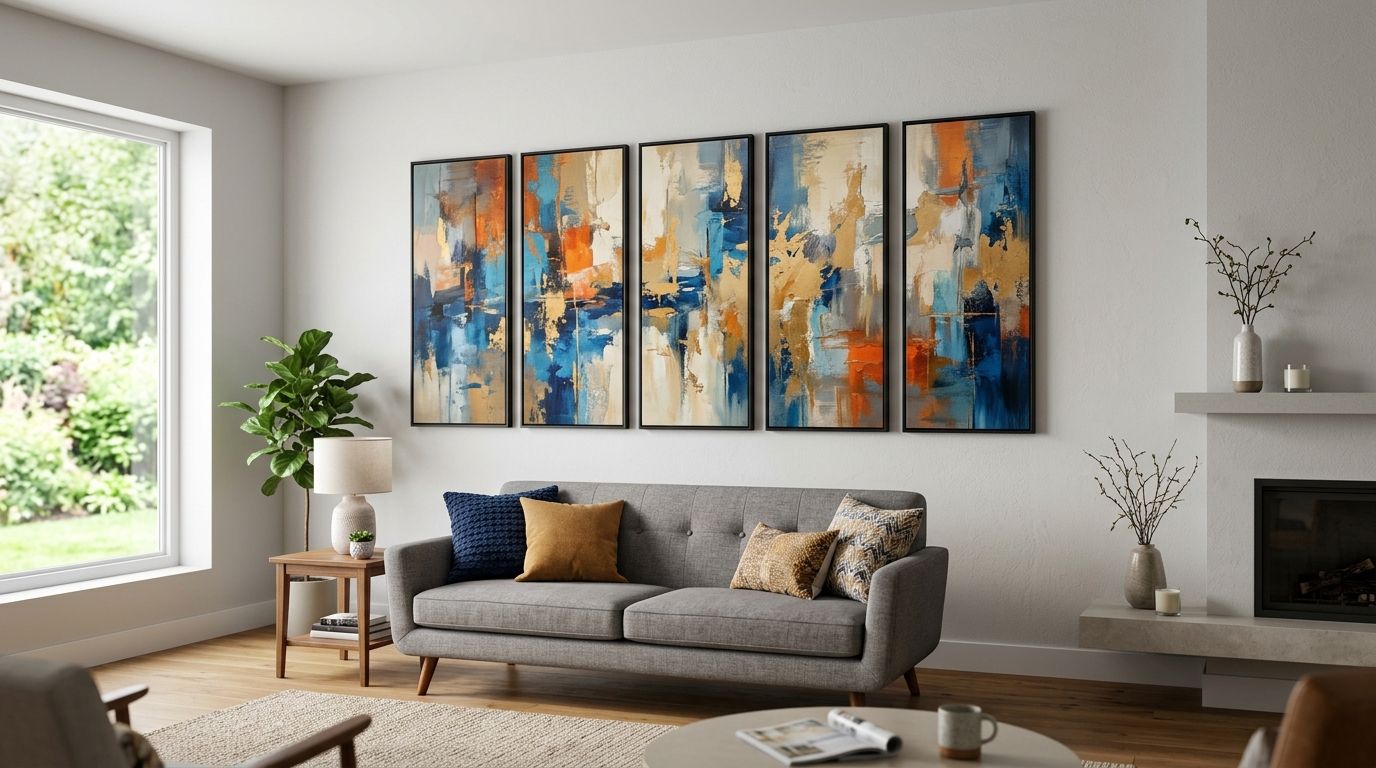
The wildcard — hallway gallery wall. A grouping of 3 or 5 framed prints along a hallway or staircase; odd numbers read as intentional in photos, even numbers read as leftover. It works in period homes with long corridors and crowds foot traffic in a narrow rental hallway. Consider — property-dependent, not a default.
The closer — statement piece for oversized walls. One large canvas of at least 150cm across for a double-height living wall or stairwell void; walls over 4 metres wide look scattered with grouped art from a street-facing hero shot. Buy for architect-built homes with generous ceiling height, Skip for standard project homes where the scale won't land.


What looks right and isn't
- Personal photography and family portraits — even tasteful black-and-white prints of the vendor's own kids read as "someone else's memories" to a buyer, working against the blank-slate feeling staging is meant to create.
- Trend pieces with a use-by date — a print built around a single-season colour trend can date a listing photo that stays live for months if the sale is slow.
- Anything smaller than the wall calls for — undersized art is an easy fix before the photographer arrives, and one of the most common misses in 2026 listings.
Sellers weigh a long list of pre-listing decisions beyond the walls. The same before-you-list logic that applies to radon mitigation before listing in markets where it's required applies to staging spend: fix what buyers will notice and skip what only the seller cares about. For a room-by-room breakdown that goes beyond staging, how to choose wall art for every room covers the same decisions for a home you're not about to sell.
Verdict by room
| Room | Best pick | Format | Verdict |
|---|---|---|---|
| Open-plan living/dining | Large abstract or landscape canvas | Single canvas | Buy |
| Dining room | Confident framed print, 90cm+ wide | Framed print | Buy |
| Hallway/staircase | Grouped gallery wall, 3-5 pieces | Odd-numbered framed grouping | Consider |
| Oversized/double-height wall | Single large-format canvas, 150cm+ | Canvas | Buy for architect homes, Skip for standard project homes |
FAQ
What is the best wall art for real estate staging in 2026?
A single large-format abstract or landscape canvas sized to 60-75% of the wall width above the main sofa or console is the safest pick for 2026 staging jobs. It photographs cleanly, reads as neutral, and avoids splitting a buyer's attention across multiple small pieces.
Should staged homes use original paintings or prints?
Standard listings do better with budget-friendly canvas prints since the art won't return on a one-off sale. Luxury listings can justify original paintings, which at Gioia Wall Art range from $410 to $5,500 depending on size and artist.
How big should wall art be for an open-plan living room during staging?
Art or a grouped arrangement should cover roughly 60-75% of the wall width above the sofa or console. Anything smaller reads as an afterthought in wide-angle listing photography.
Is framed or unframed wall art better for staging photos?
Framed prints generally photograph better in dining rooms and hallways because a slim black or timber frame reads current and adds definition against a plain wall. Unframed canvas works well for large statement pieces in open-plan living zones where a frame would compete with the room's own lines.
How many wall art pieces do you need to stage a three-bedroom home?
Most three-bedroom stagings need one statement piece in the living area, one anchor piece in the dining zone, and an optional gallery grouping in the hallway — three to five pieces total. Bedrooms usually only need art if they're staged as a secondary living space or home office.
Does wall art actually help sell a house faster in 2026?
Wall art doesn't sell a house on its own, but it directly affects how a room reads in the listing photos and video walkthrough that most buyers see before booking an inspection. A cluttered or undersized wall can make an otherwise well-presented room look unfinished in a thumbnail.
What wall art should be avoided when staging a home for sale?
Avoid personal photography, family portraits, and art tied to a single trend that could date the listing if the sale runs long. Also avoid anything undersized for the wall, which is one of the most common staging mistakes in 2026.
Can peel-and-stick options work for a staged rental property?
Yes, peel-and-stick wallpaper and posters are a practical option for rental properties where landlords won't allow drilling, since they go up and come down without wall damage between tenancies or open homes.
One last thing
A single large canvas almost always outperforms a matching pair of smaller prints in a listing's hero shot, because a pair forces the eye to split between two focal points instead of resting on one. If a listing photo has to work as a thumbnail before a buyer even clicks through, one confident piece from Gioia Wall Art beats a curated collection every time in 2026's fast-scroll browsing behaviour.