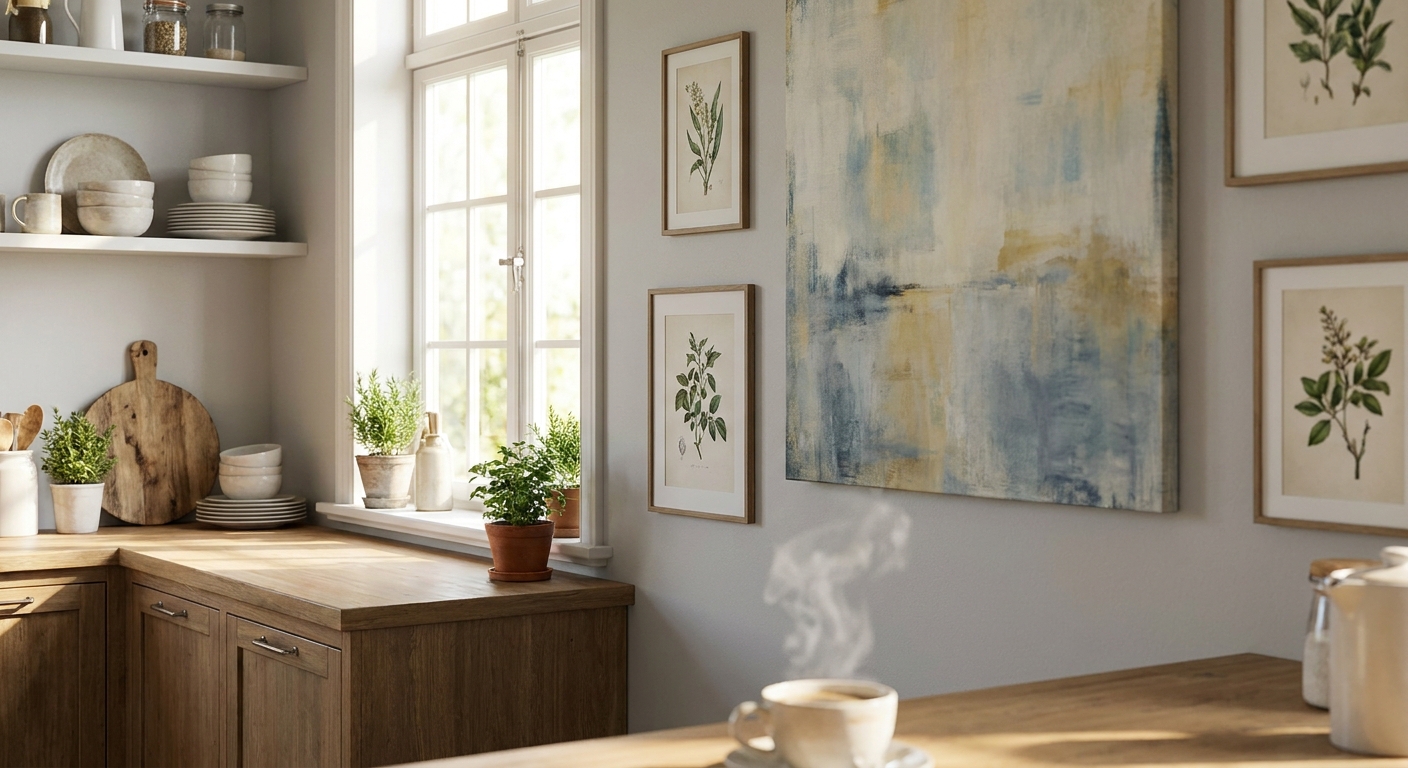
Kitchens take more visual punishment than any other room in the house — steam, grease, direct light, and the constant traffic of everyone using it. Wall art for kitchens needs to survive all that while still doing the job of tying the room together.
- Mediterranean Lunch canvas suits open kitchen-dining zones and handles indirect light without fading — Buy.
- Olive Still Life works as a neutral anchor above a bench or floating shelf — Buy.
- Pistachio Hydrangea softens stark white cabinetry with pastel tones — Consider.
- Skip unframed paper posters near the stove; grease and steam degrade them within a year.
- Canvas and framed prints outperform loose posters for wall art for kitchens in 2026.
Why this matters
Most decorating guides treat every wall the same, but a kitchen wall behaves differently to a bedroom or hallway wall. Heat rises from the stove, moisture spikes when the kettle boils, and cabinetry already carries strong colour and texture. Art that works in an open-plan living space needs to hold its own against a kitchen island, pendant lighting, and whatever's cooking.
Get the material wrong and you're replacing a warped print in 12 months. Get the size wrong and a $600 benchtop looks cluttered instead of considered. This guide narrows down what actually survives a working kitchen in 2026, not just what photographs well in a styled shoot.
Who this is for
This guide is for homeowners and renters styling a kitchen or open-plan kitchen-dining zone who want art that survives daily cooking, not just a Pinterest board. If you're hanging something above a stove, next to a splashback, or on the dining-adjacent wall of an open-plan layout, the criteria below apply directly to you.
What to look for in wall art for kitchens
Moisture and heat resistance
Steam from boiling pots and heat from the stove will warp unframed paper within months. Canvas prints stretched on a wooden frame handle ambient humidity far better than a loose poster, and a framed print behind glass adds another layer of protection from splashback grease.
Distance from direct heat
Anything within a metre of a stovetop or oven takes constant low-level heat exposure. Keep art at least 60-90cm from any direct heat source, and favour the dining or bench-adjacent wall over the cooking zone itself.
Colour harmony with cabinetry and benchtop
A kitchen already has strong colour input from cabinetry, splashback tile, and benchtop stone. Art that pulls one or two tones from those surfaces reads as intentional; art that fights them reads as clutter. Green-toned botanicals suit timber cabinetry, while warm terracotta and olive palettes sit well against white or stone benchtops.
Subject matter suited to a food and gathering space
Still life, botanical, and Mediterranean scenes have stayed the dominant kitchen categories through 2026 because they echo what the room is actually for — food, produce, and shared meals. Abstract line work also performs well in smaller kitchens where a busy scene would feel heavy.
Size relative to the available wall
A kitchen wall is rarely a full blank canvas the way a lounge room wall is. Measure the actual clear space above a bench, shelf, or dining nook before buying, and leave at least 15cm of breathing room on each side of the frame.
No-drill options for rental kitchens
Renters make up a large share of Australian kitchen renovators in 2026, and drilling into a splashback tile or rental wall isn't always an option. Command strips rated for the print's weight, or a leaning shelf-top display, solve this without losing the wall art for kitchens look.
Top picks for kitchen walls
Mediterranean Lunch — the entertainer's pick. This still-life piece leans into warm terracotta and olive tones that suit open-plan kitchen-dining zones with timber or stone finishes. It reads well from across a room, which matters if your kitchen opens onto a living or dining area. Verdict: Buy for kitchens that double as entertaining space — see Mediterranean Lunch.
Olive Still Life — the safe neutral. A muted still-life composition that works above a floating shelf or narrow bench wall without competing with cabinetry colour. It's the pick for kitchens where the splashback or benchtop is already the visual statement. Verdict: Buy for anyone wanting a low-risk anchor piece — see Olive Still Life.
Pistachio Hydrangea — the soft-palette option. Pastel green and cream tones soften stark white cabinetry and cooler kitchen finishes. It suits smaller kitchens where a heavier still life would feel dense. Verdict: Consider if your kitchen leans cool and minimal — see Pistachio Hydrangea.


What to avoid
- Unframed paper posters above the stove. Steam and grease warp and yellow paper within a year, even with occasional wiping.
- Glossy glass frames in direct window glare. A kitchen wall opposite a window will bounce reflection straight into the glass, hiding the art rather than showing it off.
- Oversized single canvases on narrow bench walls. A print wider than the available wall space crowds the room instead of anchoring it — measure before you buy, not after.
Verdict comparison
| Pick | Best for | Palette | Verdict |
|---|---|---|---|
| Mediterranean Lunch | Open-plan entertaining kitchens | Terracotta, olive | Buy |
| Olive Still Life | Narrow bench or shelf walls | Muted neutral | Buy |
| Pistachio Hydrangea | Cool, minimal kitchens | Pastel green | Consider |
| Earth's Gathering (Green Tones) | Timber cabinetry kitchens | Deep green | Consider |
FAQ
What's the best wall art for kitchens in 2026?
Canvas prints and framed prints with still-life or botanical subjects, such as Mediterranean Lunch or Olive Still Life, hold up best against steam and grease in 2026. Loose paper posters are the weakest option for a working kitchen.
Is framed or unframed wall art better for kitchens?
Framed prints behind glass protect better against splashback grease and moisture than unframed posters. Unframed canvas is the middle ground — durable but without the glass barrier.
How close can wall art hang to a stove?
Keep art at least 60-90cm away from a direct heat source like a stovetop or oven. Closer than that, heat and grease exposure shortens the life of both canvas and paper prints.
What size wall art suits a kitchen?
Measure the clear wall space above your bench, shelf, or dining nook first, then leave roughly 15cm of margin on each side of the frame. Kitchens rarely have the full blank wall a lounge room offers, so oversized single canvases often overwhelm the space.
Do canvas prints work well in kitchens?
Yes, stretched canvas handles ambient kitchen humidity better than unframed paper because the fabric doesn't buckle the way paper does. It's one of the more durable formats for wall art for kitchens.
What colours work best for kitchen wall art?
Pull one or two tones directly from your cabinetry or benchtop rather than introducing a competing palette. Green and terracotta botanical tones suit timber cabinetry, while cooler pastel palettes suit white or stone finishes.
Can renters hang wall art in a kitchen without drilling?
Yes, weight-rated command strips or a leaning display on a shelf or bench top avoid drilling into rental walls or splashback tile. Confirm the strip's weight rating matches the frame before hanging.
How much does wall art for kitchens cost?
Prints in this category range from under $80 for smaller framed sets to several hundred dollars for larger canvas pieces, based on current 2026 store pricing. Original hand-painted work sits well above that range.
One last thing
The kitchen wall people forget is the one behind the dining chairs, not the one above the bench — it gets seen for longer, at eye level, during every meal, which makes it worth more design attention than the splashback wall that only gets a glance while cooking.