Medical and dental clinics need wall art that calms nervous patients, survives high foot traffic, and looks professional to referring GPs walking through the door. This guide breaks down what actually works on clinic walls in 2026, with picks you can act on today.
- Soft abstract landscapes outperform bold graphic prints for wall art for medical clinics — low-arousal colour palettes reduce patient stress in waiting rooms.
- Go Gently by Fiona Hill (60cm x 60cm, $410) is the safe pick for reception areas needing a quiet, neutral tone.
- Skip glass-framed prints in consult rooms — glare and breakage risk make acrylic or unframed canvas the better call in 2026.
- Large canvas prints work best for waiting room feature walls over 2 metres wide; anything smaller reads as an afterthought.
- Consistency across rooms matters more than any single statement piece — pick one palette family and repeat it.
Why this matters
A dental or medical clinic isn't a living room. Patients sit in these spaces anxious, sometimes in pain, often for 20 to 40 minutes at a time. What's on the wall either lowers that tension or adds to it.
Clinics also get more foot traffic per square metre than almost any retail category — cleaning staff, trolleys, wheelchairs, kids' school bags. Wall art in this setting has to survive contact, glare from overhead LED panels, and years of daily viewing without becoming visual clutter. Gioia Wall Art works with interior designers who fit out commercial spaces exactly like this, and the same sizing and framing logic that applies to wall art for hair and beauty salons applies here — calm colour, durable materials, sizing that matches the wall, not the budget.
Who this is for
This guide is for practice managers, clinic owners, and the interior fit-out contractors who furnish GP clinics, dental practices, physiotherapy suites, and allied health rooms. If you're choosing between three quotes for reception artwork and none of them explain why one size or finish beats another, this is the decision framework you need before you sign off on a purchase order in 2026.
What to look for in wall art for medical clinics
Calming, low-arousal colour palettes
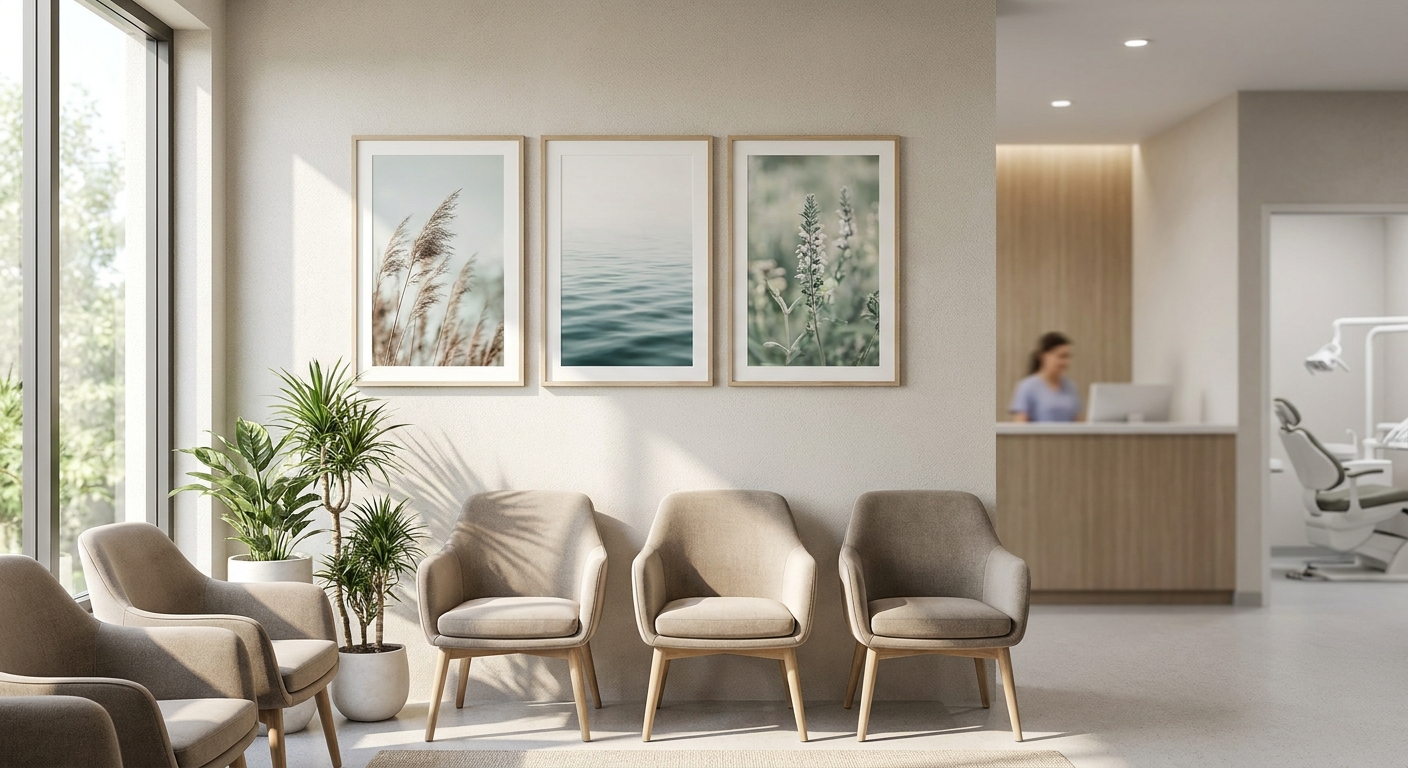
Saturated reds, oranges, and high-contrast graphic prints raise visual arousal — the opposite of what an anxious patient needs. Muted blues, sage greens, sandy neutrals, and soft pastels do the heavier lifting in a waiting room, and they photograph well for a practice's own marketing too.
Hygienic, easy-clean surfaces
Canvas and acrylic-faced prints wipe down without streaking; textured papier or raw timber frames trap dust and are harder to disinfect. In a dental clinic specifically, where aerosol and spray exposure is routine, a sealed canvas surface beats an open-weave textile every time.
Neutral, non-triggering subject matter
Abstract landscapes, coastal scenes, and gentle botanicals read as safe to almost everyone. Skip anything with sharp medical or anatomical references, aggressive wildlife, or portraits — patients project their own anxiety onto ambiguous or intense imagery more than clinicians expect.
Scale that matches the wall, not the invoice
A 40cm print on a 4-metre waiting room wall looks like an afterthought, no matter how good the piece is. Measure the wall first, then size the art — for waiting rooms and reception walls over 2 metres wide, large canvas prints built for scale outperform a cluster of small frames.
Framing that survives commercial wear
Glass framing glares under clinical LED lighting and shatters if a trolley clips it. Canvas on a stretcher bar, or acrylic-faced prints, hold up better in high-traffic corridors and consult rooms where knock risk is real.
Consistency across multiple rooms
A clinic with five consult rooms and one reception area needs one coherent palette family, not five unrelated art choices. Repeating a colour story — even with different subjects — reads as designed rather than assembled on the fly.


Top picks for clinic walls in 2026
The safe pick — Go Gently by Fiona Hill. A 60cm x 60cm soft abstract in purple, pastel pink, and Payne's grey. Low-arousal palette, sealed canvas surface, easy to clean and easy to match with almost any reception colour scheme. Buy for main reception walls where the goal is calm, not conversation.
The wildcard — Luminous Wild by Carrie Welsh. A 40cm x 30cm textured abstract landscape with warm gold accents that catches clinical LED lighting without glaring the way glass does. It's a statement piece for a consult room corridor rather than the whole waiting room. Consider it if your clinic wants one memorable wall instead of five safe ones.
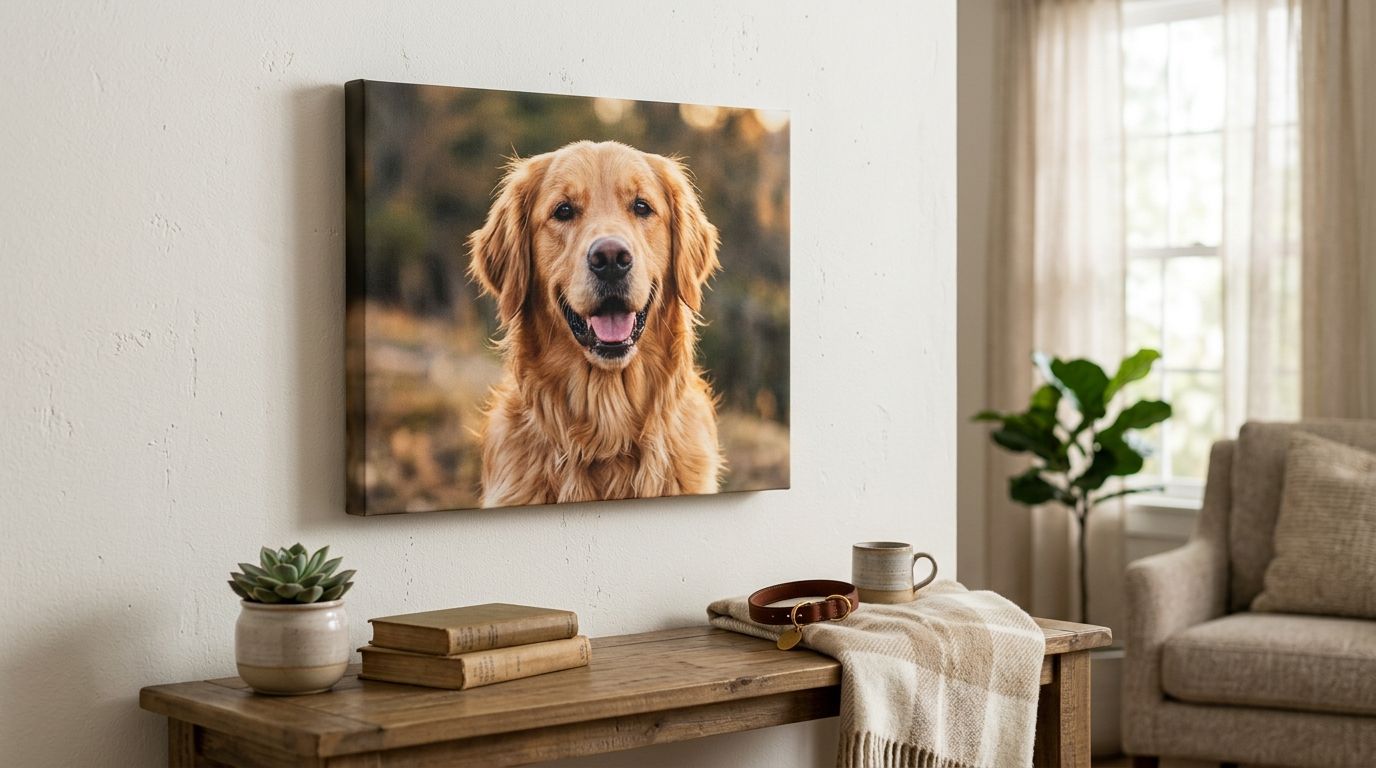
The scale pick — large-format canvas. For waiting rooms with a wall over 2 metres wide, undersized art disappears against clinical white paint. Sizing up to a genuinely large canvas print fills the space properly and reduces the visual empty-wall effect patients notice while they're bored and anxious. Buy for any reception wall longer than 2 metres.
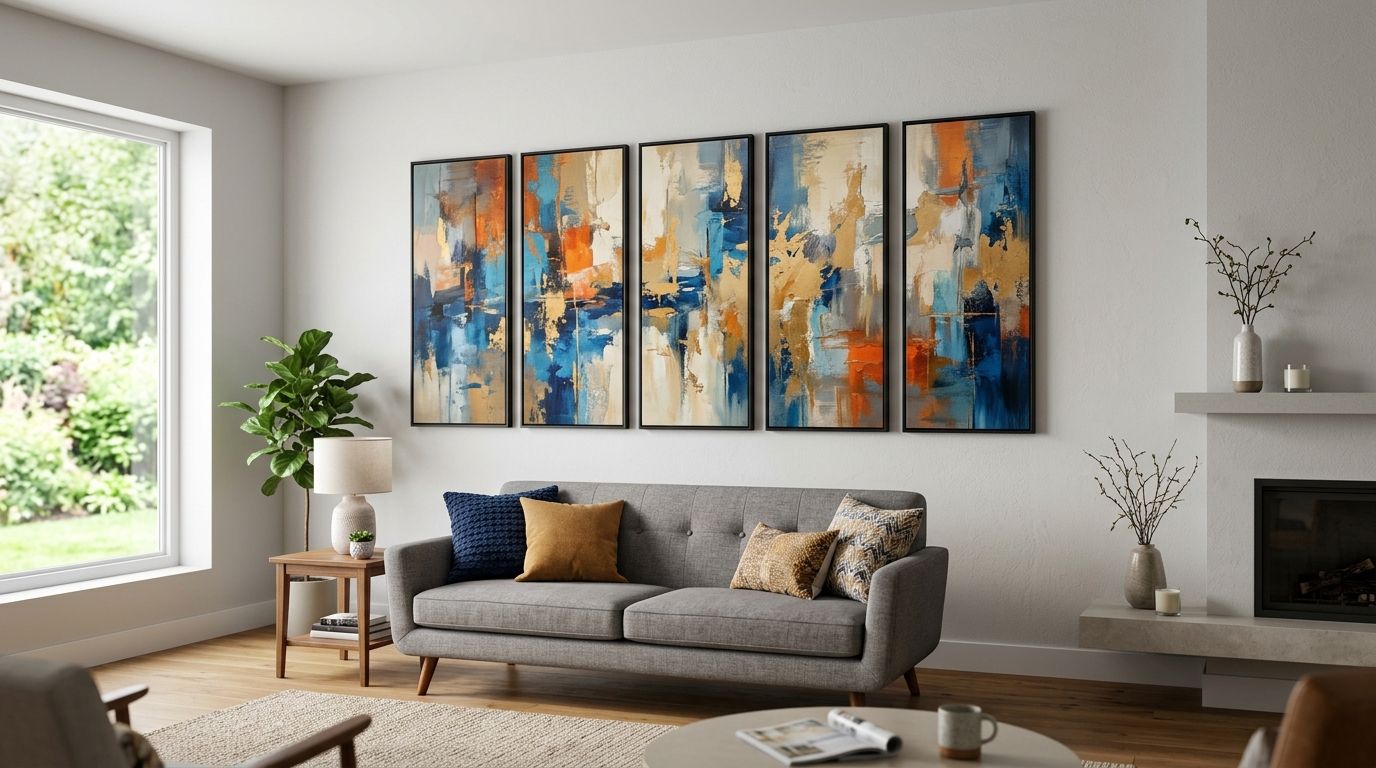
The multi-room system — framed print sets. Clinics with several consult rooms benefit from a repeatable framing system rather than one-off pieces per room — the same logic used in residential framed prints for gallery walls applies at commercial scale, just with fewer, larger frames per room. Consider for practices standardising five or more rooms at once.
Somewhere Softly by Debra Duffy — the corridor piece. An imagined landscape built from colour, texture, and pattern rather than a literal scene, which makes it read as calm without demanding attention in a hallway or transition space. Buy for corridors and secondary waiting areas.
What to avoid
- Glass-framed prints in consult rooms. They glare under overhead LED panels and shatter risk is real near trolleys and equipment carts.
- High-contrast graphic or typographic prints. They look sharp in a portfolio photo but raise visual noise in a room where patients are already stressed.
- Undersized art on feature walls. A print that would look right-sized in a living room reads as an afterthought on a 3-metre clinic wall.
Verdict comparison
| Pick | Best for | Size | Framing | Verdict |
|---|---|---|---|---|
| Go Gently (Fiona Hill) | Main reception | 60 x 60cm | Unframed canvas | Buy |
| Luminous Wild (Carrie Welsh) | Consult room accent | 40 x 30cm | Unframed, textured | Consider |
| Large-format canvas | Wide waiting room walls | 2m+ walls | Canvas, no glass | Buy |
| Framed print system | Multi-room consistency | Varies per room | Framed, matched set | Consider |
| Somewhere Softly (Debra Duffy) | Corridors | Mid-size | Unframed canvas | Buy |
FAQ
What's the best wall art for a medical clinic waiting room in 2026?
Soft abstract landscapes and muted-palette canvas prints work best in 2026 because they lower visual arousal for anxious patients. Avoid high-contrast graphic prints or anything with sharp medical imagery.
Is canvas or framed art better for a dental clinic?
Canvas is generally better for dental clinics because it wipes clean without glare and holds up against aerosol exposure. Framed glass art looks polished but glares under clinical lighting and carries breakage risk near equipment.
How big should wall art be in a clinic reception area?
Size the art to the wall, not a default frame size — a wall over 2 metres wide needs a genuinely large canvas print, not a cluster of small frames. Undersized art reads as an afterthought in commercial spaces.
Should every consult room have the same wall art?
No, but every consult room should share the same colour palette family. Consistency across rooms reads as designed, while five unrelated art choices read as assembled without a plan.
What colours should be avoided in clinic wall art?
Saturated reds, oranges, and high-contrast graphic combinations raise visual arousal in patients who are already anxious. Muted blues, sage greens, and soft neutrals do more of the calming work.
Can original paintings work in a commercial medical practice?
Yes, original paintings suit clinics that want a genuine statement piece in a consult room corridor or director's office rather than covering every wall. Pair one original with repeatable canvas prints in the higher-traffic areas.
How often should clinic wall art be replaced?
There's no fixed rule, but sealed canvas and acrylic-faced prints hold their colour and surface far longer under commercial lighting than paper-based prints, which is the practical reason to choose them for a multi-year fit-out.
Does wall art actually affect patient anxiety?
Low-arousal, nature-adjacent imagery is widely used in healthcare interior design specifically because it reduces the visual stress load of a waiting room. It won't replace good care, but it removes one more source of tension from the room.
One last thing
The single biggest mistake clinics make in 2026 isn't picking the wrong art — it's picking art sized for a home, not a commercial wall. A print that looks generous in a living room photo shrinks to nothing on a 3-metre reception wall under fluorescent light. Measure the wall before you shortlist anything.