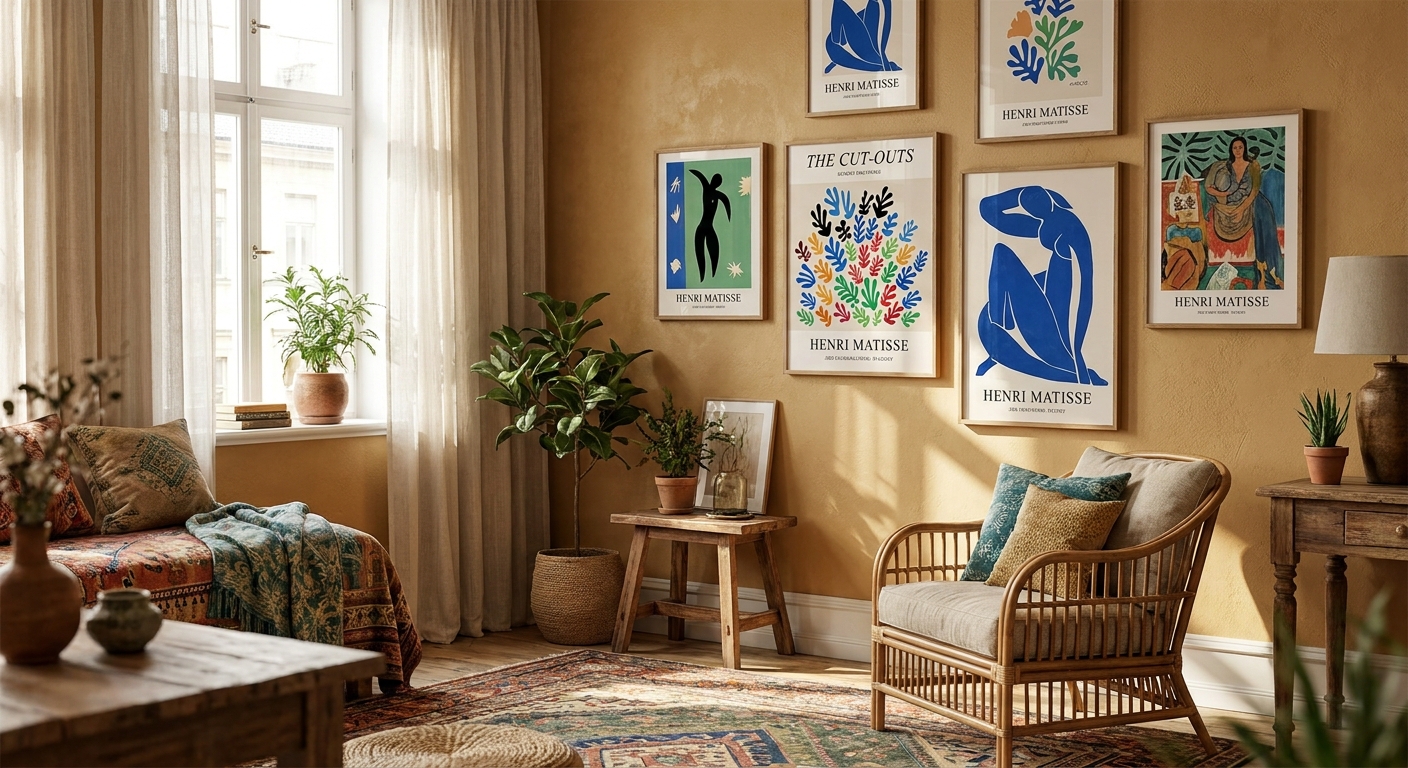
Henri Matisse's cut-outs and Blue Nude silhouettes translate straight into a bohemian living room without the beige-gallery stiffness that plagues most "famous artist" reproductions — pick the right era, size and frame and the wall does the styling for you.
- Henri Matisse cut-out prints suit bohemian interiors better than his Nice-period portraits — Buy the Jazz-era pieces, Skip formal framed portraits.
- Over 5,400 Australians search henri matisse wall art monthly in 2026, and botanical cut-outs pair best with rattan and linen.
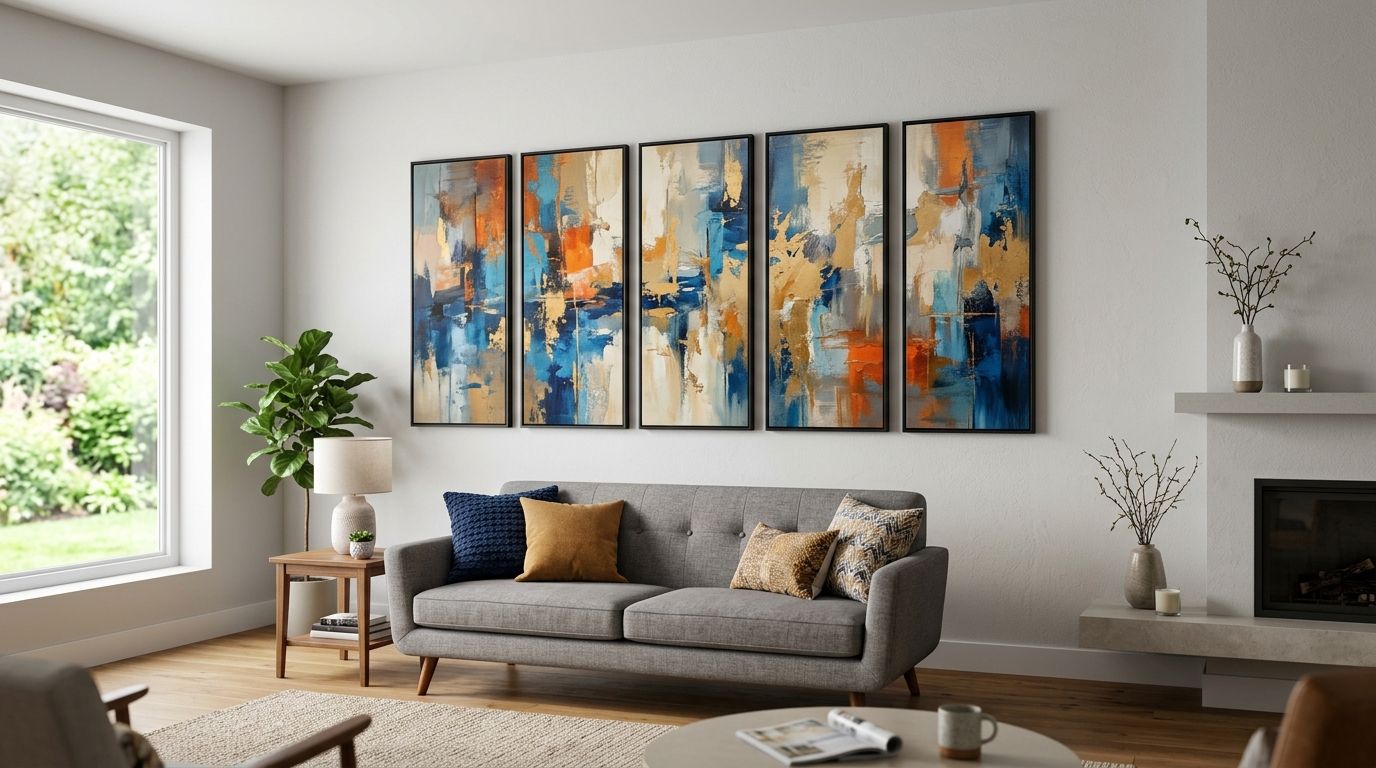
- Unframed A1 prints at 594mm x 841mm layer easiest into a boho gallery wall; heavily framed pieces read too formal.
- Blue Nude reproductions work as one statement piece, not scattered across a cluster wall — Buy for a single feature wall only.
Why this matters
Boho interiors run on pattern, texture and one saturated hero colour per room — which is exactly what Matisse's flattened cut-out shapes and Blue Nude silhouettes deliver without the fussy detail of a Renaissance reproduction. Search interest backs this up: henri matisse pulls roughly 5,400 monthly searches in Australia in 2026, and a large share of that traffic is people decorating rentals and share houses, not art students. The trap is picking the wrong Matisse era for the room. A stiff, formally framed Nice-period portrait fights a rattan headboard and macrame wall hanging; a loose paper cut-out florals piece works with both.
Who this Matisse guide is for
This is for anyone furnishing a rental, share house or first home in a bohemian or eclectic style — layered rugs, indoor plants, warm timber, rattan pendant lights — who wants one or two Henri Matisse prints to anchor a gallery wall layout rather than a single formal portrait over the mantel. You're not building a museum wall. You're building a room that still looks intentional in 2026 and doesn't fight the jute rug underneath it.
What to look for in Henri Matisse prints for bohemian interiors
Cut-out era vs. figurative era
Matisse's later cut-out works (1947 onward) use flat, saturated colour blocks and organic botanical shapes — think leaves, algae forms, dancers reduced to silhouette. These read as modern and loose, which is the entire point of a boho wall. His earlier figurative and Nice-period portraits are tighter, more formal, and were painted decades before the cut-out period; they suit a traditional or Hamptons room far better than a boho one.
Colour temperature against your existing palette
Boho rooms usually run warm — terracotta, mustard, olive, rattan tones. A Matisse piece heavy in cool ultramarine blue (the Blue Nude series) needs a warm accent nearby or it looks dropped in from a different room. Check the dominant hue against your existing textiles before you commit to a size.
Print size for gallery wall math
A single A1 print (594mm x 841mm) anchors a feature wall alone. For a layered boho gallery wall, mix that one large piece with two or three A3 (297mm x 420mm) prints so the eye has a resting point. Undersized prints on a large wall are the single most common styling mistake in this category.
Framed vs. unframed for a layered look
Boho gallery walls lean on mismatched, informal framing — timber, rattan-edge or unframed canvas rather than gold gilt. A heavily gilded frame around a cut-out print looks like it wandered in from a different house. Save framing for the one statement piece, and keep the supporting prints loose or in slim natural-timber frames.
Paper stock, canvas finish and fade resistance
Matisse's saturated blocks of colour show fading fastest of any print style — a cheap giclée on standard paper will visibly dull within a couple of years near a north-facing window, which matters in most Australian living rooms. Canvas prints with UV-resistant inks hold saturation longer than poster-stock prints hung in direct light.


Top picks by Matisse era
The Jazz-era cut-outs — the safe pick. Twenty plates published in 1947, all built from flat botanical and figure shapes in primary colour. One A1 print at 594mm x 841mm carries an entire boho reading nook wall on its own. Buy for the main anchor piece in any share house living room.
The Blue Nude silhouettes — the statement pick. A single large-format reproduction (100cm or wider) works as the one cool-toned moment in an otherwise warm room, but two of them in the same space compete for attention. Buy for a single feature wall only — never as a pair.
The botanical line drawings — the layering pick. Smaller A3 prints of Matisse's loose ink botanicals slot easily into a mismatched gallery wall alongside original paintings and photography. Pair three or four in a statement wall art cluster rather than hanging one alone. Buy for gallery wall filler.
The Nice-period portraits — the wildcard. Tighter brushwork, more formal composition, painted well before the cut-out period. These need a heavier, more traditional frame to look intentional, which fights a boho room's loose aesthetic. Consider only if the rest of the room already leans French provincial rather than boho.
The paper-cut florals — the affordable pick. Poster-format reproductions of the smaller cut-out florals cost less than a canvas print and still deliver the colour block effect at A3 or A2 size. Buy for a rental where budget matters more than archival ink.
What to avoid
- Heavily gilded or ornate frames around cut-out prints — the flat colour blocks read as modern art, and a gold frame drags the whole piece into a formal register it was never designed for.
- A single undersized print on a large wall — an A4 Matisse print on a 3-metre living room wall disappears; it needs either scale or a supporting cluster.
- Cheap poster stock hung in direct sun — the saturated colour blocks that make Matisse work for boho styling are the first thing to fade under harsh Australian light.
Verdict comparison
| Era | Dominant colour | Best use in a boho room | Frame style | Verdict |
|---|---|---|---|---|
| Jazz cut-outs (1947) | Primary reds, yellows, greens | Main anchor piece | Unframed or slim timber | Buy |
| Blue Nude silhouettes | Ultramarine blue | Single feature wall | Simple black or unframed | Buy (solo only) |
| Botanical line drawings | Ink black on cream | Gallery wall filler | Mismatched slim frames | Buy |
| Nice-period portraits | Muted earth tones | Traditional-leaning rooms only | Heavier timber or gilt | Consider |
| Paper-cut florals (poster) | Mixed brights | Budget rental styling | Unframed or clip frame | Buy |
FAQ
What's the best Henri Matisse print for a boho living room?
A Jazz-era cut-out print from the 1947 series works best because its flat botanical shapes and primary colour blocks read as modern rather than formal. Hang it as the single anchor piece rather than mixing several large cut-outs on one wall.
Is Henri Matisse better than Pablo Picasso for eclectic interiors?
Matisse's cut-outs suit boho and eclectic rooms better because the flat colour shapes are softer and more decorative than Picasso's angular Cubist forms. Check the Pablo Picasso prints for eclectic homes guide if your room leans more graphic than boho.
What size Matisse print do I need for a feature wall?
An A1 print at 594mm x 841mm works as a single statement piece on most Australian living room walls. Larger walls over 3 metres wide can carry a print scaled up to 100cm or wider without looking undersized.
Should I frame a Matisse cut-out print or leave it unframed?
Leave botanical and gallery-wall filler prints unframed or in slim natural timber to keep the boho layered look. Reserve a heavier frame for a single statement piece like a Blue Nude reproduction.
How much does a Henri Matisse print cost in Australia in 2026?
Poster-format reproductions cost less than canvas prints, and canvas versions cost more again depending on size and finish. Check current pricing on the site before committing to a size, since finish and dimensions both move the price.
Do Matisse prints fade in Australian sunlight?
Saturated colour blocks fade faster than muted tones, especially on standard poster stock hung near a north-facing window. Canvas prints with UV-resistant inks hold their colour longer under the same light exposure.
Can I mix a Matisse print with original paintings on the same wall?
Yes — pairing a Matisse cut-out reproduction with one or two original paintings in a similar warm palette is a standard boho gallery wall technique for 2026. Keep the colour temperature consistent across all pieces so the wall reads as one composition.
What's the difference between Matisse's Jazz series and his Blue Nudes?
The Jazz series (1947) uses multiple bright colours in botanical and figure shapes, while the Blue Nude series is a smaller set of works built entirely from cut cobalt-blue paper. Jazz pieces suit clusters; Blue Nudes suit a single statement wall.
One last thing
Matisse made the entire cut-out series from a wheelchair in his final decade, cutting directly into painted paper with tailor's scissors instead of painting at an easel — which is why the shapes look loose and hand-cut rather than precisely drawn, and why they sit so naturally next to imperfect, organic boho textures like rattan and raw linen.
“I have attained a form filtered to its essentials.”
— Henri Matisse