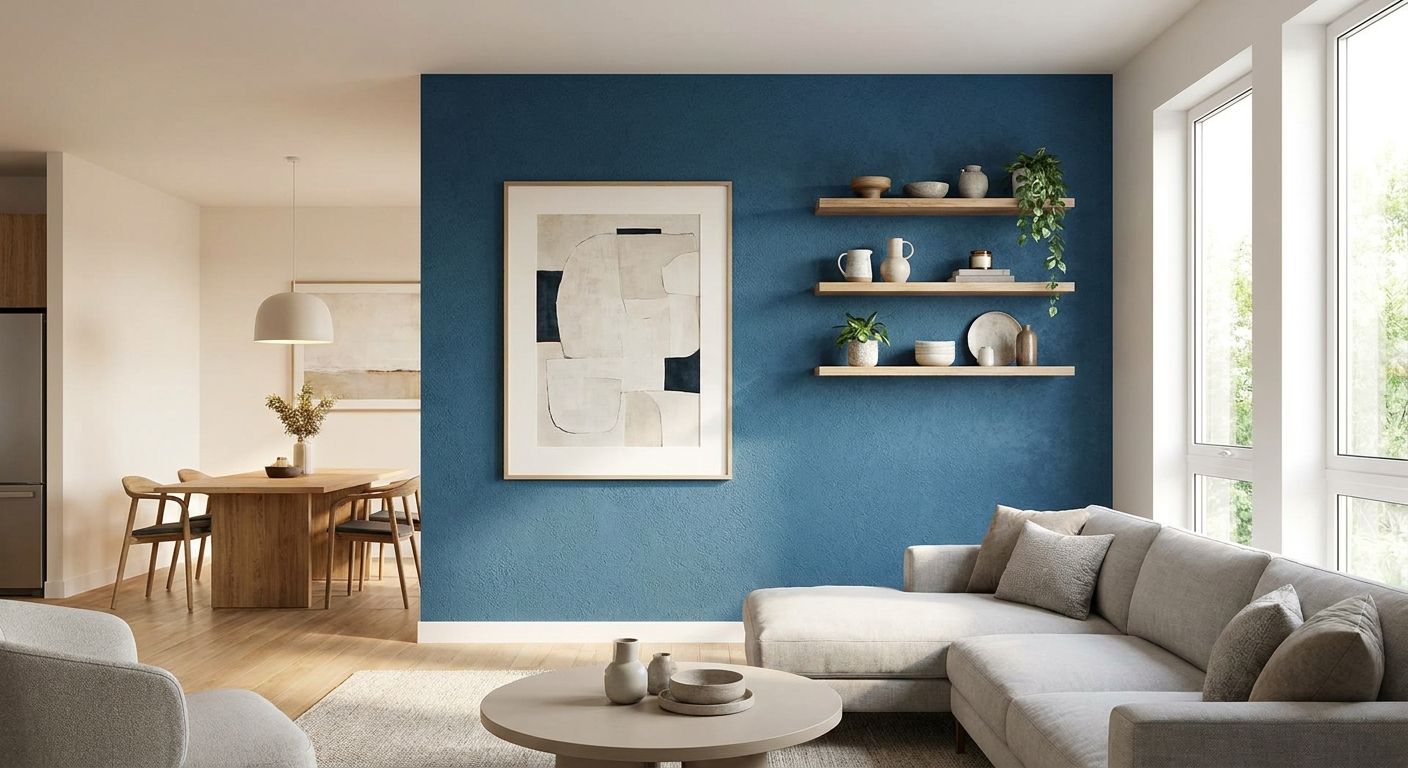
A focal point wall in an open-plan home works when one wall carries all the visual weight of the space — usually the wall your eye lands on first from the entry, or the one facing the main seating zone. The fastest way to build one in 2026 is picking a single anchor: one oversized canvas, a tightly measured gallery cluster, or a diptych, sized to at least two-thirds the width of the furniture sitting below it. Skip the instinct to spread three or four small prints across different walls — in an open-plan layout that reads as clutter, not a focal point.
- A focal point wall works when one piece is sized to roughly two-thirds the width of the sofa, media unit or dining table below it.
- Single statement canvases suit open-plan homes better than multiple small prints because sightlines run further than in a closed room.
- Gallery wall clusters of 6 to 9 pieces need a defined 200cm+ span to read as one focal feature, not a scattered collection.
- Hanging height matters as much as size — centre the piece around 145-160cm from the floor to the artwork's midpoint.
- Gioia Wall Art stocks large-format canvas and original paintings sized for open-plan feature walls.
Why this matters
Open-plan living, dining and kitchen zones share sightlines that a closed floor plan never has to deal with. A print sized for a hallway or bedroom often disappears against a 4-metre wall, and a wall with three unrelated pieces competes with the kitchen splashback, the dining table and the TV unit for attention. Getting the focal wall right settles the whole room — everything else in the space starts reading as intentional once one wall does the heavy lifting.
The good news is you don't need architectural changes to create one. Canvas prints for open-plan spaces are built specifically for this — oversized formats designed to hold a long sightline without needing a second or third piece to fill the wall.
How to create a focal point wall in an open-plan home
- Pick the wall the eye hits first. Stand at the main entry to the open-plan zone and note where your gaze lands before it moves anywhere else — that's your focal wall, not necessarily the biggest wall in the room.
- Measure the furniture below it. If a sofa, console or dining table sits against that wall, the art should span roughly two-thirds of that furniture's width, not the full wall.
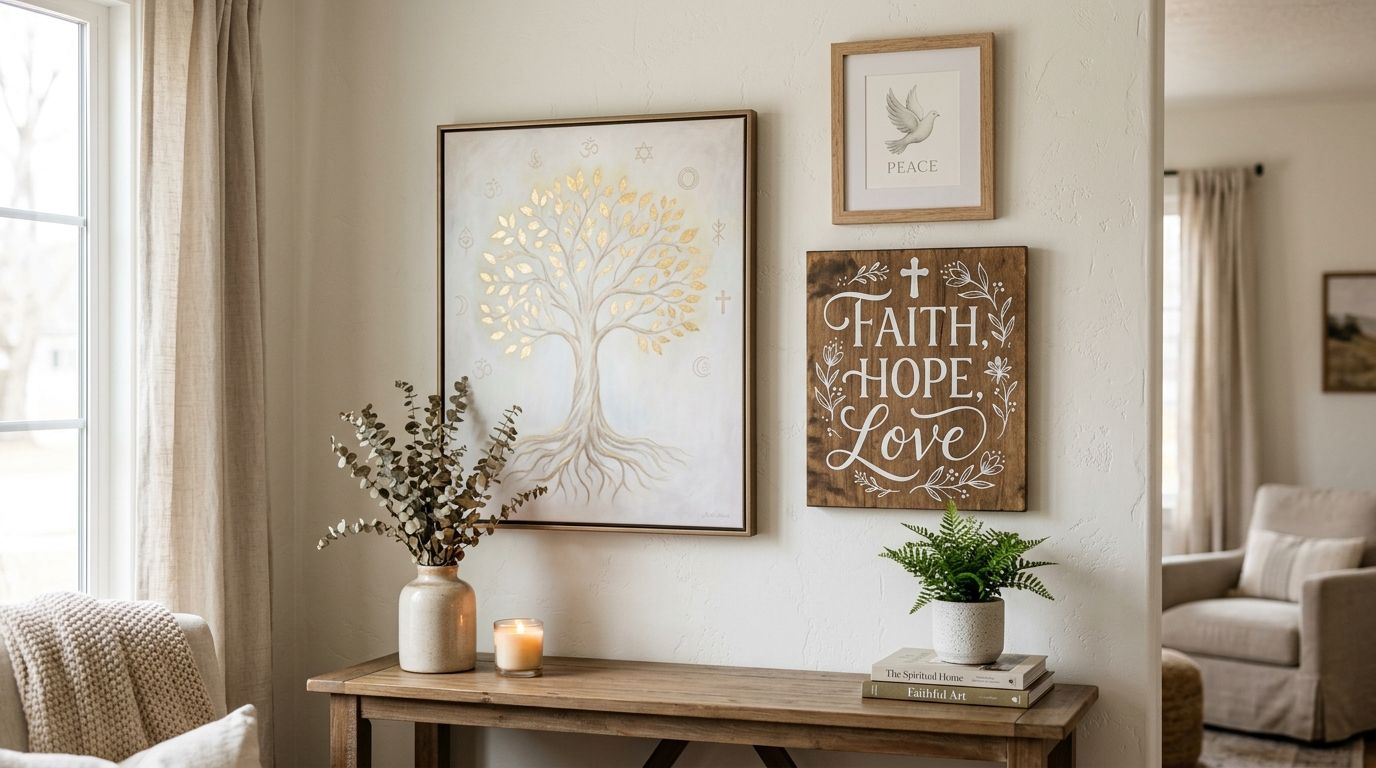
- Choose one format, not several. A single statement canvas, a diptych, or a defined gallery cluster — pick one approach and commit, rather than mixing a large canvas with a scatter of small unframed prints.
- Hang at eye level, not ceiling height. Centre the artwork (or the visual centre of a cluster) around 145-160cm from the floor, the standard gallery-hanging convention, adjusted down slightly if the piece sits above low furniture.
- Check it from every angle in the open-plan zone. Walk the kitchen, the dining table and the hallway — the focal wall should read clearly from each vantage point, not just face-on from the sofa.
Single statement canvas: 100-180cm wide for open-plan walls
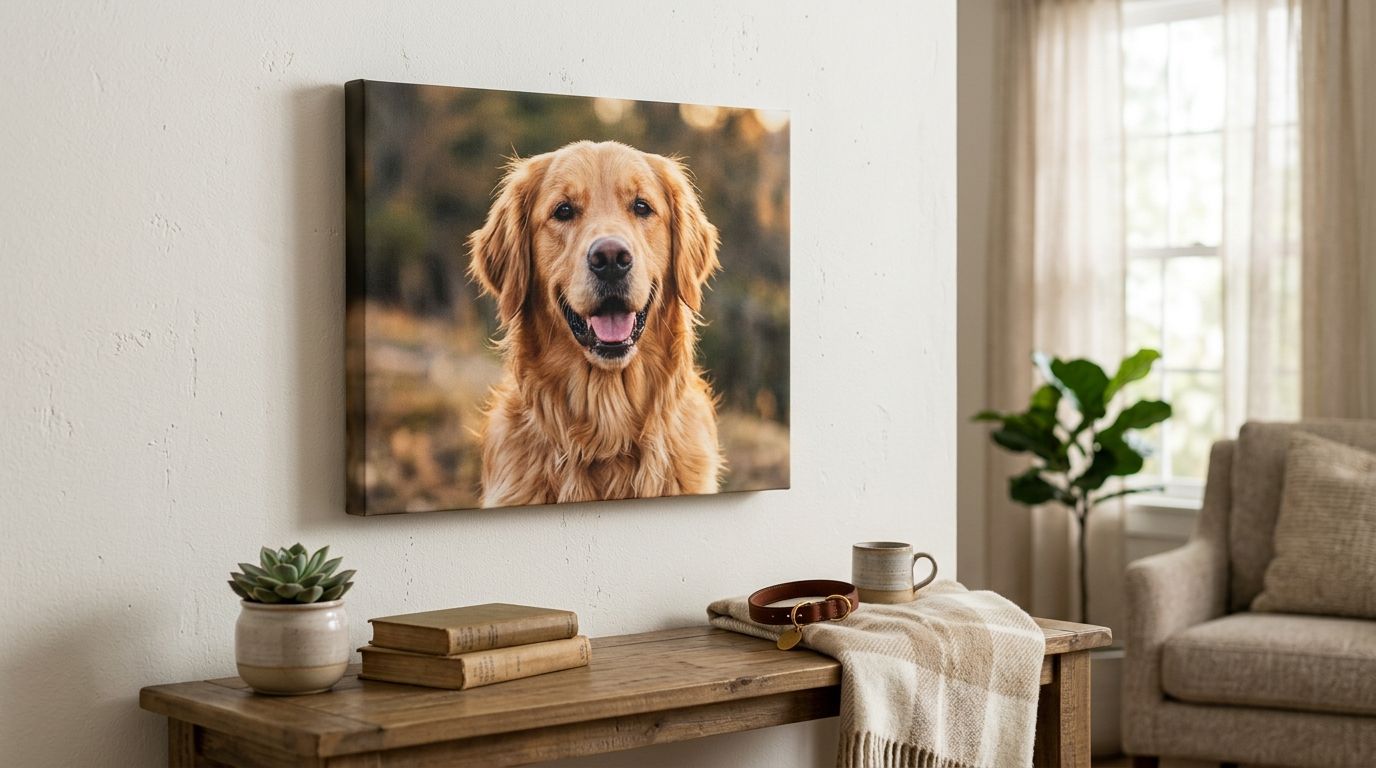
One large canvas is the simplest route and the hardest to get wrong once it's sized correctly. For a typical open-plan living wall behind a three-seater sofa, a canvas in the 100-180cm width range fills the sightline without leaving awkward bare wall either side. Buy this route if you want one confident decision instead of a layout to plan.
Gallery wall cluster: 6 to 9 pieces across a 200cm+ span
A cluster works when you want variety in the room but still need it to read as one focal feature from a distance. The pieces need a defined span — 200cm or more of wall dedicated to the arrangement — and consistent spacing, usually 5-8cm between frames. The gallery wall layout guide covers spacing templates in more detail. Best for renters or anyone who wants to swap individual pieces over time — hold off if you don't want to commit to laying it out properly.
Diptych or triptych: two to three panels spanning 150-240cm
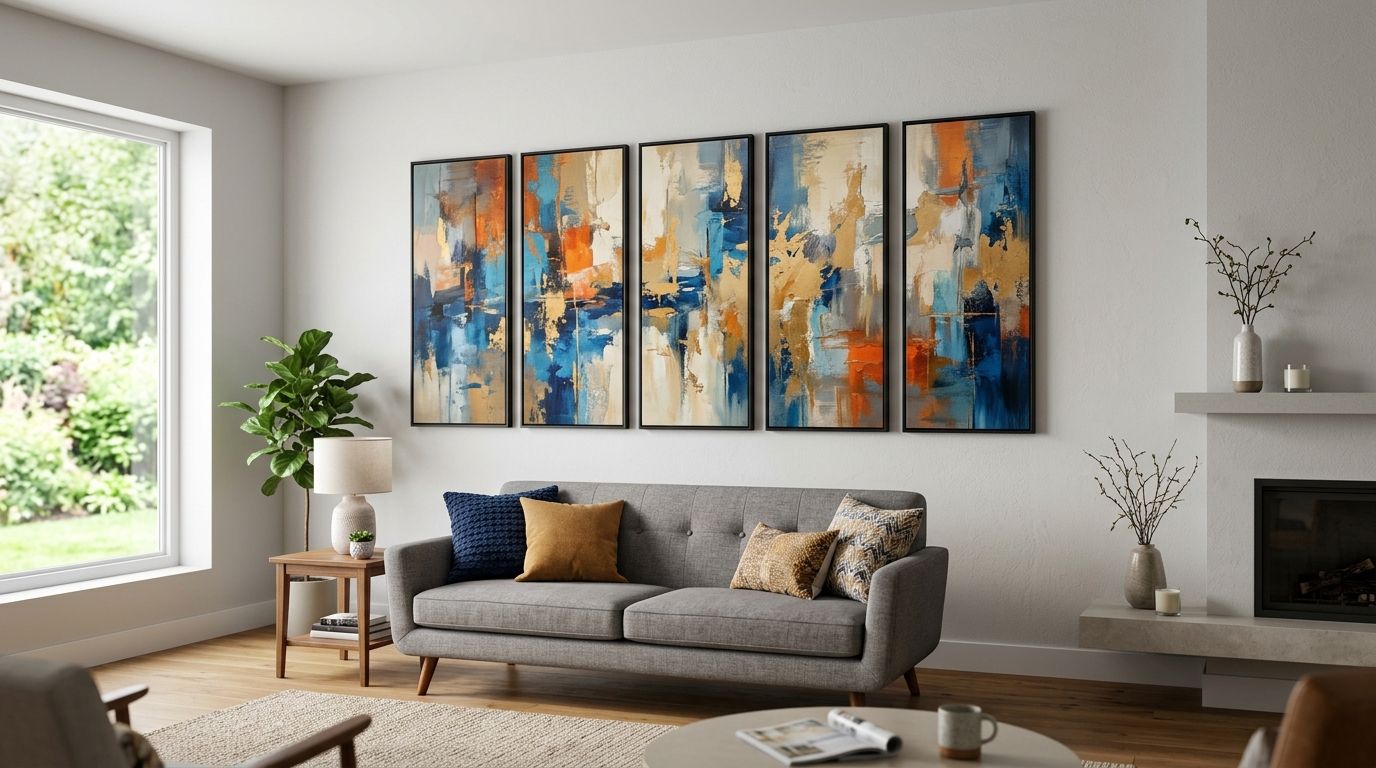
A diptych or triptych splits one image or a matched set across two or three canvases, giving you the visual impact of a single statement piece with the installation flexibility of separate panels. Total span typically runs 150-240cm depending on the wall. Buy this route for a wall with an odd width that a single canvas doesn't quite fit.
Why the right approach varies
- Sightline length — a wall you view from 6 metres away in the kitchen needs a bigger, bolder piece than one you pass at arm's length in a hallway.
- Ceiling height — rooms with raked or high ceilings pull the eye upward, so the art needs enough vertical presence to hold the wall rather than get lost near the floor line.
- Furniture below — a low console reads differently to a full-height media unit; the art's width should track whatever sits directly beneath it.
- Existing colour and finish — a feature wall with panelling, dark paint or wallpaper already has visual weight, so the art needs to complement it rather than compete.
- Natural light — a wall that gets direct afternoon sun needs UV-protected printing or glazing to stop colours fading over time.
- How permanent the space is — renters and short-term movers often lean toward one large canvas over a gallery cluster because it's easier to pack and rehang.
If you're sizing the piece itself rather than the wall composition, the guide to choosing the right size wall art walks through the room-by-room math.
Do I need to match the art to my sofa colour?
No — the art needs to relate to the room's tone, not match the sofa fabric exactly. A focal wall that echoes one accent colour from elsewhere in the space (a cushion, a rug, a joinery finish) reads as intentional without looking like a matched set.
How high should a focal point piece hang in an open-plan room?
145-160cm from the floor to the artwork's visual centre is the standard hanging height, and it applies whether the piece sits above a sofa, a console or an empty stretch of wall. Drop it 10-15cm lower if there's a low piece of furniture directly underneath, so the art doesn't float away from what's below it.
Should a studio apartment handle a focal wall differently to a full open-plan living space?
Yes — a studio benefits from one mid-sized statement piece rather than a large-format canvas, because the shorter sightlines in a smaller footprint make an oversized piece feel like it's closing the room in rather than opening it up.
Once you've settled on the wall and the format, statement wall art for a feature wall is worth a look for large-format options built specifically for this job, and it's also where the difference between an original painting and a printed canvas becomes a real decision rather than an abstract one.


FAQ
How do I create a focal point wall in an open-plan home?
You create a focal point wall by picking the wall your eye hits first from the main entry, then sizing one piece of art to roughly two-thirds the width of the furniture beneath it. Commit to one format — single canvas, diptych, or gallery cluster — rather than mixing several small prints across the room.
What size should a focal point canvas be for an open-plan living room?
A focal point canvas typically runs 100-180cm wide for a wall behind a three-seater sofa, scaling up for longer walls or higher ceilings. The goal is roughly two-thirds of the furniture's width, not the full span of the wall.
Should I use one large canvas or a gallery wall for a focal point?
One large canvas is the simpler, lower-risk choice for a first attempt at a focal wall, since sizing it correctly is the only decision to get right. A gallery wall of 6 to 9 pieces works better if you want variety or plan to swap pieces over time, but it needs a defined 200cm+ span to read as one feature.
How high should wall art hang above a sofa in an open-plan space?
Wall art should hang with its visual centre 145-160cm from the floor, dropping 10-15cm lower if it sits directly above low furniture. This is the standard gallery-hanging convention and applies whether it's a single canvas or a cluster.
Can original paintings work as a focal point wall, or should I stick to prints?
Original paintings work well as a focal point when the wall calls for texture and one-off scale that a printed canvas can't replicate. Prints are the more practical route for renters or anyone sizing a wall precisely, since formats are more flexible.
Does a focal point wall need to match my existing furniture colours?
No, a focal point wall needs to relate to the room's tone rather than match the sofa or rug exactly. Echoing one accent colour already in the space is enough to make the wall feel considered rather than random.
How many pieces of art make a good gallery wall focal point?
6 to 9 pieces is the typical range for a gallery wall focal point, spread across a defined 200cm or wider span with consistent 5-8cm spacing between frames. Fewer pieces than that tend to read as a small grouping rather than a wall feature.
What's the biggest mistake people make with focal point walls in open-plan homes?
The biggest mistake is undersizing the art relative to the wall and the furniture below it, which leaves the piece looking lost rather than commanding. The second most common mistake is spreading several small, unrelated prints across the space instead of committing to one format.
One last thing
The detail most people skip is checking the focal wall from the kitchen, not just from the sofa. In an open-plan layout you'll spend as much time facing that wall while cooking or standing at the island as you will seated — if the piece only works front-on from one chair, it's not doing its job as a focal point in 2026's open-plan floor plans.