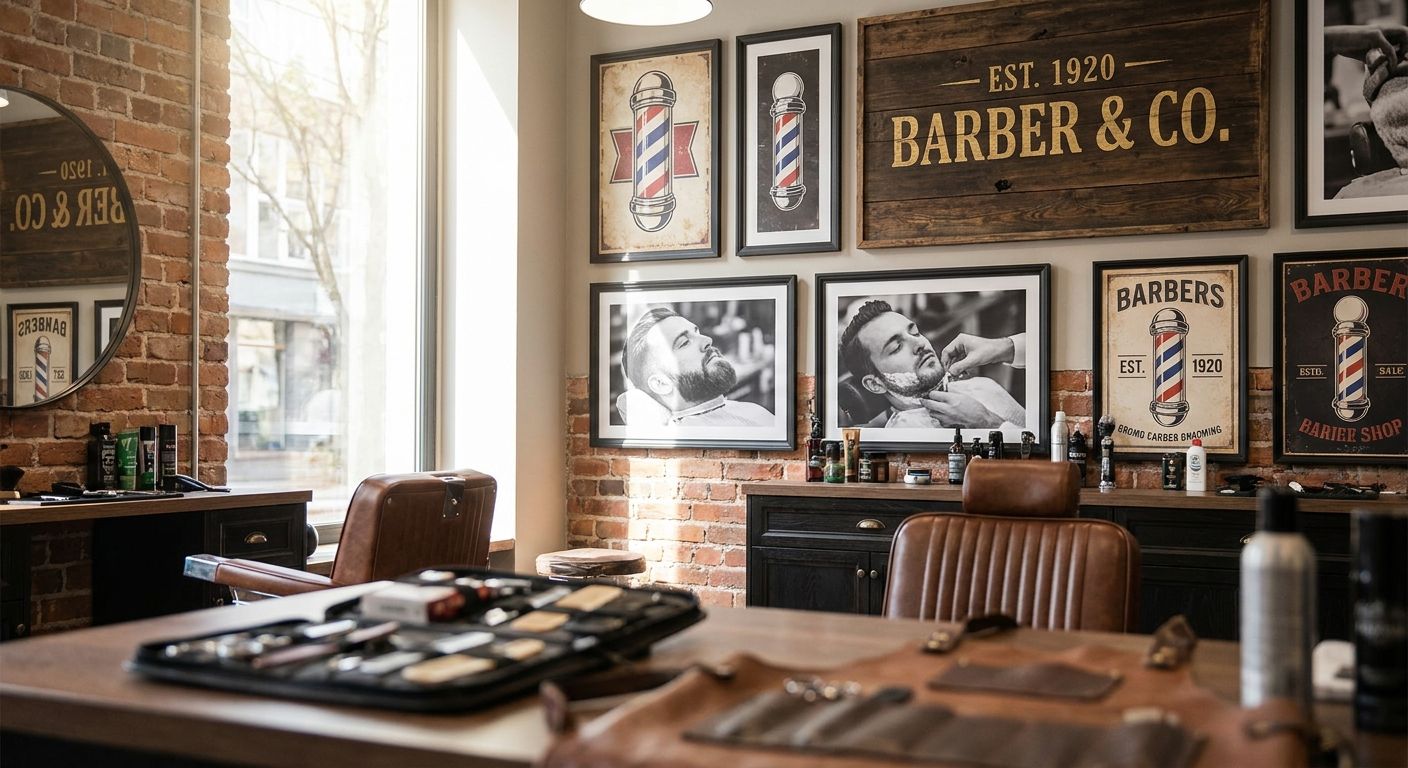
Barbershop wall art works as fast branding: the right prints turn a ten-minute wait into a moment worth photographing, while a bare wall reads unfinished no matter how sharp the fade is.
- Wall art for barbershop and grooming salon walls works best in black-and-white photography, vintage car prints and bold typography, not soft florals.
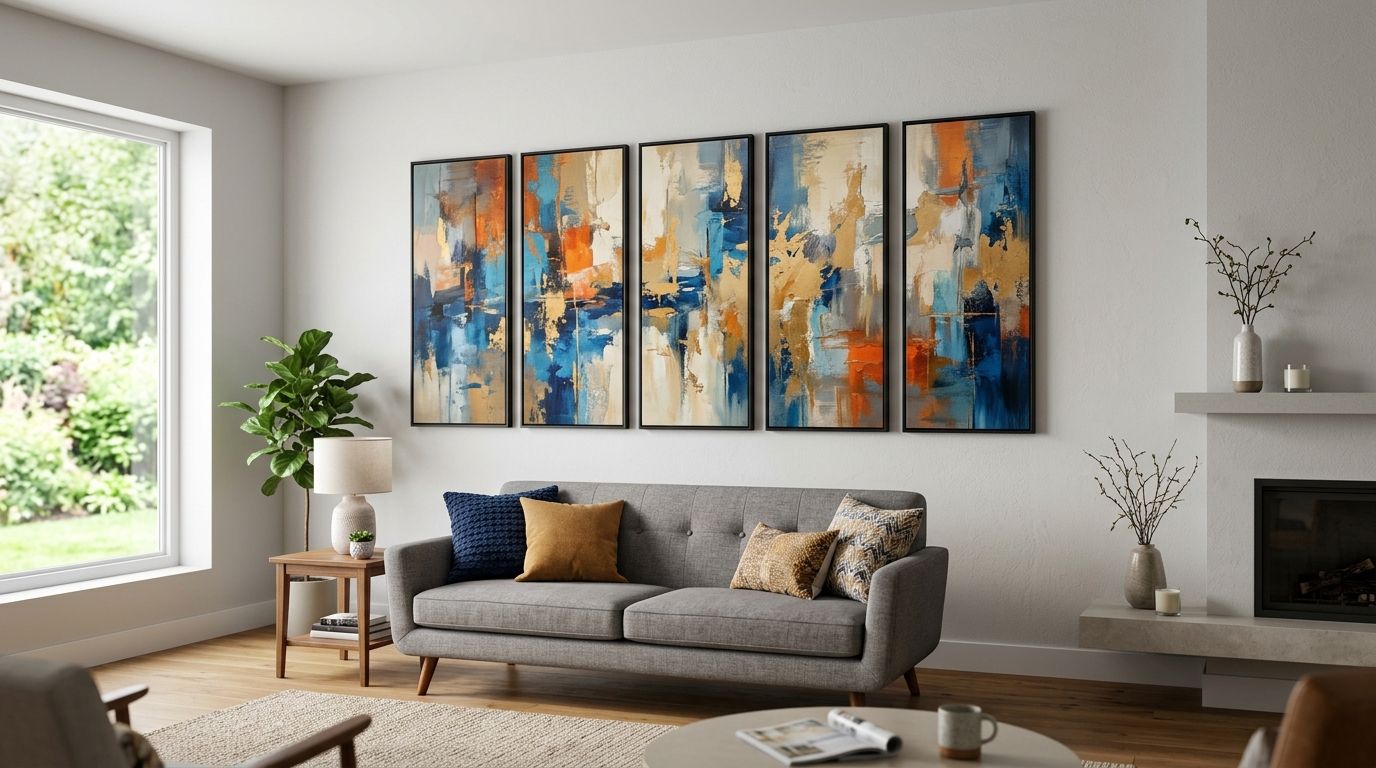
- Large-format canvas behind the chair bank fills high walls without cluttering a small footprint.
- Classic car and motorsport prints suit a barbershop's masculine palette better than generic office art.
- Budget per station, not per wall - two or three anchor pieces beat five scattered small frames.
- Rotate one or two pieces every 6 to 12 months to keep regulars looking up from their phones.
Why wall art matters for barbershops
Barbershops and grooming salons run on repeat visits, and every client sits facing the same wall for the length of a cut, shave or beard trim. That wall is unpaid advertising: it either reinforces the brand a shop is charging for, or it quietly undercuts it with bare plaster and a wobbly framed certificate. Gioia Wall Art curates prints and canvases built for exactly this kind of high-traffic, high-dwell commercial space, not just living rooms.
Grooming salons in 2026 also compete on Instagram as much as on foot traffic. A wall with a strong visual anchor - a vintage motorcycle print, a bold monochrome portrait, a line of graphic typography - gives clients something worth tagging, which does more for local search visibility than another flyer taped to the mirror.
Verdict: a barbershop wall earns its keep when it's photographed as often as the haircut is.
Building a barbershop wall art plan, step by step
Define the shop's visual identity before buying anything
Do this before opening a catalogue. A shop chasing three different aesthetics at once ends up looking unfinished no matter how much art goes up.
- Walk the shop and note what's already working (leather chairs, exposed brick, chrome fixtures)
- Photograph the strongest existing feature as a benchmark for new pieces
- Decide in one sentence what the shop should feel like: heritage barber, modern grooming lounge, or industrial workshop
- Match new art to that one sentence, not to whatever is trending on social media that week
- Ask one regular client for their honest read before committing to a direction
Pick a palette that reads masculine, not sterile
Colour does more work than most owners expect. Get this wrong and the shop reads like a waiting room instead of a barbershop.
- Lean on black-and-white photography and charcoal tones for a timeless barbershop look
- Add one warm accent - tan leather, aged brass, terracotta - so the space doesn't feel clinical
- Avoid pastel florals and soft abstract washes; they read salon, not barbershop
- Test any swatch against the chair upholstery and floor tile before framing anything
- Gioia's classic car and motorsport prints give a faster route to that heritage-masculine palette than sourcing vintage photography yourself
Size art for the actual sightlines in the chair
Clients sit, barbers stand. Measure the sightline at seated eye height, not standing height, or the art talks to the wrong person.
- Fill the wall behind the mirror with one large piece rather than three small ones - clutter fights with reflections
- Leave a hand's width of breathing room around any frame near a workstation
- Check ceiling height before ordering an oversized canvas; low ceilings need horizontal formats
- Match art width to the mirror or chair bank behind it, not to the wall's full length
- Order a size sample or check dimensions twice before committing to anything above eye level
Layer in typography for personality
One good line near the entry sets tone before the first greeting happens.
- Keep font choices bold and legible from across the room, not decorative script
- Limit typography to one or two pieces total; a wall of quotes reads like a cafe
- Typography and quote wall art built for motivational spaces is the shortcut if in-house design isn't an option
- Reserve the boldest line for the wall a phone camera naturally frames while waiting
Rotate pieces to keep regulars looking twice
A shop that never changes its walls stops getting noticed by the people who come back every four weeks.
- Swap one or two pieces every 6 to 12 months rather than a full refresh
- Track which prints get photographed most and lean into that style next round
- Keep the rotating piece near the till or waiting bench, where dwell time is longest
- Store swapped-out canvases flat, not leaning, to avoid warping the stretcher bars
Hang art that survives daily traffic
A barbershop wall takes more abuse in a month than most home walls take in a year.
- Use D-rings and picture wire rated for the frame weight, not sawtooth hangers, on anything over A2
- Keep glass-framed prints out of direct clipper-spray zones; canvas or acrylic-face prints hold up better nearby
- Anchor into studs or use rated wall anchors near doorways, where knocks are frequent
- Recheck hanging hardware every few months; vibration from clippers and foot traffic loosens fixings faster than it does at home
Budget per station, not per wall
Most grooming groups running multiple chairs in 2026 make this mistake once and fix it on the second location.
- Price one strong anchor piece per chair or station before filling secondary gaps
- Spend more on the piece behind the mirror bank - it's in every client photo and every review shot
- Use smaller framed prints or posters for secondary walls like the retail shelf or waiting bench
- Reserve original paintings for a flagship location; multi-location groups get more consistency from repeatable print runs
“The wall behind the mirror bank gets photographed more than any other surface in the shop.”
Wall art options for barbershops compared
Gioia Wall Art's range covers framed prints, unframed prints, canvas, peel-and-stick wallpaper and original paintings - each suits a different part of the shop.
| Option | Best for | Key limitation |
|---|---|---|
| Framed art prints | A finished, gallery look at the till or waiting bench | Glass reflects overhead lighting in narrow shops |
| Unframed art prints | Multi-location groups who reframe locally to match each site | Needs a separate framing step before hanging |
| Canvas prints | Large feature walls behind the chair bank | Looks flat without a print that has real contrast |
| Peel-and-stick wallpaper | A leased fit-out where a full accent wall beats single prints | Not suited to walls near heavy splashback or clipper spray |
| Original paintings | A flagship shop wanting one statement piece no competitor can copy | Higher cost per piece limits use across multiple stations |
Verdict: canvas behind the chair bank and framed prints on secondary walls covers most barbershops; original paintings are for the one flagship spot worth the extra spend.
Common wall art mistakes barbershops make
- Hanging one small frame in a room built for big walls - it disappears next to exposed brick or dark paint
- Choosing soft, pastel abstract prints better suited to a beauty salon than a barbershop
- Framing behind glass in a spray zone, then wondering why the print fogs and streaks within a year
- Filling every wall with quotes and typography until the space reads like a gym change room
- Skipping measurement and ordering an oversized canvas that overlaps the mirror or light fixture
FAQ
What's the best wall art for a barbershop in 2026?
Black-and-white photography, vintage car and motorcycle prints, and bold typography read strongest in barbershops in 2026. Soft florals and pastel abstracts tend to read more salon than barbershop.
Is canvas or a framed print better for a barbershop wall?
Canvas handles high-traffic zones near the chair bank better because it has no glass to fog or crack. Framed prints work well on secondary walls like the retail shelf or waiting bench, away from clipper spray.
How big should wall art be behind the barber chairs?
Size it to match the width of the mirror or chair bank it sits behind, filling the wall as one large piece rather than several small ones. Measure sightlines at seated eye height, not standing height.
Should a barbershop use wallpaper or prints?
Wallpaper suits a leased fit-out where a full accent wall makes more impact than individual prints. Keep it away from splashback zones and heavy clipper spray, where prints hold up better.
How often should a barbershop change its wall art?
Swap one or two pieces every 6 to 12 months rather than doing a full refresh. Track which prints get photographed most by clients and lean into that style on the next rotation.
Is original art worth it for a single-chair barbershop?
Original paintings suit a flagship location that wants one statement piece a competitor can't copy. For multi-chair or multi-location groups, repeatable print runs give more consistent results for less cost per station.
What wall art should a grooming salon avoid?
Avoid pastel florals, soft abstract washes and decorative script typography - they undercut a masculine grooming space. Also avoid glass-framed pieces directly in clipper-spray zones.
Where should the biggest piece of wall art go in a barbershop?
The wall behind the mirror bank earns the biggest and best piece, since it appears in nearly every client photo and review shot. Secondary walls near the entry or retail shelf can run smaller, cheaper pieces.
One last thing
The wall behind the mirror bank gets photographed more than any other surface in the shop - client selfies, before-and-afters, Google review photos - so in 2026 it earns the highest print budget in the fit-out, not the entry wall most owners default to. Gioia Wall Art's canvas prints ship ready to hang, which matters more in a barbershop than a home: less downtime between the delivery van and the next client in the chair.