Wall art for a caravan or motorhome has to earn its place on a wall that vibrates, flexes and sweats through a Queensland summer — regular framed prints from a house wall won't survive the trip.
- Wall art for caravan interiors works best in lightweight, unframed or peel-and-stick formats under A3 size.
- Skip glass-framed prints on corrugated roads — vibration cracks glass and rattles frames loose within a season.
- Command strips and 3M hooks hold most caravan wall art without drilling into laminate or fibreglass panels.
- Rotate 2-3 small prints between trips instead of committing to a fixed gallery wall in a motorhome.
Why wall art matters for caravan and motorhome owners
A caravan interior is small, often beige, and built for function over feeling — timber-tone cabinetry, vinyl flooring, a fixed dinette. Wall art is the fastest way to make that box feel like a room you chose rather than a shell you're renting from the manufacturer.
The brief is different from a house wall. Caravan and motorhome owners need art that survives corrugated dirt roads, condensation near windows, and walls that can't take a standard picture hook. That rules out a lot of what works in a living room and rules in a narrower set of formats.
Measure your wall space before you buy
Caravan walls are shorter and narrower than house walls, and window placement eats into usable space fast. Get the exact dimensions before you shop, not after the print arrives and won't fit above the dinette.
- Measure the widest flat panel between windows, not just "the wall"
- Account for curved corners on older vans — flat art needs a flat run of at least 40-50cm
- Leave a hand's width of clearance around light switches, vents and grab rails
- Check ceiling height near slide-outs, which is often lower than the main cabin
- Use painter's tape to mock up the size on the wall before ordering
Choose lightweight materials over heavy framed glass
Anything with glass or acrylic glazing is the first thing to fail on a caravan trip. Vibration on gravel and corrugations works glass loose in its frame and can crack it outright within a few thousand kilometres.
- Pick unframed paper or canvas prints over glazed frames
- Choose prints under 500g where possible — light enough that adhesive strips hold them securely
- Avoid heavy timber box frames; they're the first thing to work loose from wall panels
- Look for canvas prints with a stretched frame rather than a rigid backing board, which flexes less under vibration
- If you want a framed look, choose acrylic-free options or skip glazing entirely
Pick a mounting method that won't damage fibreglass or laminate walls
Most caravan and motorhome walls are fibreglass, ABS panel or thin laminate over ply — none of them like a drilled hole, and resale value drops fast once a wall's been drilled into for decor. Removable adhesive is the standard fix.
- Use rated Command strips or 3M hooks sized to the print's actual weight
- Test adhesive on a hidden panel section first — some caravan finishes react differently to standard wall paint
- Reusable poster tape works for lightweight paper prints and comes off clean
- Magnetic mounts work if the wall has any steel backing (check with a fridge magnet first)
- Avoid nails or screws unless you've confirmed there's no wiring or plumbing behind the panel
Match the size to a caravan's proportions
A single large statement piece that works over a sofa at home will overwhelm a caravan wall and block sightlines to windows. Smaller, well-placed prints read better in a compact space.
- A3 or A4 unframed prints suit most single-wall spots above a dinette or bed
- Square formats fill awkward gaps between windows better than tall portrait prints
- Two or three small prints grouped tightly reads as intentional; scattered singles look like an afterthought
- Leave at least 15cm of breathing room between art and any fixed cabinetry edge
- In a full motorhome with more wall run, a single mid-size canvas print (around 40x60cm) still outperforms an oversized piece
Protect prints from vibration, humidity and UV
Caravans run hotter and damper than a house — condensation builds on windows overnight, and afternoon sun through unshaded windows fades paper fast. Protecting the art matters as much as choosing it.
- Keep prints at least 20cm from windows to limit direct UV exposure
- Avoid hanging paper prints directly opposite a window that gets full afternoon sun
- Wipe down condensation on nearby surfaces before it reaches the art, especially in winter travel
- A slim foam pad behind a print's mounting point reduces rattle noise against the wall while driving
- Store spare or seasonal prints flat, not rolled, to stop curling in a hot storage bay
Style a themed gallery wall for a compact space
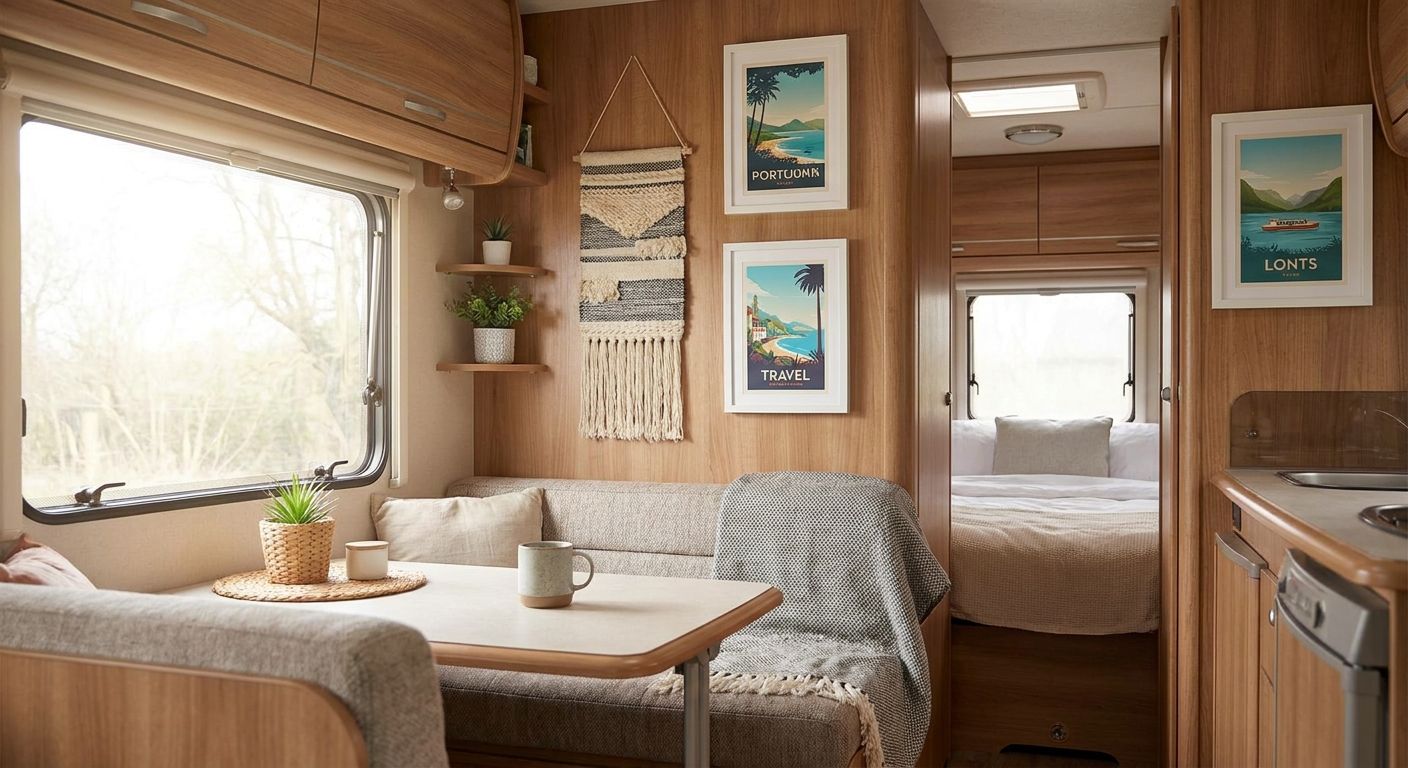
A loose theme reads better in a caravan than a random mix, because there's less wall to dilute the effect. Coastal, botanical or travel-map themes suit the holiday-mode feel most owners are going for.
- Pick one colour family and stick to it across every print in the space
- Use odd numbers — three prints group more naturally than two or four on a short wall
- A single anchor piece near eye level at the dinette does more work than several small pieces spread thin
- Keep frame styles (or lack of frames) consistent across the group
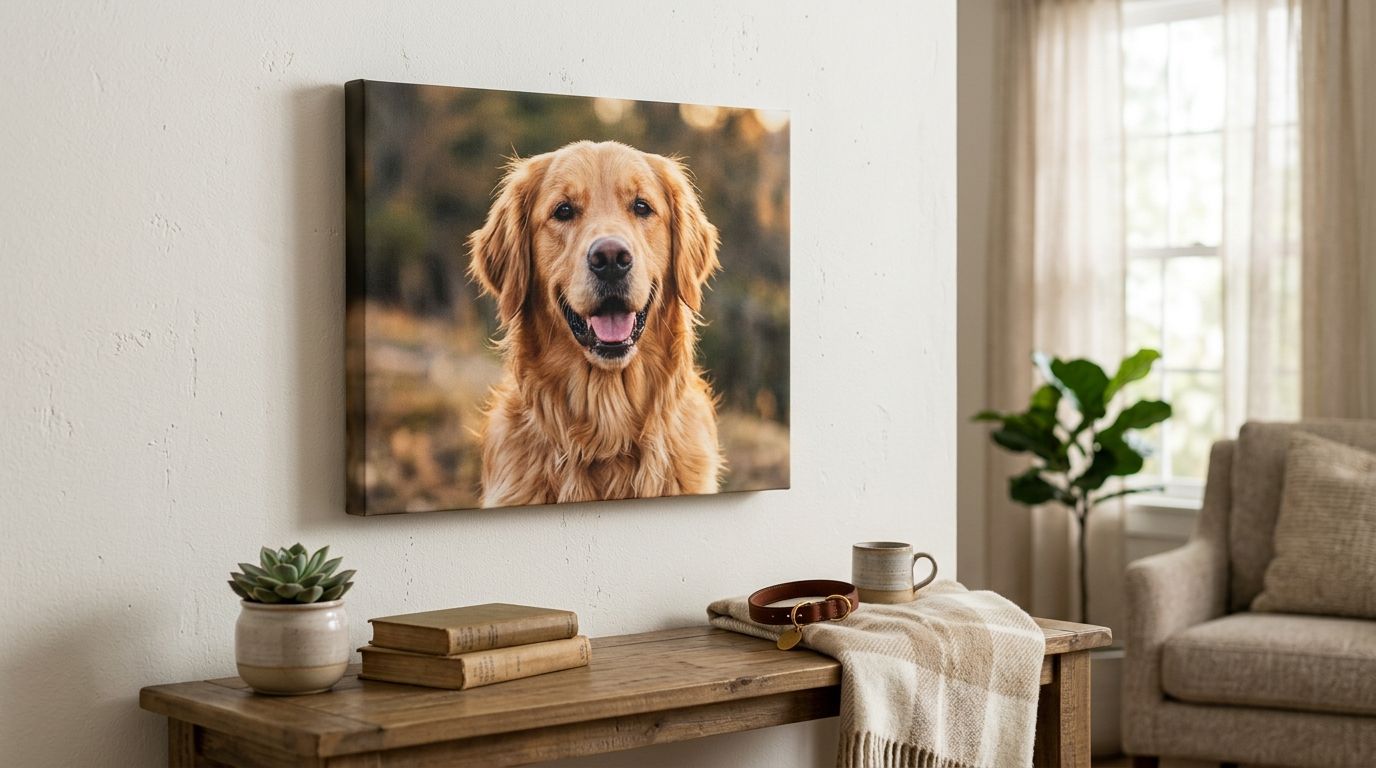
- If you travel with pets or kids, a wall art for dog and cat lovers or travel-themed print adds personality without clutter
Rotate art seasonally or by trip
One advantage a caravan has over a house: the walls are small enough that swapping art out between trips is a five-minute job, not a redecorating project.
- Keep two or three spare prints in a flat folder for quick swaps
- Match art loosely to the trip — coastal prints for a beach run, muted tones for outback travel
- Removable adhesive makes rotation painless; peel, store flat, reapply
- Refresh art at the start of each caravan season rather than leaving the same print up year-round
Comparison: wall art options for caravans and motorhomes
| Option | Best for | Mounting | Key limitation |
|---|---|---|---|
| Unframed paper print | Budget refresh between trips | Command strips, poster tape | Curls in humidity without flat storage |
| Peel-and-stick wallpaper panel | Covering a full feature wall in a static van | Removable adhesive | Struggles on curved caravan corners |
| Framed print, no glazing | Motorhomes with fixed mounting points | Screws into wall studs | Heavier, needs a confirmed solid fixing point |
| Stretched canvas print | Larger motorhomes with more wall run | Canvas hanging hardware | Bulkier, more vibration risk on gravel |
| Lightweight poster | Pop-tops and camper trailers | Reusable adhesive, washi tape | Least durable option long-term |
Unframed prints on removable adhesive win for most caravans in 2026 — light, cheap to replace if damaged, and the only format that survives corrugations without a rattle.


Common mistakes caravan and motorhome owners make
- Hanging heavy framed glass art that survives one trip before the glass cracks on a dirt road
- Ignoring condensation risk near windows, which warps paper prints from the back within a season
- Overcrowding a short wall with a full house-style gallery layout that blocks sightlines to windows and vents
- Drilling into fibreglass or aluminium panels without checking for wiring or the caravan's structural bracing behind it
- Choosing high-gloss frames that reflect glare off every window in a small cabin, making the art harder to see, not easier
The same principles apply if you're setting up a granny flat or any compact secondary living space — small wall, big impact, wrong material fails fast.
FAQ
What's the best wall art for a caravan?
Unframed paper or canvas prints under A3 size, mounted with rated Command strips, work best for caravan walls in 2026. They're light enough to survive vibration and easy to swap between trips.
Can you hang canvas prints in a motorhome?
Yes, but choose a stretched canvas rather than a heavy box frame, and secure it to a confirmed solid mounting point. Larger motorhomes with more wall run handle canvas better than small camper trailers.
How do you hang art in a caravan without drilling holes?
Rated adhesive strips like 3M Command hooks hold most lightweight prints without damaging fibreglass or laminate panels. Test the adhesive on a hidden section of wall first, since caravan finishes vary.
Is peel-and-stick wallpaper safe for caravan walls?
It works on flat laminate panels but struggles on curved corners common in older caravans. Test a small section first to check adhesion on the specific wall finish.
What size wall art suits a small caravan wall?
A3 or A4 unframed prints suit most single caravan wall spots, with square formats filling gaps between windows better than tall portrait prints. Two or three small grouped prints usually reads better than one oversized piece.
Does humidity damage prints in a caravan?
Paper prints can curl or warp if condensation builds nearby, particularly on overnight trips in cooler weather. Keeping prints away from windows and storing spares flat, not rolled, prevents most damage.
Is framed or unframed art better for motorhomes?
Unframed art is better for most motorhomes because it's lighter and has no glass to crack under vibration. Framed prints work only where there's a confirmed solid mounting point and the frame skips glazing.
How often should caravan wall art be rotated?
Most owners swap prints at the start of each caravan season or between major trips, since removable adhesive makes the change a five-minute job. Keeping two or three spare prints on hand makes rotation easy.
One last thing
A thin foam pad stuck behind the mounting point of a print — the same kind used under furniture feet — cuts down the rattle against the wall panel while driving, and it's the detail most caravan owners skip until the second trip.