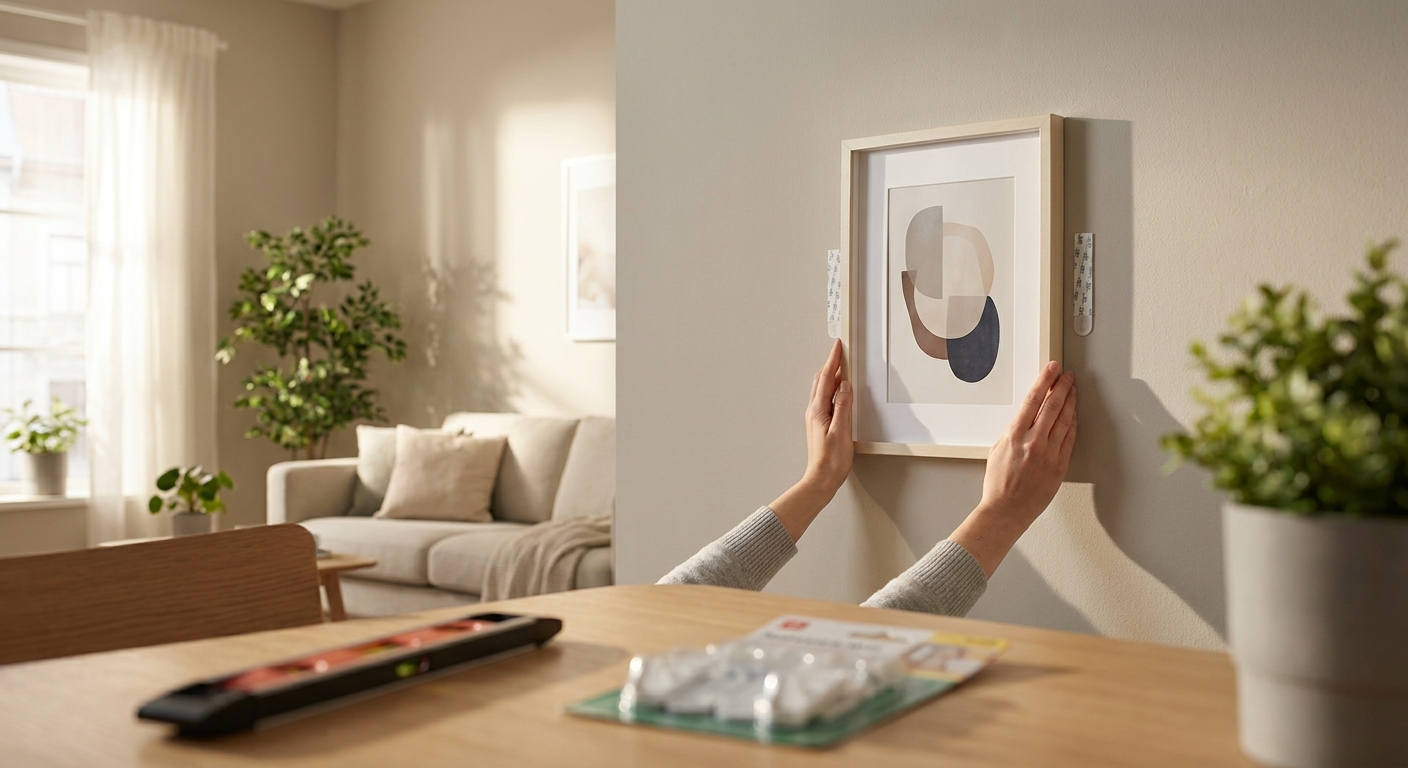
Renting in Australia in 2026 means one rule stays constant: no holes, no bond deductions. This guide breaks down exactly how to hang wall art without damaging walls, using removable methods that hold real weight and come off clean at inspection time.
- Command strips rated for 2kg to 7.3kg per pack hang canvas and framed prints without a single nail hole.
- Test every placement with painter's tape for 24 hours before committing adhesive to a rental wall.
- Textured or freshly painted walls need adhesive hooks, not strips - strips fail on uneven surfaces.
- Pulling a strip slowly at a 15-degree angle for 15 seconds prevents paint tear on plaster and gyprock.
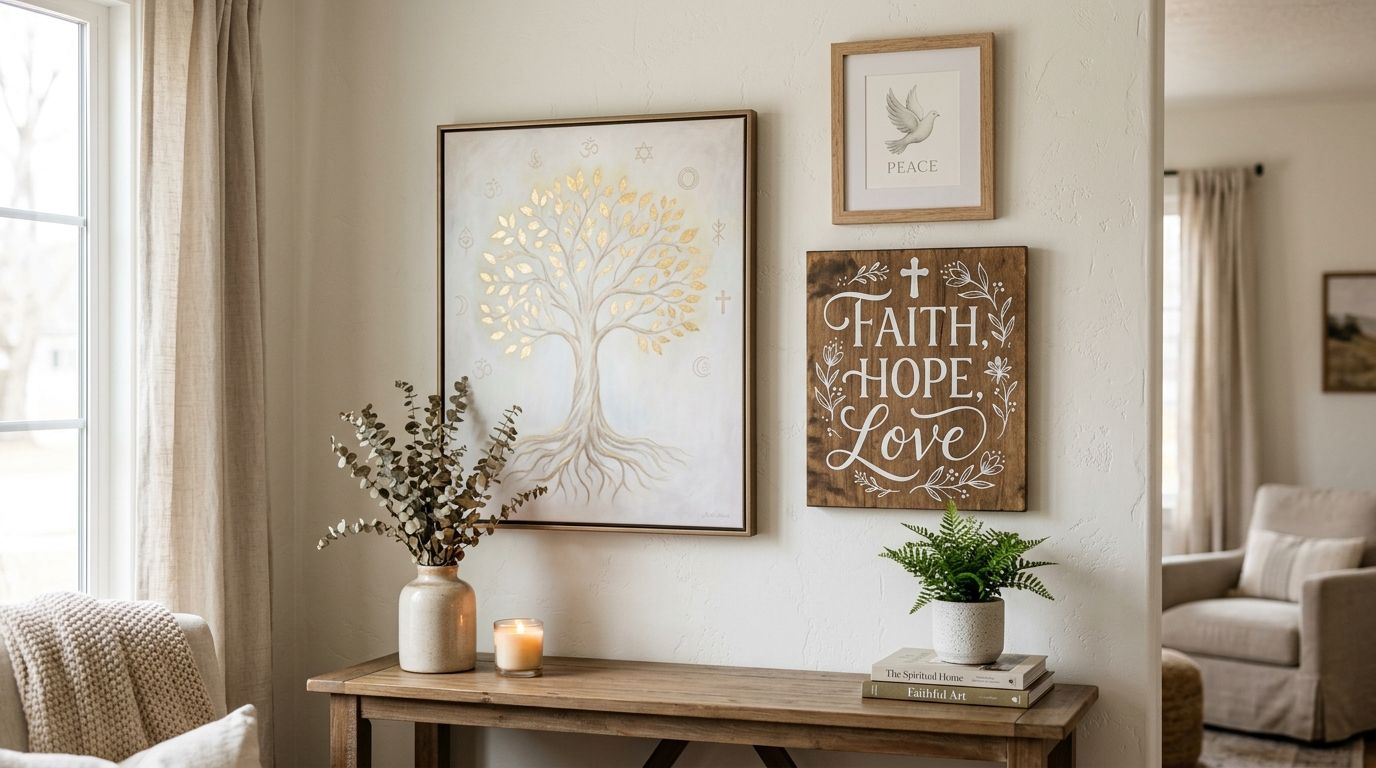
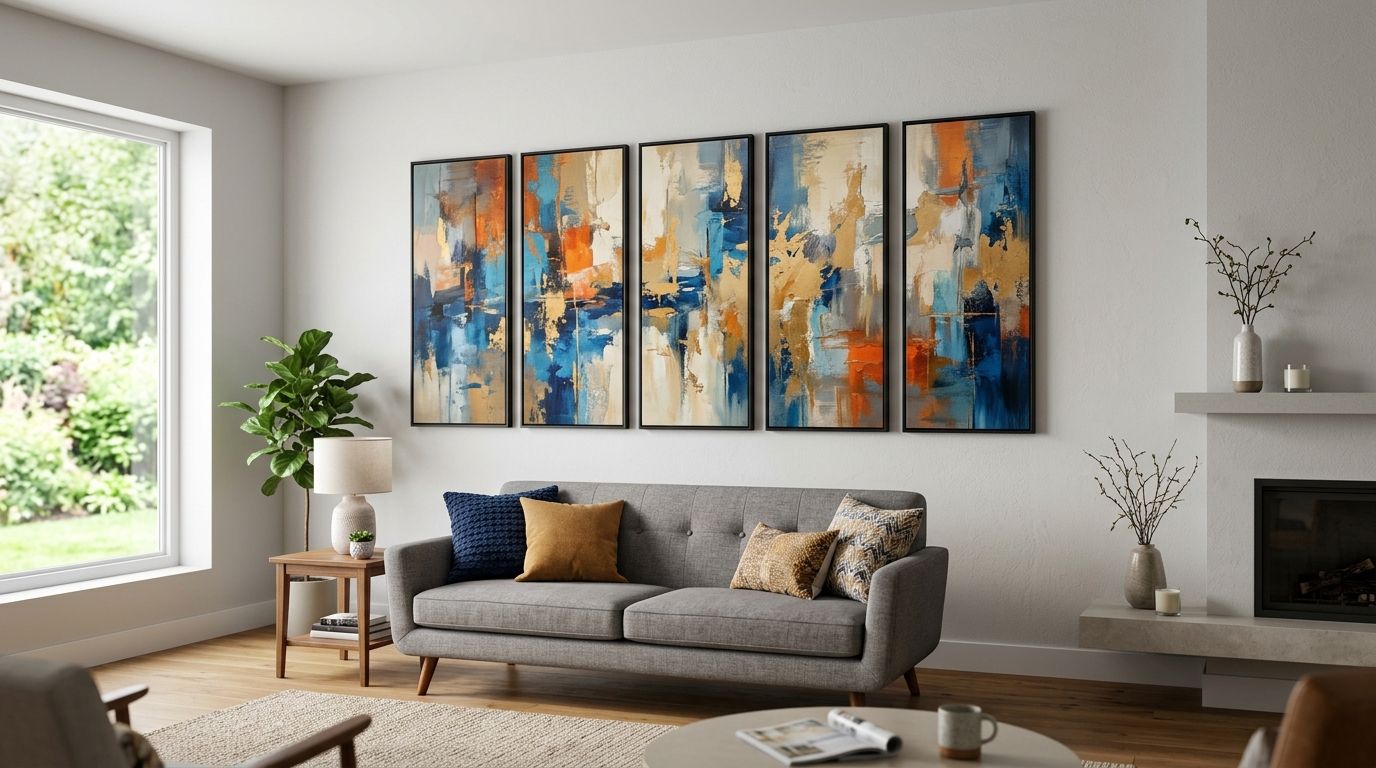
- Gallery walls work in rentals when you anchor one hero piece and build outward with strips, not nails.
Why this matters
Bond inspections in 2026 are stricter than they were even three years ago, and most property managers now photograph every wall before handover. A single nail hole can trigger a deduction that runs into hundreds of dollars once patching and repainting labour gets added to the final invoice.
The fix isn't skipping wall art - it's choosing the right hanging method for the wall you've actually got. Renters who want art up without risking bond money need methods matched to weight, wall texture and how long they're staying.
If you're decorating a rental long-term, start with pieces built for portability. Wall art for a rental you can take with you covers formats that survive multiple moves without reframing.
What you'll need
- Removable adhesive strips rated for your piece's weight (Command or equivalent, 2026 packaging lists kg capacity on the box)
- Painter's tape for placement testing
- A soft measuring tape and pencil
- A level, spirit or phone-app
- Isopropyl wipes to clean the wall surface before mounting
- A hairdryer for removal day
- Lightweight canvas or unframed original art under 2kg for the easiest, most damage-free hang
The steps
1. Check your lease and wall type before buying anything
Some leases explicitly ban adhesive products on painted walls, and some older Queenslander or federation-era rentals still have horsehair plaster that reacts badly to any adhesive. Run a thumbnail test in an inconspicuous spot - if paint flakes off with light pressure, skip strips entirely and use a freestanding shelf ledge instead.
Common mistake: assuming every rental wall is standard gyprock. A lot of 1970s-1990s Australian units still have painted masonry or plaster that behaves differently under adhesive.
2. Match the hanging method to the actual weight
A 40cm x 40cm canvas print weighs roughly 0.5kg to 1.5kg depending on stretcher depth. A framed original painting over an A2 size can hit 3kg to 5kg once glass or a timber frame is added. Adhesive strips are rated per pair - most 2026 packs list capacities from 2kg up to 7.3kg for the heavy-duty range, so check the box before you buy, not after the piece is on the wall.
Common mistake: buying one box of strips for an entire gallery wall of mixed weights. Every piece needs its own weight-matched strip count.
3. Test the layout with painter's tape first
Cut paper templates matching each artwork's dimensions and tape them to the wall. Live with the arrangement for at least 24 hours before committing adhesive - lighting changes through the day reveal glare or shadow problems that aren't obvious at 10am.
This step accomplishes more than it sounds like: repositioning painter's tape costs nothing, repositioning a set of strips after they've bonded for an hour usually tears the wall finish.
4. Clean the surface, then mount
Wipe the exact contact area with an isopropyl wipe and let it dry fully - adhesive strips lose 30-40% of their holding power on dusty or oily surfaces. Press each strip for 30 seconds, then wait a full hour before hanging the artwork so the adhesive cures against the wall.
Expected outcome: a bond that holds through Australian summer humidity spikes without the piece sliding. Skipping the one-hour cure is the single biggest reason strips fail within the first week.
5. Build a gallery wall with one anchor point
Pick a hero piece as your visual anchor, then work outward with smaller pieces spaced 5cm to 8cm apart. Every additional piece gets its own weight-matched strips - never share a single set of strips across two frames.
For curated gallery layouts specifically designed around removable hardware, framed prints for gallery walls has sizing combinations that work without a single drilled hole.
6. Remove without tearing paint
On moving day, pull each strip slowly downward at a low angle - roughly 15 degrees - for a full 15 seconds rather than yanking it straight off the wall. A hairdryer on low heat held 10cm from the strip for 20 seconds softens the adhesive further on stubborn spots.
Common mistake: pulling fast because it feels quicker. Fast removal is what tears the top layer of paint off rental walls and turns a $0 bond issue into a $150 repainting charge.
7. Deal with the residue left behind
Any leftover adhesive comes off with a warm, damp cloth and a small amount of eucalyptus-based sticky remover - avoid anything abrasive on painted surfaces. Check the wall under good light before your final inspection; residue is easy to miss in dim hallway lighting but obvious to a property manager with a torch.


Troubleshooting
- Strips won't stick to textured or Tuscan-render walls. Adhesive strips need a flat surface with even contact. Switch to a monkey hook or adhesive picture hanger designed for textured paint - these grip the wall's high points instead of relying on full surface contact.
- The piece slid down within 48 hours. The wall probably wasn't fully clean, or the strip cured for less than the recommended hour before weight was applied. Remove, re-clean with isopropyl wipes, and re-mount with a full hour's cure time.
- A small paint mark appeared after removal. This is usually a pre-existing thin spot in the paint, not adhesive damage. A dab of white touch-up paint (many landlords keep leftover tins, or the property manager can supply the exact shade) covers it in under a minute.
- Humidity in coastal Queensland or Darwin rentals is loosening strips. High humidity above roughly 70% weakens most acrylic-based adhesives. Swap to a foam-backed hook rated for humid environments, or run a small fan near the wall for a day after mounting.
- You need to hang something over 5kg, like a large framed original. Strips generally aren't rated for this. A picture rail (common in older Victorian and Edwardian terraces) or a French cleat that clips onto the rail avoids drilling entirely while supporting far more weight.
- The landlord's inspection is in two days and strips are still on the wall. Removal itself only takes seconds per strip once you follow the slow-pull technique - budget 20 minutes total for a full gallery wall of 6-8 pieces.
Tools and resources
- Weight-rated removable adhesive strips (2kg to 7.3kg capacity, check the box)
- Painter's tape and paper templates for layout testing
- Isopropyl wipes and a soft cloth for cleanup
- A hairdryer for low-heat removal
- For textured or heritage-plaster walls, check best posters for renters who can't drill into walls for lightweight formats that skip adhesive strain altogether
- For committing to a full wall treatment instead of individual pieces, best peel-and-stick wallpaper for Australian renters covers removable options that behave the same way at inspection time
What to do next
Once the hanging method is sorted, sizing is the next thing renters get wrong - a piece too small for the wall reads as an afterthought no matter how well it's mounted. How to choose the right size wall art for your wall walks through the proportion math before you buy.
FAQ
What's the best way to hang wall art without damaging walls in a rental?
Weight-rated adhesive strips are the most reliable damage-free method for most canvas and framed prints in 2026. Match the strip's kg rating to the piece's actual weight and clean the wall surface before mounting.
Are Command strips strong enough for a framed print?
Yes, heavy-duty adhesive strips now rate up to 7.3kg per pair, which covers most standard framed prints. Anything heavier than 5kg is safer on a picture rail or French cleat instead.
Do adhesive strips work on textured walls?
No, most adhesive strips need a flat surface for full contact and fail on textured render or heritage plaster. Use a monkey hook or textured-wall-rated adhesive hanger instead.
How do you remove adhesive strips without tearing paint?
Pull the strip slowly downward at roughly a 15-degree angle for about 15 seconds rather than yanking it off. A hairdryer on low heat for 20 seconds softens stubborn adhesive first.
Can you build a gallery wall in a rental without drilling?
Yes, anchor one hero piece and build outward with individually weight-matched adhesive strips for each additional frame. Never share one set of strips across two pieces.
How much weight can a monkey hook hold on a rental wall?
Standard monkey hooks typically hold 9kg to 18kg depending on the brand and gyprock thickness, without needing a stud. They leave a pinhole smaller than a nail hole, which most property managers don't flag at inspection.
Will humidity affect adhesive strips in Australian rentals?
Yes, humidity above roughly 70% weakens most acrylic-based adhesives over time. Coastal and tropical rentals do better with foam-backed hooks rated specifically for humid conditions.
Is peel-and-stick wallpaper safer than paint for a bond return?
Removable peel-and-stick wallpaper is designed to lift cleanly without pulling paint, making it a lower-risk option than repainting an accent wall. It still needs the same clean-surface prep as adhesive strips.
One last thing
Most bond disputes over wall art in 2026 aren't about the holes themselves - they're about undisclosed adhesive residue found weeks after move-out, once it's hardened and gone slightly yellow. Do the final residue check under a torch, not overhead lighting, the night before your inspection, and you'll catch what a quick glance misses.