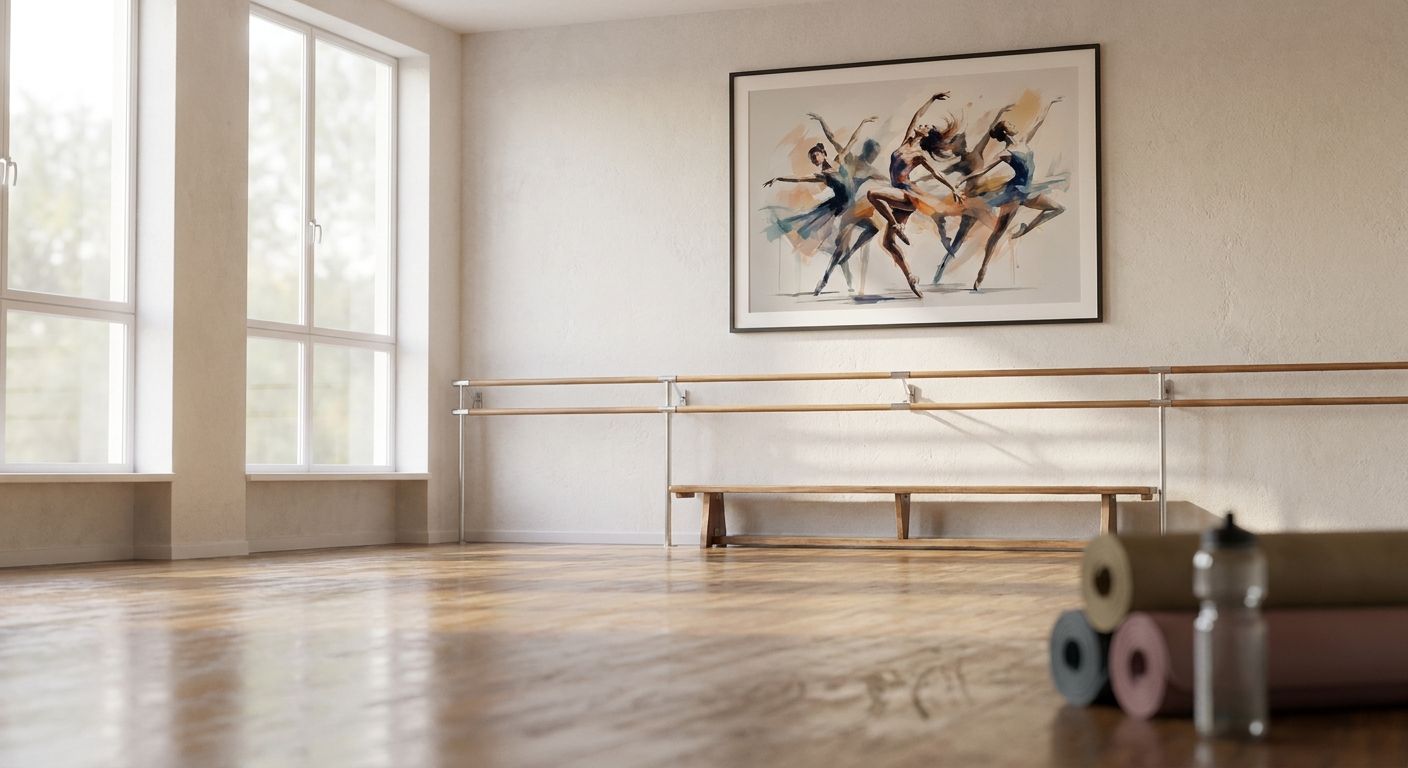
Wall art for a dance studio is the framed prints, canvas pieces and typography you hang on the non-mirrored walls, in reception areas and along corridors, to build atmosphere and give parents and students something to look at besides their own reflection. Performing arts spaces need art that survives humidity, sweaty hands on doorframes and kids swinging bags off the walls — not just anything that photographs well for a mood board.
- Wall art for dance studio spaces works best on non-mirrored walls: reception, corridors, changerooms.
- Canvas prints outperform glass-framed art near practice rooms because glass glares and reflects movement.
- Motivational typography earns its spot in performing arts studios, but only when it isn't the only decor idea in the building.
- Gioia Wall Art's canvas and framed print ranges cover both the front-of-house statement wall and the low-traffic hallway in 2026.
- Budget for three or four smaller pieces spread across zones rather than one large piece in the foyer.
Why wall art matters for dance and performing arts studios
A dance studio spends most of its wall budget on mirrors, and that's correct — dancers need them. But mirrors also mean every other wall in the building carries more weight than it would in a normal commercial space, because it's the only decor a student, parent or auditioning family actually notices.
Parents wait in reception for 45 minutes at a time during rehearsal season. Students queue in corridors between classes. Both groups are staring at walls, not at the floor work happening behind the studio door. Wall art for yoga and gym studios faces a similar problem — movement-heavy spaces where the practice room itself can't carry decor, so the surrounding walls have to do the work of building brand and mood.
The difference with performing arts specifically is turnover. Recital season, new enrolments, exam results — a dance studio's public walls need to feel current more often than a gym's do, which changes how you plan the budget across the year, not just the initial fit-out.
Map the walls that aren't mirrored
Before buying anything, walk the building and list every wall that isn't a mirror, a barre, or a fire exit. Most studios find they have more usable wall space than they think, just spread thin across small zones.
- Reception and front desk wall (first impression, highest dwell time)
- Waiting area for parents, often with seating facing one wall
- Corridor between studios, usually the narrowest and most trafficked space
- Changeroom and toilet corridor, easy to forget and rarely decorated
- Stairwell or entry landing if the studio is on an upper floor
- Office or admin nook, lower priority but still visible to staff and enrolling families
Choose movement and energy themes over generic decor
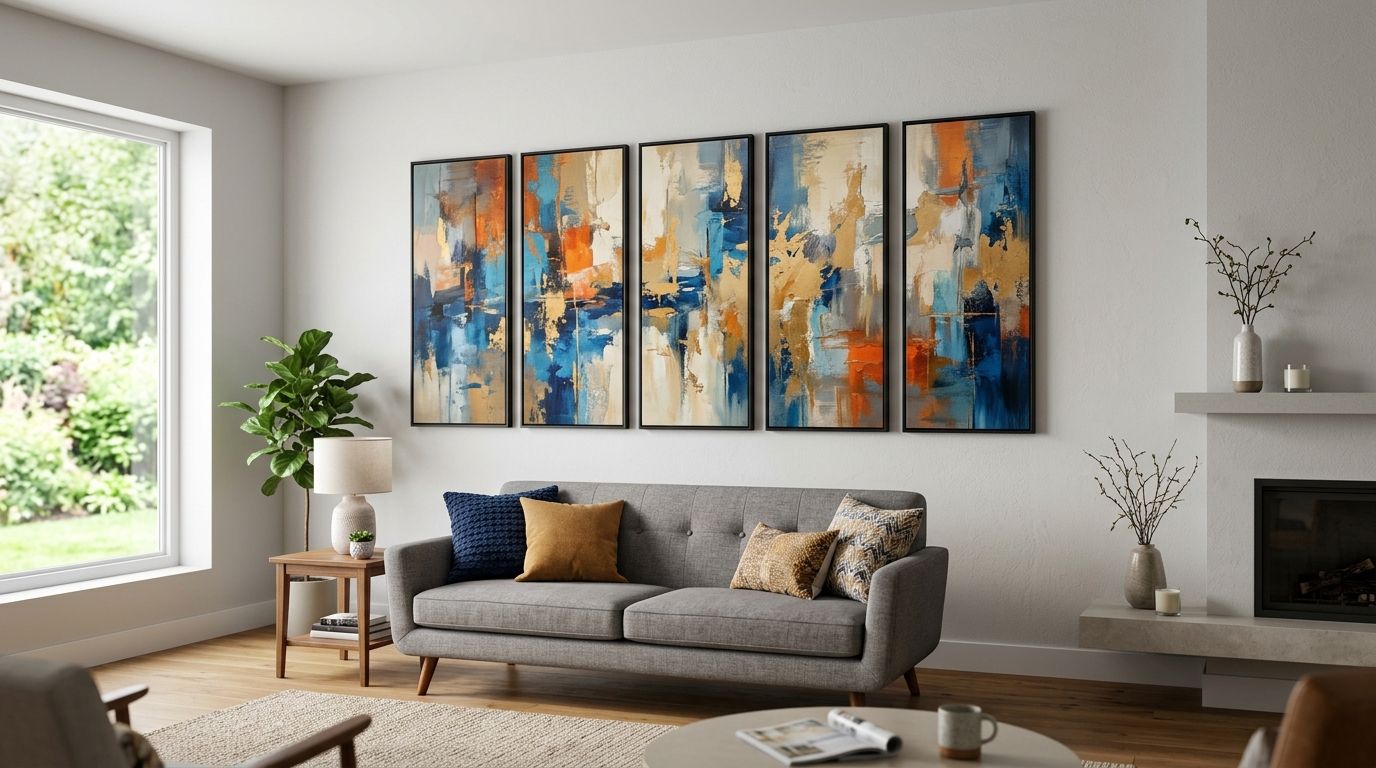
Generic hallway prints work fine in an office. A dance studio can push further because the audience already associates the space with movement, colour and expression. Abstract pieces with visible brushwork or gestural line work read as energetic without being literal.
- Abstract works with strong colour contrast for reception walls
- Expressive, textured pieces that echo the physicality of the studio
- Warm, saturated palettes over muted neutrals — flat grey reads as corporate, not creative
- Original paintings for a single statement wall, where budget allows
- Avoid photographic dance imagery in every room — one or two pieces is a theme, five is a cliché
This is where the studio's brand colours matter more than the room's existing palette. If the reception wall is already black-trimmed to match the mirrors, don't force the art to match the trim — let it contrast.


Add motivational typography where it earns its place
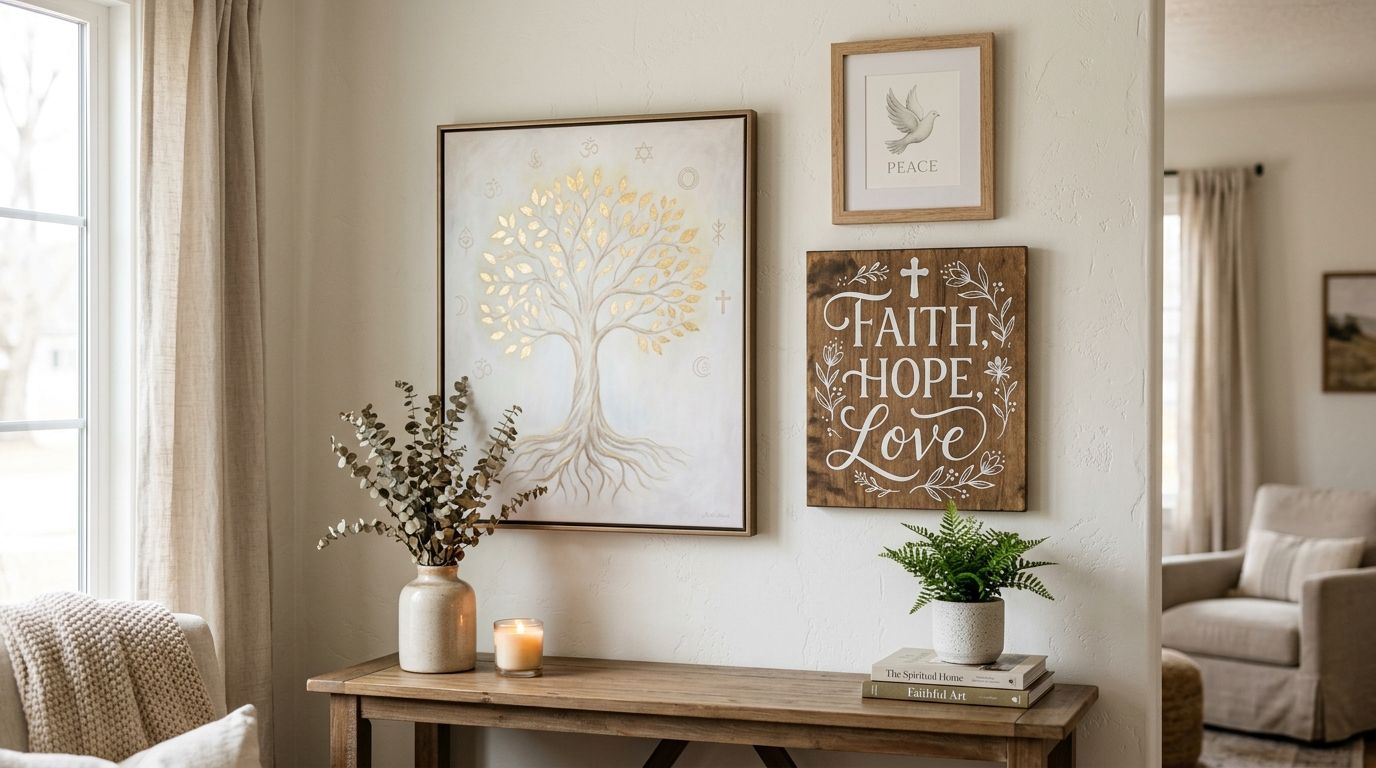
Quote art is common in performing arts studios for a reason — it works. It also gets tired fast when it's the only decor idea in the building.
- Pick one wall for typography, not every corridor
- Rotate the quote each term or season rather than framing it permanently
- Match the font and tone to the studio's actual brand, not a generic stock phrase
- Reserve motivational quote wall art for the changeroom or corridor students pass daily, not the reception wall parents judge first
Pick finishes that survive high-traffic corridors
Glass-framed prints look sharp in a showroom and reflect every fluorescent tube and moving body in a studio hallway. That glare is worse directly opposite a mirror wall.
- Canvas prints for corridors and any wall near a mirror or practice room
- Framed prints for lower-traffic admin offices and the front desk
- Unframed posters only for temporary, seasonal displays — they curl faster in humid changerooms
- Anything with glass kept away from doorways where bags and equipment swing past
Size pieces for the zone, not the whole room
A single oversized print looks intentional in a foyer and lost in a two-metre-wide corridor. Match scale to the actual wall segment, not the building's overall footprint.
- Reception feature wall: one large piece, or a two-piece diptych
- Corridors: a run of three to five smaller matching-format prints, evenly spaced
- Changeroom: one modest piece per wall segment, nothing oversized
- Stairwells: vertical formats that follow the sightline up the stairs
Balance energetic and calming pieces across zones
Not every wall should shout. Reception can carry bold colour and movement; a stretching or warm-up area often works better with a calmer, muted piece that doesn't compete with what the body is doing in the room.
- Bold, saturated pieces: reception, front corridor, foyer
- Muted, textured pieces: waiting seating, stretch zones, office
- Neutral abstracts: changerooms, where lighting is often harsher and flatter
Spread the budget across zones instead of one splash
A single large original painting in the foyer feels impressive on day one and does nothing for the six other walls a student and parent see every visit. Three or four mid-size canvas pieces spread across the building do more for how the studio actually feels to walk through.
Comparison: wall art options for dance and performing arts studios
| Option | Best for | Key limitation |
|---|---|---|
| Canvas print | Corridors and any wall near mirrors or practice rooms | Corners can dent if bags are stacked against them |
| Framed print | Reception desk, admin office | Glass glares under studio lighting and reflects movement |
| Unframed poster | Temporary recital themes, noticeboards | Least durable, curls in humid changerooms over time |
| Original painting | Foyer statement wall, owner's office | Higher spend per piece and harder to size-match across multiple walls |
Verdict: canvas prints win for most dance studio walls in 2026 because they carry no glass, no glare, and hold up better against foot traffic than framed or unframed alternatives.
“The wall parents stare at longest in any dance studio is the reception desk while they wait for pickup, not the practice room nobody but students see.”
Common mistakes dance studios make with wall art
- Hanging glass-framed pieces opposite the barre or mirror wall — the glare bounces straight back at dancers mid-turn.
- Filling every corridor with the same oversized motivational quote — parents notice the repetition faster than students do.
- Buying one large piece for the foyer and leaving every hallway and changeroom bare.
- Matching decor to the mirrors' black trim instead of the studio's actual brand colours.
- Skipping the changeroom and toilet corridor, the walls every parent actually looks at during pickup.
FAQ
What's the best wall art for a dance studio reception area?
A large canvas print or diptych in bold, saturated colour works best for a dance studio reception in 2026, since it's the wall families see first and judge fastest. Avoid framed glass here if the desk sits under fluorescent lighting, since glare undercuts the impression.
Should dance studios use framed prints or canvas near mirrors?
Canvas prints are the better choice near mirrors because they carry no glass and won't reflect movement back at dancers. Framed prints are fine in low-traffic admin offices away from the practice room.
How do you choose wall art for a small dance studio?
Prioritise the reception wall and one corridor run first, then add smaller pieces to changerooms as budget allows. Small studios do better with three or four modest pieces spread across zones than one oversized statement piece.
Is typography or quote wall art good for performing arts spaces?
Yes, but limit it to one wall and rotate the phrase each term. Quote art loses impact fast when it's the only decor idea in the building.
What size wall art works best in a dance studio corridor?
A run of three to five smaller, matching-format prints spaced evenly along the corridor reads better than one oversized piece in a narrow hallway. Match the format to the actual wall segment, not the building's total footprint.
Can original paintings work in a working dance studio?
Original paintings suit a single foyer or office statement wall, but they cost more per piece and are harder to size-match across multiple corridors. Canvas prints spread the same budget across more walls.
How often should a dance studio update its wall art?
Typography and quote pieces are worth refreshing each term or recital season; canvas and framed pieces in reception and corridors can stay put for years. Update the changeroom and hallway art first since students see it daily.
Does wall art help with a dance studio's brand identity?
Yes — reception and corridor art are often the only visible brand decisions a family sees before enrolling. Matching colour palette and tone across the front-of-house walls reinforces identity more than any single statement piece.
One last thing
Most studios spend their entire wall art budget on the foyer and forget the changeroom corridor, but that's the wall a parent stares at every single pickup, five days a week, for years. Put the second-best piece there in 2026, not the leftover poster.