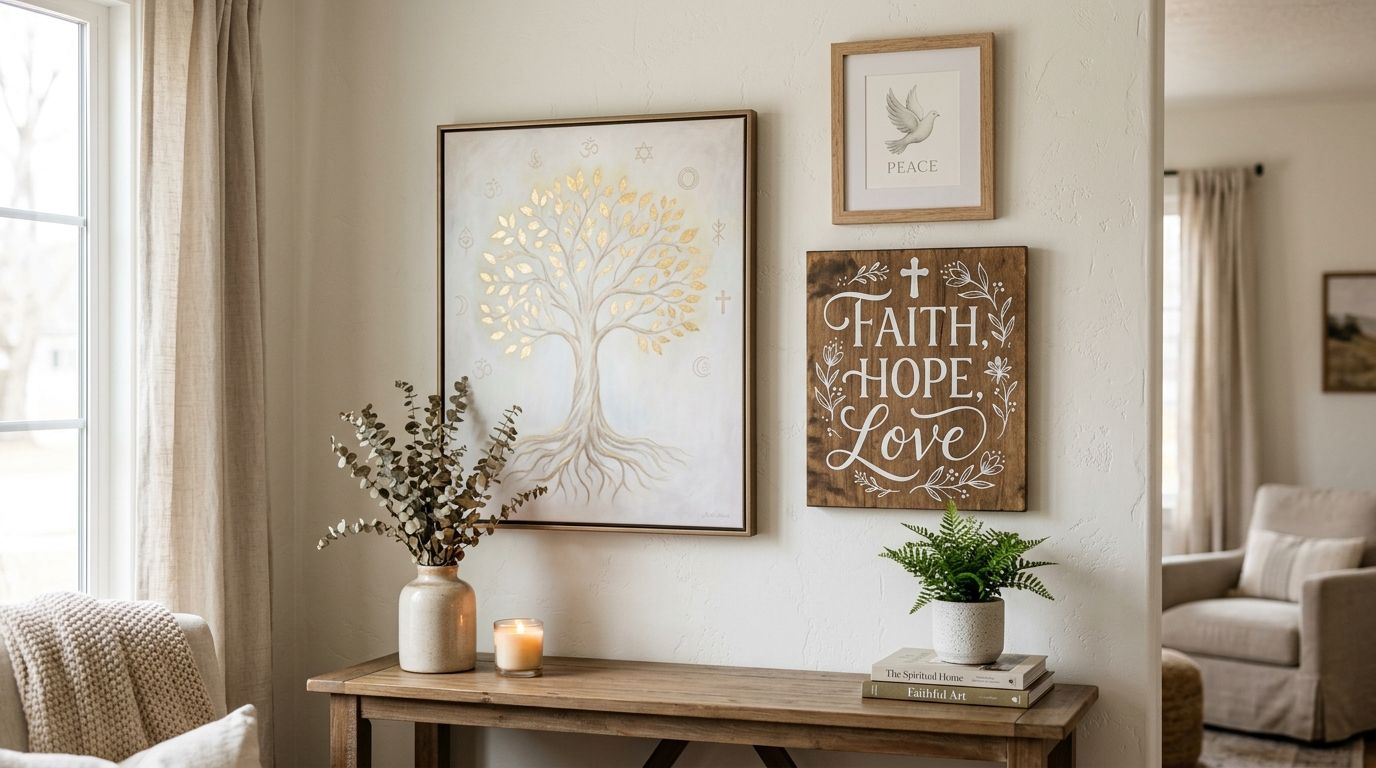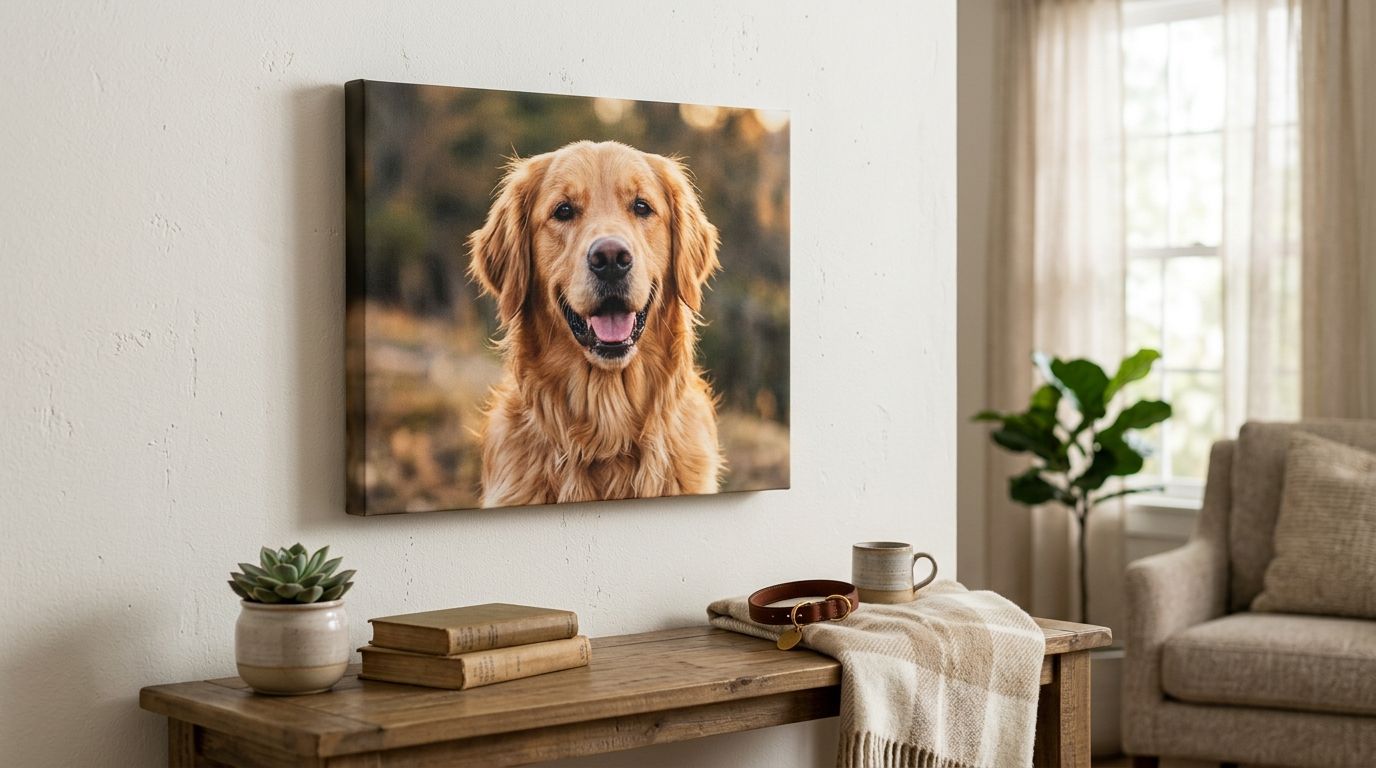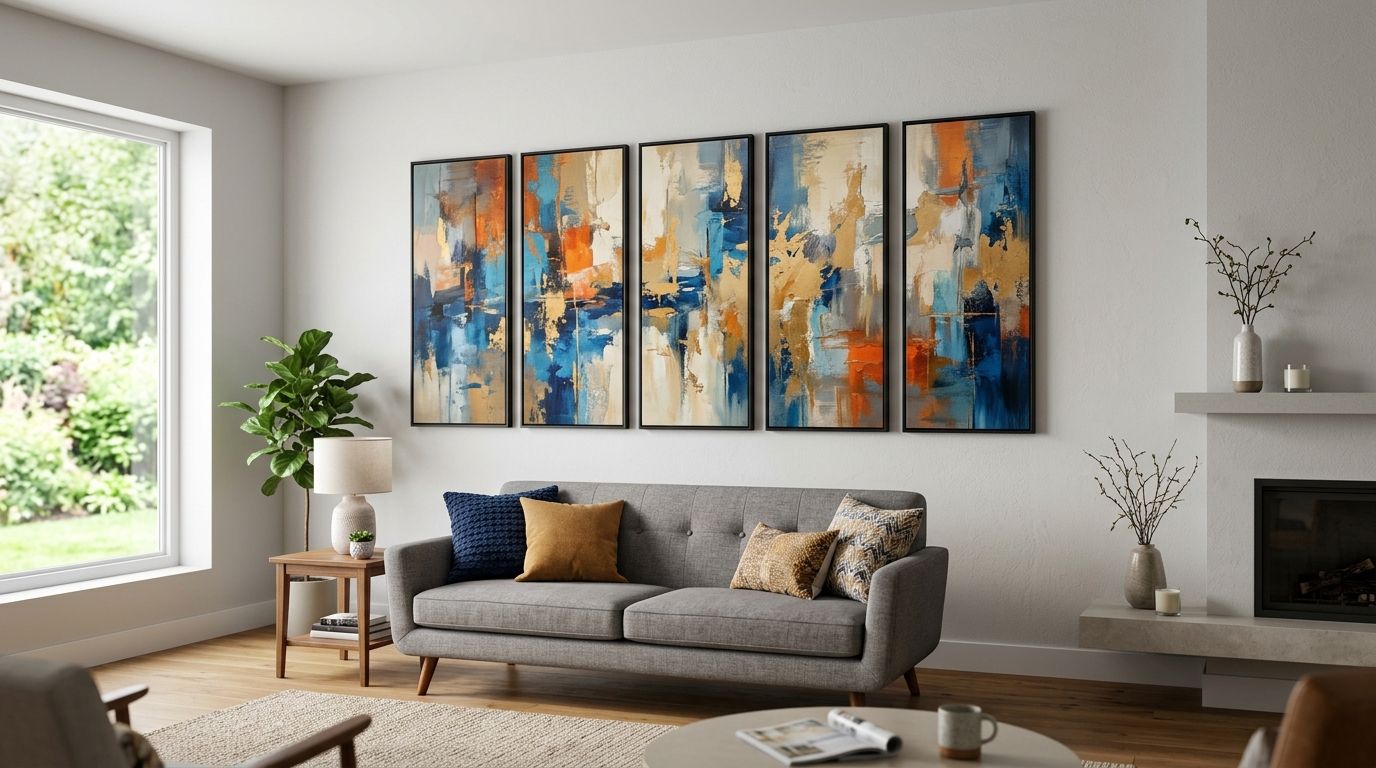
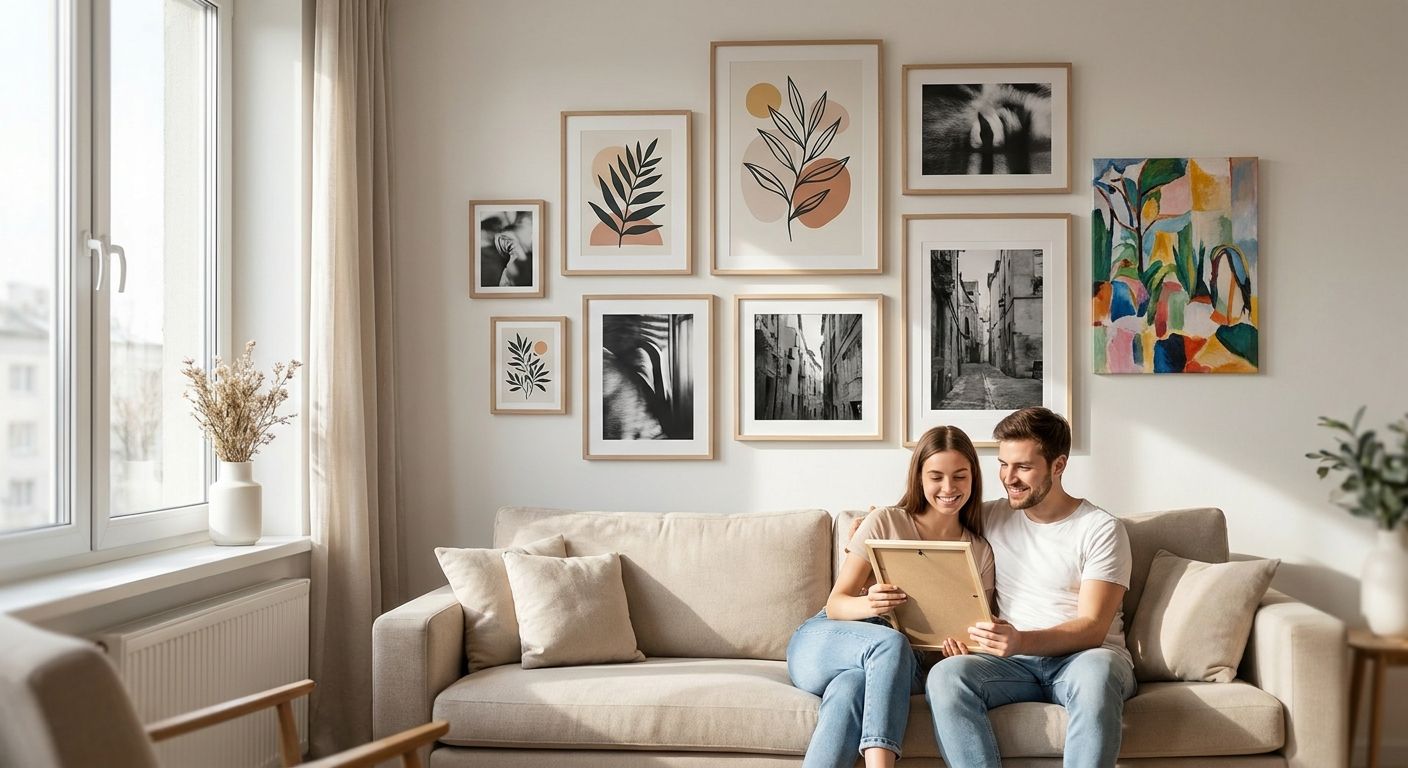
Wall art for first home buyers is the fastest, lowest-cost way to make a new place feel finished while the rest of the furniture budget is still recovering from settlement. First-time buyers move into homes with bare, builder-grade walls and almost no decorating history to fall back on, so every choice — size, style, order of purchase — has to work harder than it would in a home you've lived in for years.
- Wall art for first home buyers works best bought in stages, not as one big statement piece.
- Canvas prints from Gioia Wall Art start at $179.99 and need no extra framing budget.
- Map every wall before buying anything — most first buyers underspend on the hallway and overspend on the lounge.
- Unframed and poster options cost less upfront but need a hanging plan for rental-grade plasterboard.
- Pick one style anchor in 2026 and build outward instead of matching pieces room by room.
Why wall art matters for first home buyers
A first home usually comes with white or off-white walls, project-home proportions, and a mortgage that's already eaten the decorating budget. Wall art is the single cheapest way to make those rooms look intentional rather than half-moved-into, because it doesn't require a tradesperson, a paint job, or a weekend off work.
First buyers also tend to search and shop differently to established homeowners: they're comparing options across the whole house at once, not just one feature wall, because every room needs something. That changes the math — spreading a set budget across five or six rooms usually beats spending it all on one large canvas over the sofa.
Map your walls before you buy anything
Do this before opening a single product page. A floor plan with wall lengths noted takes twenty minutes and saves you from buying art that's the wrong scale for the space.
- Walk the house and note which walls are widest (usually the living room and the main hallway run)
- Measure the sofa or bed wall specifically — this is where scale mistakes happen most
- Check natural light at midday and again at 5pm; north-facing rooms wash out darker palettes
- Photograph each wall on your phone so you can compare options later without re-measuring
- Flag any feature walls (fireplace, staircase, entry) separately from the rest
Set a wall art budget as its own line item
Most first home buyers fold decorating into a vague "whatever's left" category, which usually means it never happens. Treat wall art as its own line in the moving budget, separate from furniture and window coverings.
- Decide a total figure for the first 12 months, not just move-in week
- Split it by room priority — living areas and entry first, spare rooms last
- Leave 15-20% aside for hanging hardware, especially on rendered or brick-veneer walls
- Price a few pieces before committing to one room, so you know what a full house actually costs
- Track what you've spent per room so you don't blow the whole budget on the first wall you fill
Choose ready-to-hang canvas prints for new-build proportions
Once the budget is set, the manual route is buying unframed prints and sourcing your own framing — cheaper per piece, but it adds a second job and a second cost. The faster path for most first buyers is a ready-to-hang canvas print, which skips the framing step entirely and suits the taller, plainer walls common in 2026-era project homes.
- Canvas prints arrive stretched and ready to hang, no framing shop required
- Sizes in the 60-100cm range suit standard project-home ceiling heights
- A single large canvas reads better on an open-plan wall than two small ones
- Check the best wall art for a new build home guide for proportions specific to newer floor plans
- Buy the anchor piece for your main living wall first, then work outward


Get the sizing right before you order
Undersized art is the most common first-home mistake — a 40cm print looks lost above a queen bed or a three-seater sofa. Get the proportion right before checkout, not after the box arrives.
- Sofa and bed walls: art should span roughly two-thirds of the furniture width below it
- Hallways: a run of smaller pieces reads better than one oversized print in a narrow space
- Entry walls: one medium piece at eye level beats an oversized statement piece in a tight foyer
- Ceiling height over 2.7m (common in newer builds) can carry a taller vertical print without looking cramped
- Work through the right size wall art for your wall breakdown if you're unsure on any single wall
Buy for the whole home, not one room
First buyers often spend the entire art budget on the living room because it's the room guests see first, then leave every other room bare for a year. Spread the spend instead.
- Prioritise the entry, the main living wall, and the bedroom — these get seen and used daily
- Leave spare rooms and studies for a second wave of purchases
- Buy one piece per priority room before doubling up on any single wall
- Keep a shared visual thread (a colour, a tone, a subject) across rooms so the house reads as one home, not five unrelated ones
Pick a style anchor before you shop
Deciding on style after you've already bought three unrelated pieces is how first homes end up looking disjointed. Pick one anchor style in 2026 and let every later purchase reference it.
- Coastal, Japandi, and Scandinavian palettes suit lighter, brighter first-home interiors
- Warm, earthy tones work well against project-home neutrals like greige and warm white
- Bold colour or pattern pieces work best as a single feature, not repeated room to room
- If budget is genuinely the deciding factor, the best wall art under $100 range is a reasonable place to start testing a style before committing to larger canvas pieces
Comparison: wall art options for first home buyers
| Option | Best for | Starting price | Key limitation |
|---|---|---|---|
| Unframed art prints | Cheapest wall coverage, DIY framing later | Check current site pricing | Needs your own frame and hardware |
| Framed prints | No extra framing job | Check current site pricing | Bulkier if you move again within a few years |
| Canvas prints | Ready-to-hang, gallery finish | From $179.99 | Higher per-piece cost than posters |
| Posters | Lowest cost, easy to swap out | Check current site pricing | Less durable finish over several years |
| Peel-and-stick wallpaper | Statement wall without paint | Check current site pricing | Bigger commitment for a first decorating pass |
Canvas prints win for first home buyers who want the walls done in one order, not a second framing project.
Common mistakes first home buyers make
- Buying one giant statement piece and stopping there — the living room looks finished, every other room stays bare through 2026 and beyond
- Matching art to the previous rental's palette instead of the colours actually in the new home
- Ordering tiny prints for wide project-home walls, which reads as an afterthought rather than a decorating choice
- Waiting until "everything else is sorted" to buy art, which usually means it never gets bought at all
- Skipping the hanging plan and damaging fresh paint or rendered walls with the wrong hardware
FAQ
What wall art should first home buyers buy first?
Start with the main living room wall or the entry — these get seen daily and set the tone for every room after them. A single ready-to-hang canvas print covers this without a framing job.
Is canvas or framed print better for a first home?
Canvas prints are usually better for first home buyers because they arrive ready to hang with no separate framing cost. Framed prints suit rooms where you want a finished, formal look and don't mind the extra bulk if you move again.
How much should first home buyers budget for wall art?
There's no fixed figure, but treating it as its own line item — separate from furniture — is what stops it getting skipped. Canvas prints from Gioia Wall Art start at $179.99 per piece, which gives a workable per-room baseline.
What size wall art suits a project home?
Project homes built in the last decade tend to have taller ceilings and wider open-plan walls, so 60-100cm canvas prints usually read better than smaller prints designed for older, lower-ceiling homes. Measure the actual wall before ordering.
Should first home buyers buy art before or after furniture?
Art can go up before furniture arrives since it doesn't depend on anything else in the room. Waiting for furniture first is the reason many first homes stay bare-walled well into their second year.
Is peel-and-stick wallpaper a good option for a first home?
It works well for a feature wall without a paint job, but it's a bigger style commitment than a print you can swap out later. First-time buyers still finding their style usually do better starting with prints.
How many pieces of wall art does a first home need?
Enough for every room that gets daily use — typically the entry, living area, and bedroom at minimum, with spare rooms added in a second wave once the budget allows.
Do first home buyers need matching art in every room?
No — a shared colour or tone across rooms reads as intentional without every piece matching. Forcing an exact match across five rooms usually looks flatter than a loosely connected palette.
One last thing
The first-home mistake that costs the most isn't the wrong print — it's buying one oversized piece for the room guests see and leaving the rest of the house untouched for a year. Spreading the same budget across three or four rooms in smaller doses makes a first home look settled far faster than one expensive centrepiece ever will.