A staircase is the one wall in the house every visitor walks past on the way in and on the way up — get the size, the angle or the sightline wrong and it stays half-decorated for years. This guide breaks down what actually works as wall art for staircases in 2026, from single statement canvases to running gallery grids, and which pieces solve the awkward stairwell problem instead of getting lost in it.
- Wall art for staircases needs scale matched to the full wall height, not just the landing — a single large canvas often reads better than three small frames on a triple-height run.
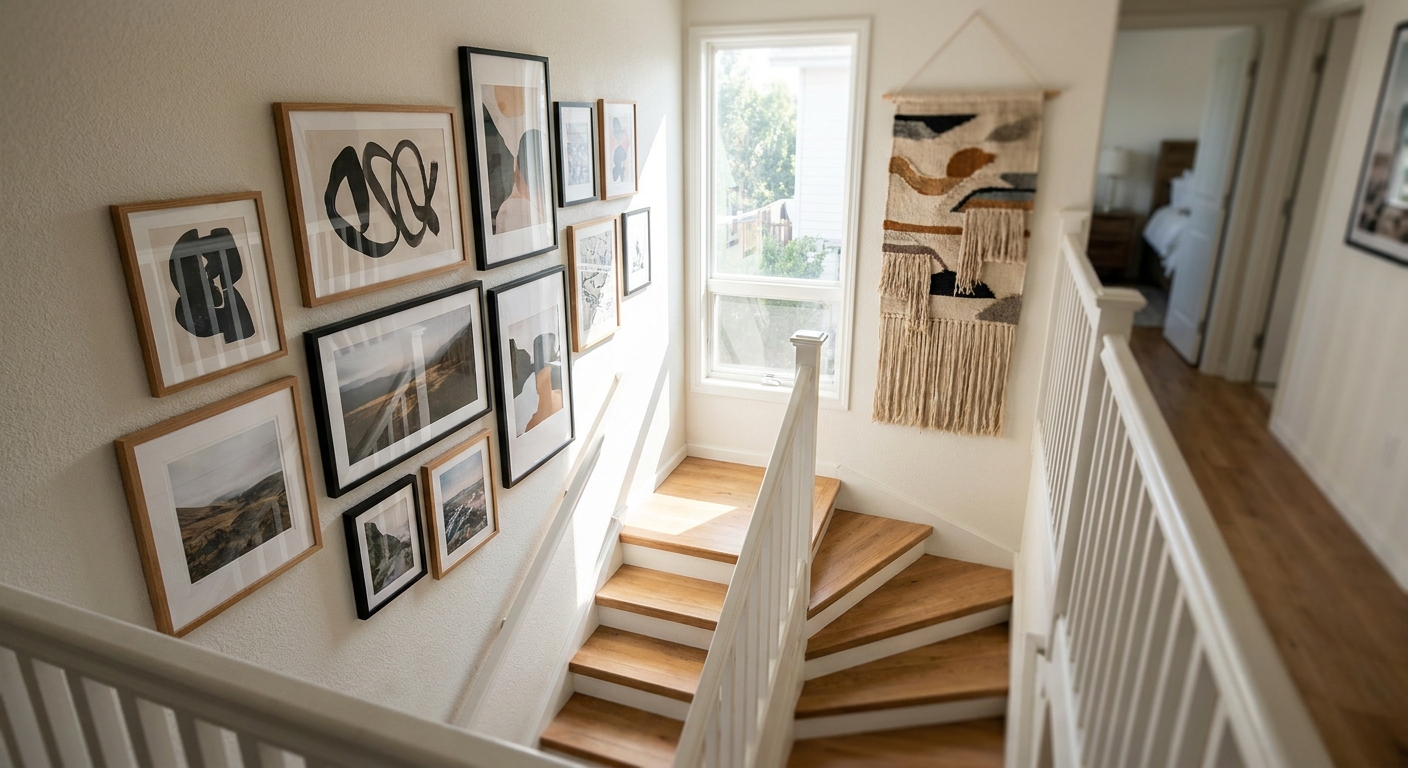
- Framed prints for gallery walls work best on stair rails because the grid can follow the stair's rake line instead of sitting dead level. Buy.
- An original painting sized for a wide stair return, like a 104cm square canvas, works as a statement piece but costs more upfront than a print run. Consider before you buy.
- Peel-and-stick wallpaper suits rental staircases where drilling isn't an option, but check the lease before you commit to a full run.
Why this matters
Stairwells are usually the tallest, most awkward wall run in an Australian home — two or three storeys of blank plaster that most furniture layouts simply ignore. Nothing else in the house sits against a floor plan for years the way an empty stair wall does. Fixing it with the right wall art for staircases is one of the highest-impact styling jobs in a renovation, and one of the most commonly botched, because the rules that work on a living room wall don't survive contact with a sloped stair rail.
Who this is for
This guide is for anyone staring at a blank stair wall right now — homeowners mid-renovation, people who've just moved into a two-storey house, and share-house tenants trying to make a stairwell feel finished without touching the landlord's paint job. If your stair run has a rake, a half-landing, or a triple-height void above the front door, the picks below are built for exactly that geometry.
What to look for in wall art for staircases
Scale that matches the wall height
A stairwell wall is almost always taller than any other wall in the house, and a single 40x60cm print on a 3.5-metre run just disappears. Go bigger than instinct suggests — large-format canvas prints sized 100cm and up are the baseline for a stair wall taller than one storey, not the ceiling.
A hanging line that follows the rake
Stair rails don't run level, and neither should the art hung beside them. A gallery grid staggered to parallel the stair's pitch reads as intentional; the same grid hung dead level against a sloped rail looks crooked even when a spirit level says it isn't.
Visibility from more than one angle
Stair art gets viewed from the bottom looking up, the landing looking down, and side-on while you're actually climbing. A piece with strong contrast and a clear focal point holds up across all three; something busy and low-contrast turns into visual noise from a distance.
Light levels in the stairwell
Many Australian stairwells run on a narrow window or a single skylight, which means low, uneven light most of the day. Matte finishes avoid glare under a single downlight, and warmer or higher-contrast palettes read better in dim corners than pale, low-contrast prints that wash out.
Framing and glazing safety
A stairwell is a high-traffic, load-carrying zone — bags, furniture, kids on the way up. Skip standard glass glazing on any piece within arm's reach of the stair rail and lean on canvas or acrylic-faced prints, which shrug off the odd bump that glass won't.
Cohesion across the run
A staircase is climbed in sequence, so the pieces on it get read as a set whether you planned that or not. Matching frame colours or a shared palette across a run makes the ascent feel curated; a mismatched grab-bag of leftover prints makes it feel unfinished no matter how good each piece is on its own.
Top picks for staircase walls
The safe pick — a framed gallery grid staggered along the rake. Framed prints for gallery walls let you stagger six to nine pieces at 8-10cm spacing so the grid climbs with the stairs instead of fighting them. This is the lowest-risk option for a standard single-flight staircase and the easiest to get right on a first attempt. Buy.
The wildcard — a round canvas cluster on the half-landing. Three round canvases in graduating sizes (roughly 30cm, 40cm and 50cm) break the usual rectangle-on-rectangle stair layout and work well on a half-landing wall that's wider than it is tall. It's a bolder call than a standard grid and suits a Japandi or Scandinavian-leaning home more than a traditional one. Consider.
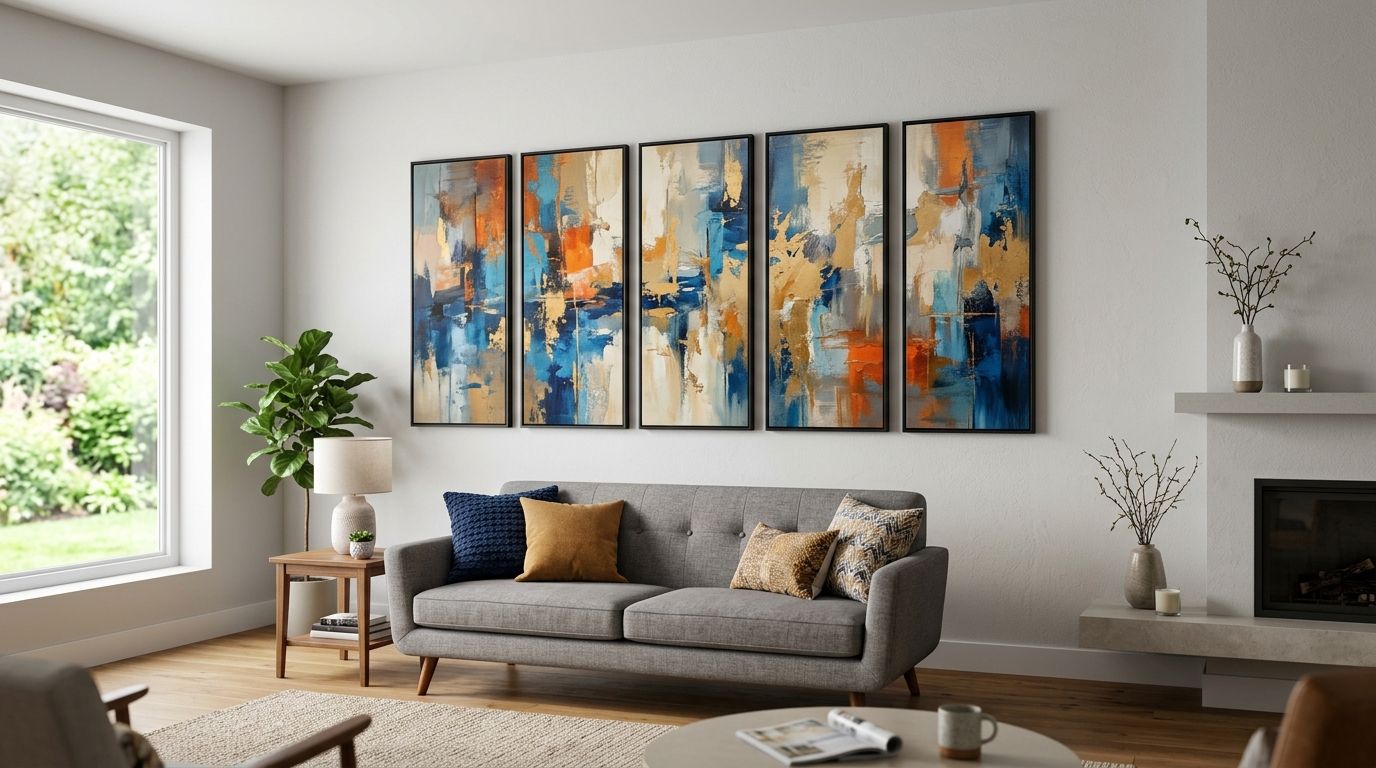
The statement piece — one oversized canvas on the tall return wall. A single canvas print at 100x150cm or larger, hung roughly at eye level from the landing rather than the ground floor, anchors a triple-height stairwell in one move instead of six. It's the fastest fix for a brand-new build with a bare stair void. Buy.
The investment piece — an original painting sized for the wall. A large original, such as a 104cm square landscape piece, gives a stairwell a one-of-a-kind focal point that a print run can't match, at a materially higher price point than a canvas print. It suits a permanent home rather than a share house or a short-term rental. Consider.
The renter-friendly pick — a peel-and-stick mural under the stairs. A removable mural on the wall beneath or beside the stair run gives a rented stairwell colour and texture without drilling a single hole, but check what the lease actually allows before committing to a full panel run. Consider.


What to avoid on a staircase wall
- Glass-framed prints right next to the stair rail. A bag, an elbow, or a piece of furniture on moving day meets glass at exactly the wrong height. Canvas or acrylic-faced prints handle the same knock without a shattered frame.
- A single small print on a triple-height void. It looks like an afterthought rather than a decision — go up in scale before you go up in quantity.
- A perfectly level gallery grid on a sloped stair wall. It will look crooked next to the rake even though every frame is plumb. Stagger the line to follow the stairs, not the spirit level.
Verdict comparison
| Pick | Best for | Size guide | Verdict |
|---|---|---|---|
| Framed gallery grid | Standard single-flight staircase | 6-9 frames, 40x60cm each | Buy |
| Round canvas cluster | Half-landing, Japandi/Scandi homes | 30cm, 40cm, 50cm rounds | Consider |
| Oversized single canvas | Triple-height stair void | 100x150cm+ | Buy |
| Original painting | Permanent home, wide return wall | 100cm+ square | Consider |
| Peel-and-stick mural | Rental staircases | Full panel run | Consider |
FAQ
What's the best wall art for a staircase wall?
A large-format canvas print or a staggered framed gallery grid works best because both can be scaled or angled to match a tall, sloped stair wall. Small single prints tend to disappear on a stairwell taller than one storey.
How high should I hang art on a staircase?
Hang the centre of each piece roughly at eye level measured from the stair tread closest to it, which means the line will climb the stairs in steps rather than sitting at one fixed height. This keeps the art at a comfortable viewing height at every point on the way up.
Can you hang framed prints on an angled staircase wall?
Yes, and framed prints for gallery walls are one of the better formats for it because a staggered grid can follow the stair's rake instead of running level. A dead-level grid next to a sloped rail will look crooked even when it's perfectly plumb.
What size art do I need for a stairwell?
For a wall taller than one storey, start at 100cm on the longest side for a single piece, or use a gallery grid of six to nine pieces at 40x60cm spaced 8-10cm apart. Undersized art is the most common mistake on stair walls.
Is canvas or framed print better for stairs?
Canvas is generally the safer choice near the stair rail because it has no glass to crack on a bump, while framed prints suit landing walls set back from traffic. Use canvas within arm's reach of the rail and framed prints further from it.
How much space should I leave between pieces in a stair gallery wall?
Keep 8 to 10cm between frames for a cohesive grid that still reads as separate pieces. Wider gaps make the grid look scattered on a wall that's already visually busy with a stair rail running through it.
Can I use an original painting on a staircase?
Yes, an original painting works well as a single statement piece on a wide stair return or half-landing wall, provided it's sized to the wall rather than left at a small gallery scale. Originals cost more than a print run, so they suit a permanent home over a rental.
Is peel-and-stick wallpaper safe for stairwells?
Peel-and-stick wallpaper is generally safe for rental stairwells since it removes without damaging paint, but check the lease terms before applying a full panel run. It works best as an accent under or beside the stair run rather than across the whole stairwell.
One last thing
Most Australian domestic staircases rake somewhere between 30 and 38 degrees, and that number matters more than most people realise when they're standing in a hardware store holding a tape measure. A gallery grid hung level at that angle will look crooked next to the rail even though every frame is dead plumb — stagger the hanging line to follow the stairs, not the spirit level, and the whole run reads as intentional instead of accidental.