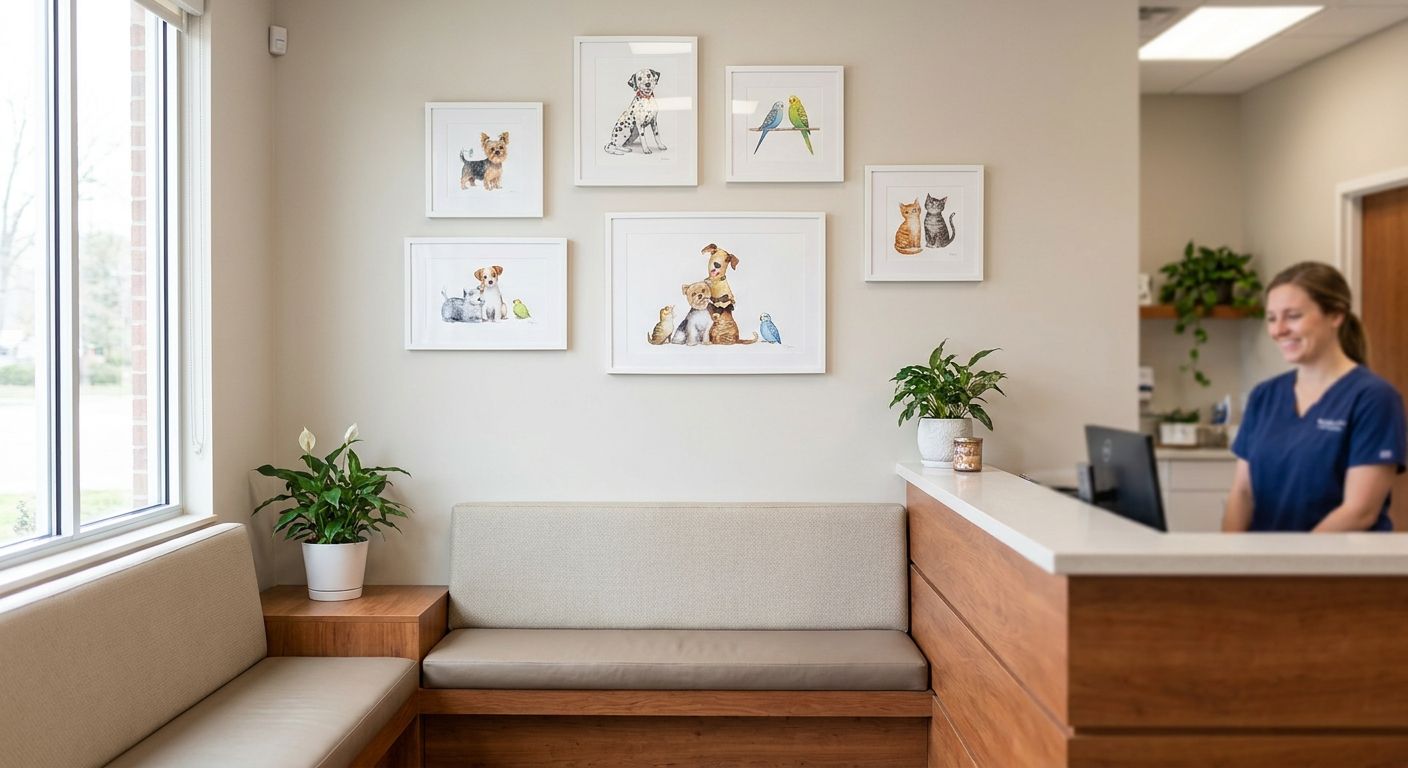
A vet clinic waits on two nervous parties at once: the owner scanning for reassurance and the patient hiding under a chair. The wall art you choose for that reception area either lowers the temperature in the room or adds to it, and in 2026 more Australian practices are treating their walls as part of the client experience, not an afterthought.
- Wall art for vet clinic waiting rooms needs washable, low-glare surfaces, not raw paper posters.
- Two Zebra Finch ($2,100) works as a calming original-art anchor for reception walls — Buy.
- Skip glossy glass-framed prints in exam rooms; fluorescent light turns them into mirrors.
- Three rooms can be furnished under $2,000 using smaller original pieces starting at $380.
- Animal-adjacent art beats literal clinical imagery for reducing pet-owner anxiety in 2026.
Why this matters
A vet visit is already a stress event for most animals and a good chunk of their owners. Bare walls, harsh downlights, and generic stock posters do nothing to soften that. Practices that invest in proper wall art for medical and dental clinics-style thinking — calm palettes, considered placement, durable finishes — tend to get referenced in Google reviews as "nicer than expected," which matters more than it sounds when a client is choosing between three clinics within a 10-minute drive in 2026.
The brief is different from a home living room. You're decorating for foot traffic, disinfectant wipes, carrier scrapes, and a waiting period that can run 20 minutes on a busy Saturday. The art has to survive that and still do emotional work.
Who this is for
This guide is for practice managers, vet owners, and the occasional design-minded receptionist furnishing a reception area, consult rooms, or a corridor that currently has nothing but a laminated poster about heartworm prevention. It applies whether you're opening a new clinic in 2026 or refreshing a practice that's looked the same since 2015.
What to look for in wall art for a vet clinic
Wipeable, low-glare finishes
Exam rooms get disinfected multiple times a day, and reception walls take knocks from carriers and leads. Canvas prints with a matte varnish handle a quick wipe-down far better than glass-framed paper prints, which also throw glare under fluorescent panels and make the art unreadable from half the room.
Calming palettes over clinical white
A waiting room already reads as sterile — white walls, chrome scales, the smell of antiseptic. Warm, muted palettes (terracotta, sage, soft ochre) do more to lower a nervous client's heart rate than another grey-on-white abstract. Save the bold primary colours for a corridor, not the room where someone is holding a sick cat.
Animal imagery that reassures, not alarms
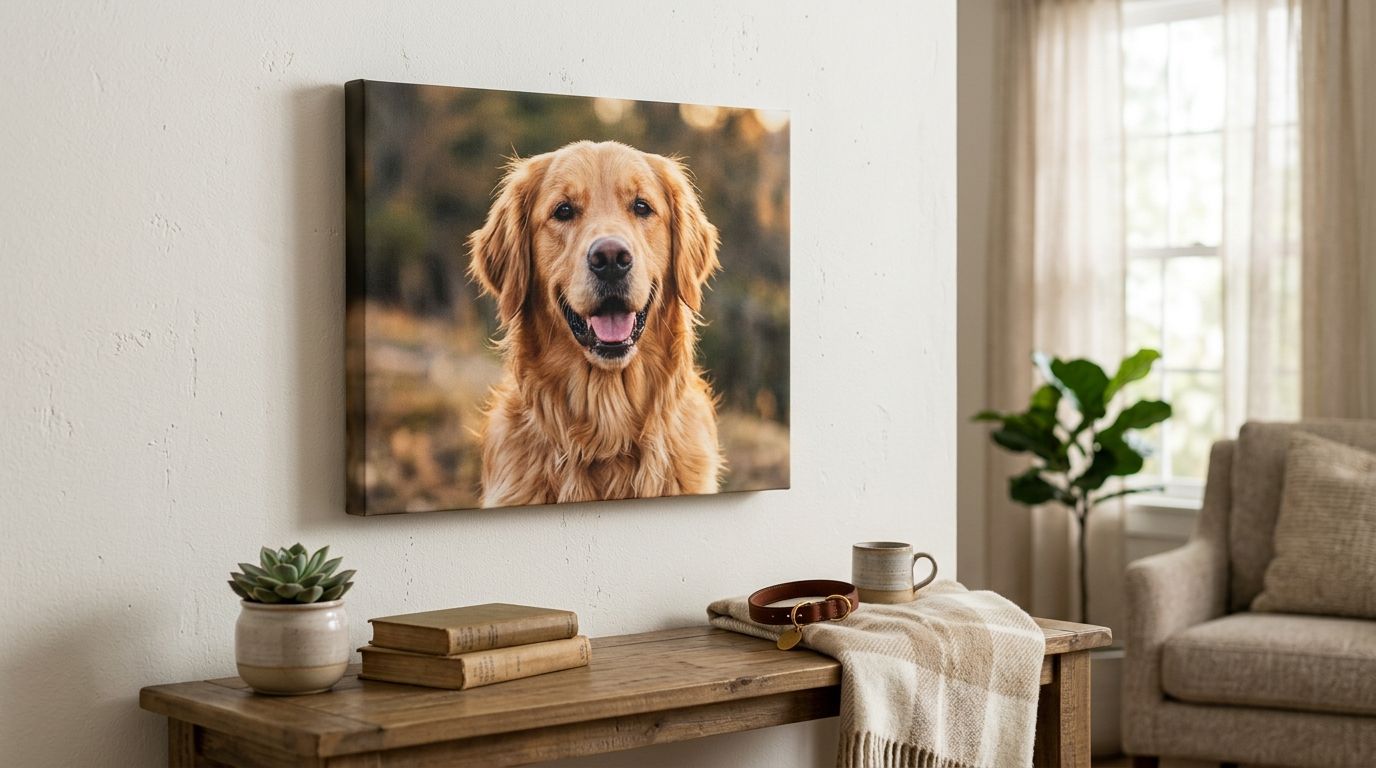
Owners connect with art that features dog and cat lovers themes, wildlife, or nature — never anything that reads as clinical or medical (no illustrated anatomy, no syringes). A well-painted bird or a loose botanical does more emotional work than a literal image of a stethoscope.
Sizing that survives cage-carrier traffic
Corridors and reception walls need pieces mounted above carrier and lead height, generally starting around 120 cm from the floor. A single large-format piece reads calmer than a cluttered gallery wall that a nervous owner has to process while holding a squirming dog.
Budget that scales across every room
A clinic usually needs art for reception, two to four consult rooms, and sometimes a staff corridor. Pricing across a range — smaller original works from the $380–$900 mark for consult rooms, and one larger anchor piece for reception — keeps the total spend sane without every room looking identical.
Top picks for veterinary clinics
Two Zebra Finch — the safe pick. This original oil painting by John Graham runs 101 x 76 cm and sits at $2,100, priced right for a reception feature wall that needs to say "considered" rather than "budget poster." The wildlife subject reads as calm nature, not clinical imagery. Buy for any reception wall with a clear sightline from the front door.
Apple & Snail — the consult-room pick. A smaller John Graham original at 30 x 30 cm ($900) with a floating frame, sized to sit beside an exam table without dominating the room. It's animal-adjacent without being literal, and the scale suits a single-species consult room. Buy if you're furnishing more than one exam room and want visual consistency without repeating the exact same piece.
The Morning Chorus — the budget-conscious pick. At $780 for a 50 x 40 cm acrylic on stretched canvas, this piece brings a soft, birdsong-adjacent calm to a smaller waiting nook without the price tag of a full-scale original. Consider it for satellite clinics or a second waiting area with less wall space.
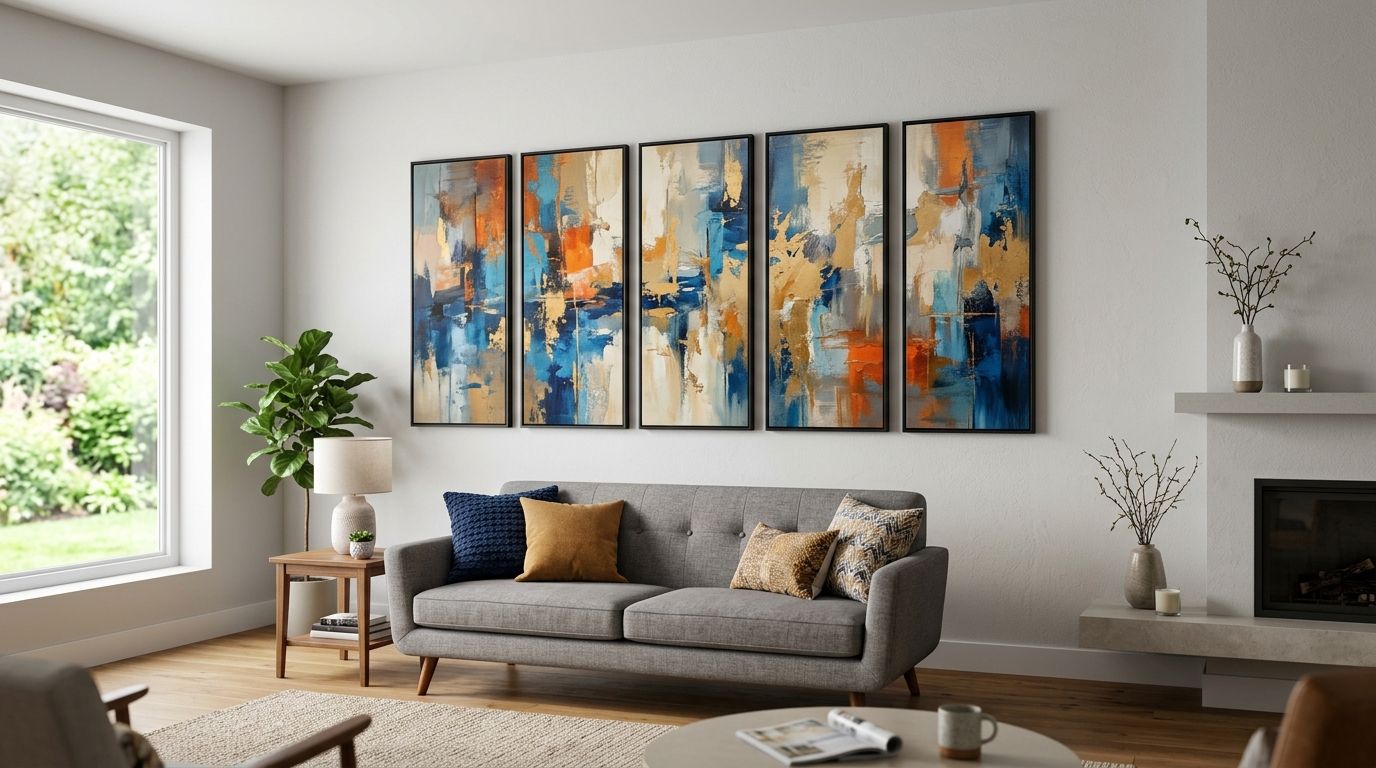
Momentum — the bold corridor pick. This three-panel expressionist work in peach, coral and orange runs $950 and works better in a staff corridor or a reception feature wall that wants energy rather than calm. It's not the right tone for an exam room. Consider for corridors, Skip for consult rooms.


What to avoid
- Glass-framed prints under fluorescent panels. They look premium in a showroom and turn into a mirror the second an overhead light hits them at the wrong angle — a real problem in a room lit for surgical precision.
- High-value original paintings in high-traffic corridors. A $4,890 canvas belongs in a quiet reception nook, not a corridor where a carrier corner or a lead clip can catch it on the way past.
- Literal clinical imagery. Illustrated anatomy, syringes, or overly medical motifs remind an anxious owner exactly why they're there. Save the reassurance for the art and let the signage handle the information.
Verdict comparison
| Pick | Size | Price | Best room | Verdict |
|---|---|---|---|---|
| Two Zebra Finch | 101 x 76 cm | $2,100 | Reception | Buy |
| Apple & Snail | 30 x 30 cm | $900 | Consult room | Buy |
| The Morning Chorus | 50 x 40 cm | $780 | Small waiting nook | Consider |
| Momentum | Three-panel | $950 | Corridor only | Consider / Skip for exam rooms |
FAQ
What's the best wall art for a vet clinic waiting room?
A single large-format canvas with a calm, nature-adjacent subject works best for a vet clinic waiting room in 2026. Avoid glass framing under fluorescent lighting and keep the palette warm rather than clinical white.
Is original art better than prints for a veterinary practice?
Original art gives a practice a more considered, higher-trust look, but framed or canvas prints are more practical for exam rooms that get wiped down daily. Reserve one original piece for reception and use durable prints elsewhere.
How much does wall art for a vet clinic cost?
A full clinic fit-out can run from under $2,000 for smaller consult-room pieces to $2,000-$4,000 for a larger reception anchor, depending on how many rooms need art. Pricing varies by size and whether the piece is an original or a print.
What size wall art suits a consult room?
Consult rooms typically suit pieces in the 30-50 cm range, sized to sit beside an exam table without crowding staff movement. Larger formats are better reserved for reception walls with more open sightlines.
Should vet clinics use animal-themed art?
Animal-adjacent and nature-themed art tends to reassure anxious pet owners more than literal clinical imagery. Wildlife paintings, botanicals, and soft abstracts all work better than anything resembling medical illustration.
Can canvas prints handle a high-traffic clinic corridor?
Yes, a matte-varnished canvas holds up far better than glass-framed paper in corridors, since it resists glare and survives the occasional knock from a carrier. Save higher-value originals for lower-traffic reception nooks instead.
What colours work best for veterinary practice wall art?
Warm, muted tones like terracotta, sage and soft ochre calm a room better than stark white or cold greys in a medical setting. Reserve brighter, bolder palettes for staff corridors rather than client-facing consult rooms.
One last thing
The piece that gets photographed and shared on a clinic's own Instagram in 2026 is rarely the cheapest poster in the room — it's the one original painting near reception that owners stop to look at while they wait. Budget for at least one genuine anchor piece, even if everything else in the practice is practical, wipeable canvas.