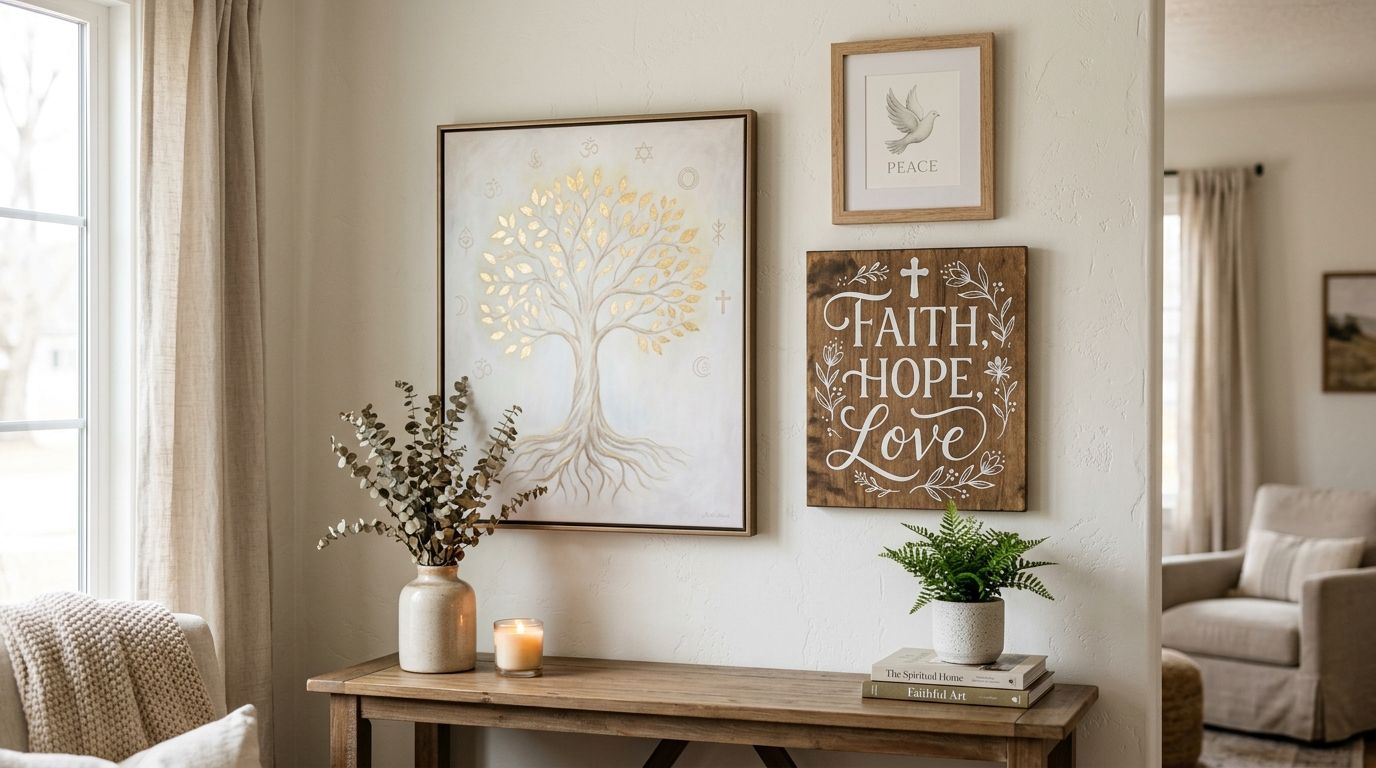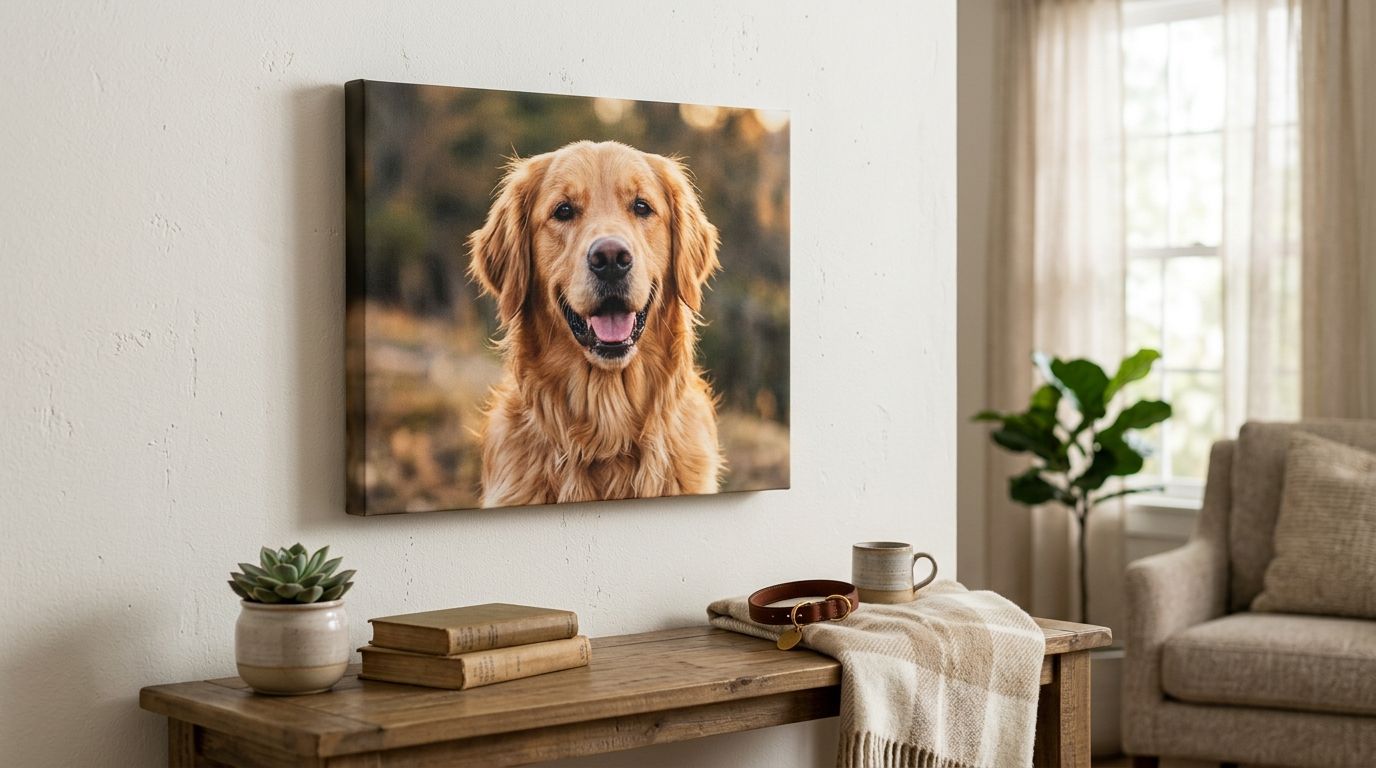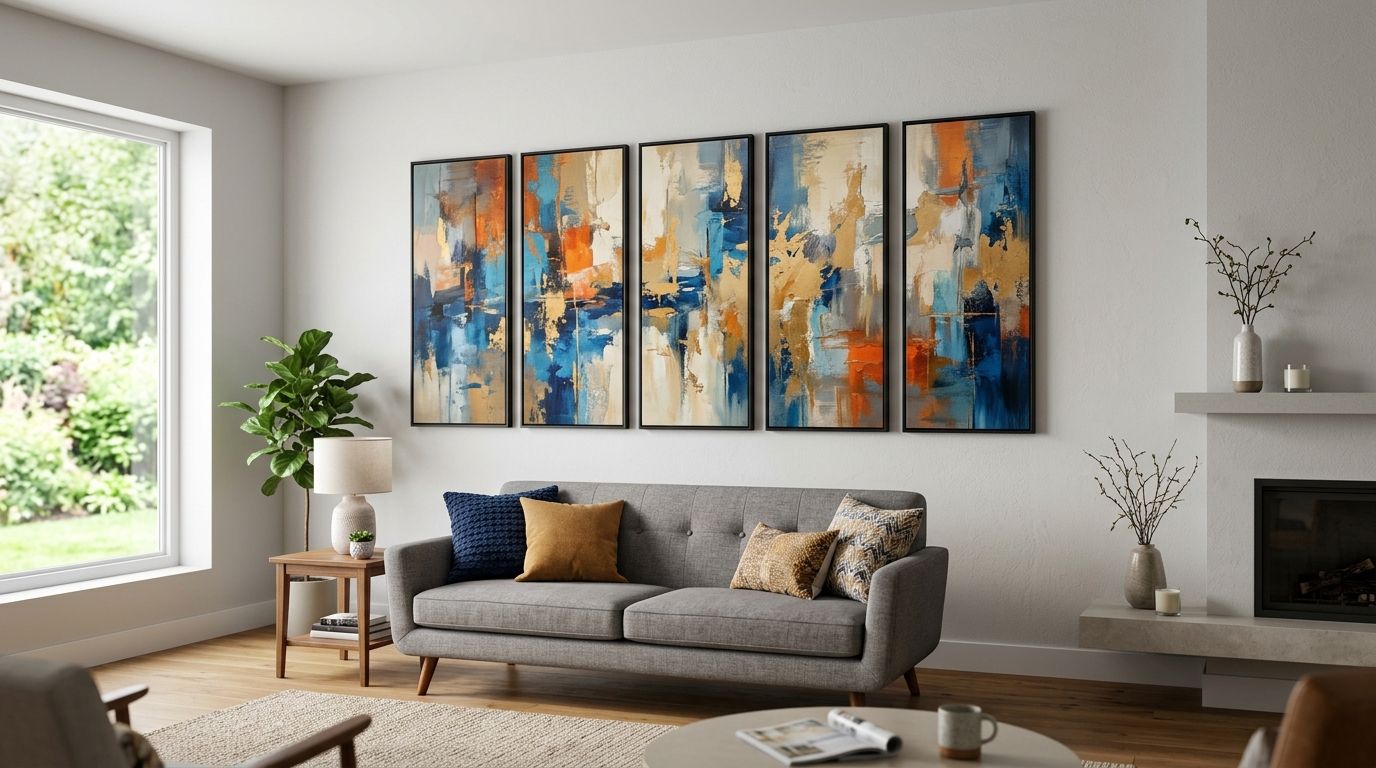
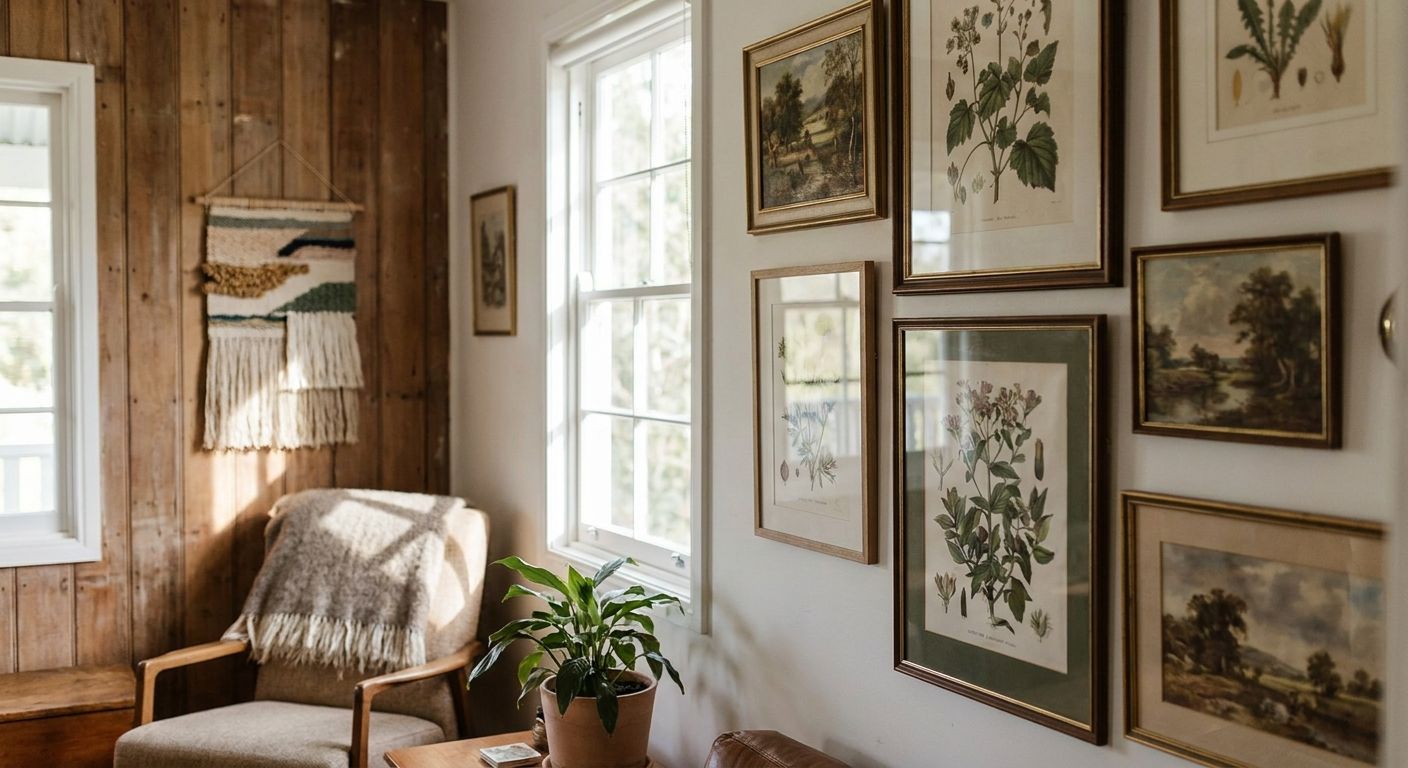
Wall art for weatherboard cottage homes works best when it echoes the timber cladding, the softer heritage light and the slightly imperfect charm of the house, rather than fighting it with anything too glossy or oversized. Weatherboard cottages differ from new-build homes in one big way: the walls are narrower, the ceilings are often lower or unusually high in older Queenslanders and Victorian workers' cottages, and the existing palette leans warm — cream, white, sage, weathered timber. Art that works in a display-home living room can look flat or clinical here.
- Wall art for weatherboard cottage homes should skew warm and textured, not glossy or oversized.
- Gioia Wall Art's botanical and impressionist canvas prints suit timber cladding and heritage light better than stark modern graphics.
- Narrow cottage hallways call for vertical or petite formats, not statement canvases sized for open-plan living rooms.
- North- and west-facing cottage windows fade prints faster, so UV protection matters more here than in a new build.
Why wall art matters for weatherboard cottage owners
Character homes keep their original proportions: narrow hallway walls, high skirting boards, picture rails in some rooms, and windows that let in more direct light than a double-glazed new build. That combination changes what actually works on the walls. A print chosen for a big, air-conditioned display home will often look undersized or oddly cool-toned once it's sitting against 100-year-old timber boards.
Gioia Wall Art works with a lot of renovated Federation, Californian bungalow and Queenslander cottages through its curated canvas and framed print range, and the pattern is consistent: pieces with warmth, texture and a slightly painterly finish sit better in these homes than flat graphic prints or anything overly minimal. You can browse the full range on the Gioia Wall Art site before you commit to a size or finish.
Match your art to the era of the cottage
Start with what era your cottage is actually channeling — Federation-era detail, a French Provincial renovation, or a more relaxed modern farmhouse look. This decides your palette and subject matter before you decide on size.
- Federation and Victorian cottages: florals, still life, muted landscapes
- Renovated farmhouse-style cottages: earthy botanicals, loose brushwork, neutral palettes
- Coastal weatherboard cottages: soft blues, sandy tones, relaxed impressionist work
- French-leaning renovations: classical still life or garden scenes with gilt or timber frames
- Avoid stark black-and-white graphic prints unless the cottage has already been styled in a hard modern direction
Work with the timber and paint tones, not against them
Weatherboard interiors usually sit in a narrow band of warm whites, creams and greige. Art with cool undertones or high-shine finishes will look slightly wrong no matter how good the piece is on its own.
- Pull one or two colours from the artwork that already exist in your cupboards, trims or soft furnishings
- Favour matte canvas or paper finishes over glossy acrylic near timber cladding
- Test warm-toned versus cool-toned frames against your actual wall paint before buying
- Lean into earthy, terracotta or warm neutral palettes if your cottage has exposed or stained timber
- If your cottage is painted a crisp white, warmer artwork tones prevent the room from feeling clinical
Choose sizes that suit narrow cottage walls
This is where most weatherboard cottage owners get it wrong: cottage hallways and bedroom walls are often narrower than a modern home's, and a print sized for an open-plan living room will overwhelm them.
- Measure the actual wall width and keep art to roughly two-thirds of that width for a single piece
- Use vertical orientations in hallways and narrow nooks rather than wide horizontal canvases
- Reserve your largest piece for the widest wall in the house, usually the lounge or dining wall
- A pair or trio of smaller prints often reads better than one oversized piece in a cottage bedroom
- Check sizing against your specific wall before ordering — a size guide walks through the ratios room by room
Style the hallway and entry first
Cottage hallways are usually the first thing a visitor sees, and they're also the narrowest, most awkward space to hang art in. Getting this one wall right sets the tone for the rest of the house.
- Hang art at eye level, roughly 145–155cm to the centre of the piece
- Use a single vertical statement piece rather than a cluttered gallery in a narrow hallway
- Pick a piece that references the room it leads into — a botanical for a garden-facing cottage, a coastal scene for a beach weatherboard
- Keep frame depth shallow in tight hallways so nothing catches on passersby
- If the hallway gets direct light through a front door with glass panels, factor in fading before choosing a finish
Layer texture with framed versus unframed prints
Cottages already carry texture in the timber, so the art doesn't need to compete — it needs to complement. Framed prints add a formal note; unframed canvas keeps things relaxed and closer to the original cottage character.
- Framed prints suit formal rooms like a dining room or a French Provincial-styled lounge
- Stretched canvas without a frame keeps a cottage feeling relaxed and unfussy
- Timber frames in oak or natural tones echo weatherboard cladding better than black metal
- Mix one framed piece with two unframed canvases for a gallery wall that doesn't feel matchy
- For a renovated cottage with a modern farmhouse edge, a modern farmhouse wall art selection shows how framed and unframed pieces sit together


Protect prints from cottage light and humidity
Older weatherboard homes often have less window treatment than new builds, and single-glazed sash windows let in more UV. If your cottage sits near the coast, salt air and humidity add another layer of risk.
- Keep prints out of direct afternoon sun where possible, especially on west-facing walls
- Use UV-protective glazing on framed pieces hung opposite unshaded windows
- Rotate or reposition statement pieces every couple of years if a room gets strong sun
- In humid coastal cottages, avoid hanging unprotected paper prints directly against exterior walls
- A dedicated guide to protecting canvas prints from sun damage covers finish choices in more detail
Build a gallery wall for the lounge or feature fireplace
Many weatherboard cottages centre the main living room around a fireplace, and that's usually the best spot for a considered gallery or a single statement piece.
- Anchor the arrangement to the mantel width, not the full chimney breast
- Keep frame styles consistent even if the artwork subjects vary
- Leave 8–10cm of breathing room between pieces in a multi-print layout
- Use one larger piece as a focal point rather than five equally-sized prints
- Match the tone of the gallery to whichever era you settled on in step one
Comparison: wall art options for weatherboard cottages
| Option | Best for | Starting price | Key limitation |
|---|---|---|---|
| Stretched canvas print | Living rooms, hallways, relaxed cottage styling | $179.99 | Matte finish needed to avoid glare near windows |
| Framed print | Dining rooms, French Provincial or Federation styling | Check current pricing on site | Adds cost and weight versus unframed canvas |
| Poster (unframed) | Bedrooms, rental cottages, budget rooms | Check current pricing on site | Needs your own frame for a finished look |
| Peel-and-stick wallpaper | Feature walls, rented weatherboard cottages | Check current pricing on site | Not suited to rough or uneven timber-lined walls |
| Original painting | Statement lounge or hallway pieces | Check current pricing on site | Higher investment, one-off sizing |
Verdict: for most weatherboard cottages, a matte stretched canvas in a warm, textured subject beats a glossy or stark graphic print every time.
Common mistakes weatherboard cottage owners make
- Going too modern. A high-gloss abstract graphic print can look out of place against 100-year-old timber boards — it fights the house instead of working with it.
- Sizing for the wrong room. Buying one oversized canvas meant for an open-plan living space, then finding it swallows a narrow cottage hallway.
- Ignoring the light. Hanging an unprotected paper print on a west-facing wall in 2026 and finding it's visibly faded within a year or two.
- Clashing frame tones. Pairing a black metal frame with warm original timber trims instead of an oak or natural-toned frame.
- Treating every room the same. Using the same bold palette in a quiet reading nook that works in a busy open living area.
FAQ
What's the best wall art for a weatherboard cottage?
Matte canvas or framed prints in warm, textured palettes work best for weatherboard cottage interiors in 2026 — botanicals, muted landscapes and impressionist-style pieces suit timber cladding better than glossy graphic art.
Is canvas or framed print better for a cottage?
Unframed canvas suits relaxed, informal cottage rooms, while framed prints work better in more formal spaces like a dining room or a French Provincial-styled lounge. Most cottages benefit from a mix of both.
How big should wall art be in a narrow cottage hallway?
Keep hallway art to roughly two-thirds of the wall's width and favour a vertical orientation over a wide horizontal piece, since most cottage hallways are narrower than modern home corridors.
Does sun damage wall art in older homes?
Yes — weatherboard cottages with single-glazed sash windows let in more direct UV than double-glazed new builds, so prints on north- or west-facing walls fade faster without UV-protective glazing or careful placement.
What colours work best for weatherboard cottage wall art?
Warm neutrals, sage, terracotta and soft coastal blues sit better against timber cladding and cream or white cottage walls than cool-toned or high-contrast graphic palettes.
Should I hang the same art style in every room of a cottage?
No — a busy open living area can carry a bolder palette, while a bedroom or reading nook in the same cottage usually needs a quieter, more muted piece.
Is peel-and-stick wallpaper a good option for a rented weatherboard cottage?
It can work on smooth painted walls, but it's not well suited to rough or uneven timber-lined surfaces common in older weatherboard cottages.
How much does wall art for a cottage renovation typically cost?
Costs vary by finish and size — canvas prints in Gioia Wall Art's range start at $179.99, with framed prints, wallpaper and original paintings priced separately on the site.
One last thing
The detail most weatherboard cottage owners miss in 2026 is frame depth, not colour. A deep box frame that looks fine in a modern build can visually compete with original picture rails and skirting in a Federation or Victorian cottage — a slim timber frame or unframed canvas almost always sits more naturally against that trim.