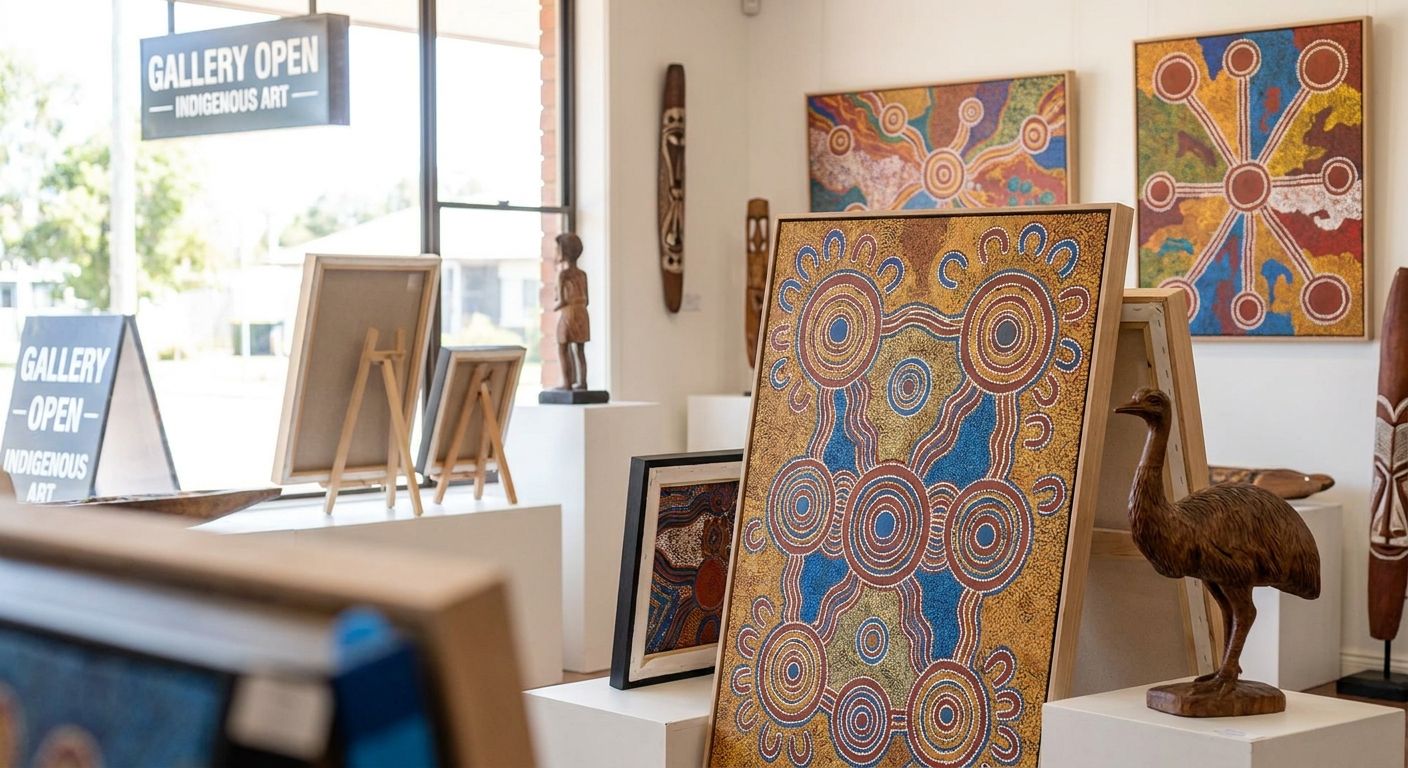
Best overall for aboriginal art for sale in Australia in 2026: Papunya Tula Artists, the artist-owned cooperative behind the Western Desert dot painting movement. Best for bark painting: Buku-Larrnggay Mulka Centre. Best for shopping several remote communities in one order: APY Art Centre Collective. Best for bold contemporary acrylic: Warlukurlangu Artists Aboriginal Corporation. Best for rarrk cross-hatching and prints: Injalak Arts. Best for urban and south-eastern Aboriginal artists: Koorie Heritage Trust.
- Papunya Tula Artists is the top pick for authentic aboriginal art for sale, with full artist provenance in 2026.
- Buy through an Aboriginal-owned art centre, not a general reseller, so royalties return to the artist and community.
- Indigenous Art Code membership is the fastest authenticity check before you pay for aboriginal art for sale online.
- APY Art Centre Collective is the easiest single checkout for pieces from multiple remote South Australian communities.
Why this matters
Australia's Aboriginal art market has a fraud problem that dates back decades: mass-produced "Aboriginal-style" prints made overseas, or by non-Indigenous artists, still turn up in tourist shops and on marketplaces sold as the real thing. The Arts Law Centre of Australia and Copyright Agency ran the Fake Art Harms Culture campaign specifically to push buyers toward art centres that return income to Aboriginal artists and their communities.
That gap is what this guide fills. It ranks the Aboriginal-owned art centres and collectives worth buying from in 2026, based on provenance, ownership structure and how easy each one is to buy from online. Gioia Wall Art doesn't stock Aboriginal art in its own catalogue of prints, canvases and original paintings, so this list points you to the community-run sources that do it properly, and the styling guides below help once the piece is in your hands.
“If a seller can't name the artist, their language group and their country, it isn't authentic aboriginal art for sale - it's a print of someone else's culture.”
What makes the best aboriginal art for sale in Australia
- Aboriginal ownership and governance - the art centre or gallery is run by, or majority-owned by, the community it represents
- Indigenous Art Code membership - a public commitment to ethical dealing with artists, fair pay and informed consent
- Named provenance - every piece comes with the artist's name, language group and country, not a generic "Aboriginal design" label
- Direct royalty return - a clear majority of the sale price goes back to the artist and the art centre, not a third-party reseller
- National shipping built for the medium - canvas, board and bark works packed and freighted properly to capital cities and regional Australia
- Range across price points - work from emerging artists sits alongside senior, exhibition-listed names
Aboriginal art for sale in Australia: at a glance
| Art centre | Best for | Standout feature | Key limitation |
|---|---|---|---|
| Papunya Tula Artists | Museum-grade Western Desert dot painting | Oldest Aboriginal-owned art company, founded in Papunya, NT, in 1972 | Limited stock and long waits for senior, exhibition-listed artists |
| Buku-Larrnggay Mulka Centre | Yolŋu bark painting and larrakitj | Community-run centre in Yirrkala, north-east Arnhem Land, since the 1970s | Bark and timber pieces cost more to freight and frame |
| APY Art Centre Collective | Browsing several remote communities in one order | Single storefront representing multiple APY Lands art centres | Styles and quality vary a lot centre to centre |
| Warlukurlangu Artists Aboriginal Corporation | Bold, colour-saturated contemporary acrylic | One of Central Australia's most prolific Aboriginal-owned cooperatives, based in Yuendumu | Saturated palette won't suit every interior scheme |
| Injalak Arts | Rarrk cross-hatching, prints and fibre art | Gunbalanya-based centre blending painting with screen-printed textiles and weaving | Smaller catalogue of large-format canvas works |
| Koorie Heritage Trust | Urban and south-eastern Aboriginal artists | Melbourne-based, focused on Koorie communities outside the desert and Top End canon | Less name recognition than Central Australian or Arnhem Land centres |
1. Papunya Tula Artists: best aboriginal art for sale for museum-grade dot painting
Papunya Tula Artists is the Aboriginal-owned company that grew out of the Western Desert art movement in the early 1970s, representing painters from the Western Desert region of the Northern Territory. Every canvas sold carries the artist's name, skin name and the story or country it depicts, and the company still operates as an artist cooperative rather than a private gallery.
Papunya Tula Artists pros:
- Full, documented provenance on every piece
- Artist-owned structure since the movement's founding
- Work held in major state gallery collections, so quality is well established
Papunya Tula Artists cons:
- Senior, exhibition-listed artists sell out fast and don't restock on demand
- Premium pricing reflects the historical and cultural weight of the movement
Best for: buyers who want an investment-grade piece with a documented artist and story. Verdict: Buy.
2. Buku-Larrnggay Mulka Centre: best aboriginal art for sale for bark painting
Buku-Larrnggay Mulka Centre in Yirrkala represents Yolŋu artists from north-east Arnhem Land, working in the region's distinctive bark painting and larrakitj memorial pole traditions. The centre also runs a print and fine art workshop, so buyers who want the Yolŋu visual language without a full bark painting have options too.
Buku-Larrnggay Mulka Centre pros:
- Deep, region-specific tradition not replicated elsewhere in the country
- Strong track record supplying state and national gallery collections
- Mix of bark, print and canvas work at different scales
Buku-Larrnggay Mulka Centre cons:
- Bark on timber support is heavier and pricier to freight than canvas
- Framing bark work usually needs a specialist, adding a step before it's wall-ready
Best for: collectors specifically after Yolŋu bark painting or larrakitj. Verdict: Buy.
3. APY Art Centre Collective: best aboriginal art for sale for browsing multiple communities at once
APY Art Centre Collective brings together several art centres from the Anangu Pitjantjatjara Yankunytjatjara Lands in South Australia under one online storefront, so a single order can include work from more than one community. It's the closest thing to a one-stop shop for aboriginal art for sale in this list.
APY Art Centre Collective pros:
- One checkout covers multiple remote art centres and painting styles
- Broad range of price points and canvas sizes in stock at any time
- Straightforward online buying compared with contacting individual remote centres directly
APY Art Centre Collective cons:
- Quality and style consistency varies between the member art centres
- Less curatorial hand-holding than a dedicated single-artist gallery
Best for: first-time buyers who want variety without contacting several centres separately. Verdict: Buy.
4. Warlukurlangu Artists Aboriginal Corporation: best aboriginal art for sale for bold contemporary acrylic
Warlukurlangu Artists Aboriginal Corporation is based in Yuendumu, Central Australia, and is one of the most prolific Aboriginal-owned art cooperatives in the country, known for dense, colour-saturated acrylic work. The cooperative structure means sale proceeds flow back through the community rather than to a private owner.
Warlukurlangu Artists Aboriginal Corporation pros:
- Large, regularly refreshed catalogue compared with smaller centres
- Distinctive, highly saturated colour palette that reads well as a statement piece
- Established cooperative with decades of trading history
Warlukurlangu Artists Aboriginal Corporation cons:
- The bold palette can overpower a neutral or muted room scheme
- Popular artists' larger canvases move quickly
Best for: a statement piece in a room that can handle strong colour. Verdict: Buy.
5. Injalak Arts: best aboriginal art for sale for rarrk prints and textiles
Injalak Arts operates out of Gunbalanya in western Arnhem Land and represents artists working in rarrk fine cross-hatching, alongside screen-printed textiles, fibre art and prints. It's a good option for buyers who want the Arnhem Land visual language in a smaller, more accessible format than a full painting.
Injalak Arts pros:
- Prints and textiles sit at a more accessible size and format than large canvases
- Distinctive rarrk cross-hatching technique specific to the region
- Fibre art and weaving options beyond flat wall pieces
Injalak Arts cons:
- Fewer large-format canvas options than centres like Papunya Tula or Warlukurlangu
- Textile and fibre pieces need different display treatment than framed prints
Best for: smaller rooms or first purchases where a full canvas isn't the goal. Verdict: Buy.
6. Koorie Heritage Trust: best aboriginal art for sale for urban and south-eastern artists
Koorie Heritage Trust is based in Melbourne and focuses on Koorie artists from Victoria and southern New South Wales, a part of the Aboriginal art landscape that gets less attention than the desert and Top End centres above. It runs a shop and gallery program supporting living Koorie artists alongside its cultural and historical collection work.
Koorie Heritage Trust pros:
- Supports artists and communities outside the desert and Arnhem Land canon
- Melbourne base makes freight to south-eastern states faster and cheaper
- Combines retail with genuine cultural and historical programming
Koorie Heritage Trust cons:
- Smaller commercial catalogue than the dedicated remote art centres
- Less name recognition can make provenance research take longer
Best for: buyers who specifically want to support urban or south-eastern Aboriginal artists. Verdict: Buy.
How this list was ranked
Every art centre and collective above is measured against the same six criteria from the section above: Aboriginal ownership, Indigenous Art Code membership or equivalent public provenance commitments, named artist documentation, royalty return to the artist and community, freight capability for the medium involved, and range across price points. None of these six failed on ownership or provenance in 2026 - the difference between them is medium, region and how easy each is to buy from as an online shopper. If a seller you're considering isn't on this list, Gioia Wall Art's guide on how to tell if an original painting is worth the price is a reasonable place to start before you pay.
Which aboriginal art for sale should you choose?
Papunya Tula Artists stays the default recommendation for a first Aboriginal art purchase in Australia: full provenance, decades of institutional recognition, and a cooperative structure that has outlasted plenty of private galleries. If you want to compare work from several communities before committing, start with APY Art Centre Collective instead. Buyers set on a specific region or technique - bark painting, rarrk, or south-eastern Koorie work - should go straight to Buku-Larrnggay Mulka Centre, Injalak Arts or Koorie Heritage Trust respectively. Whichever piece you land on, buy it from the art centre itself rather than an unnamed reseller.
FAQ
What's the best place to buy aboriginal art for sale in Australia in 2026?
Papunya Tula Artists is the strongest overall option for aboriginal art for sale in Australia in 2026, with full artist provenance and a decades-long track record as an Aboriginal-owned cooperative. For a wider browse across regions, APY Art Centre Collective covers several remote art centres from one online storefront.
How do I know if aboriginal art for sale online is authentic?
Check that the seller names the individual artist, their language group and the community or art centre behind the piece - a generic Aboriginal design label with no named artist is a red flag. Indigenous Art Code membership is a fast way to confirm a seller has made a public commitment to ethical dealing.
What is the Indigenous Art Code?
The Indigenous Art Code is a voluntary code of conduct for the Australian Aboriginal art industry, covering fair payment, informed consent and honest representation of artists. Sellers and galleries that sign up publish their membership, so it's worth checking before buying aboriginal art for sale from a source you don't recognise.
Is aboriginal art from an art centre more expensive than a print reseller?
Original work from an Aboriginal-owned art centre generally costs more than a mass-produced print because you're paying for a documented, original piece rather than a reproduction. That price difference is also what funds the royalty return to the artist and their community, which a generic reprint doesn't provide.
Can I buy Aboriginal art directly from the artist?
Some artists sell directly, but most work through their community's art centre, which handles pricing, provenance documentation and freight on their behalf. Buying through the art centre, rather than a private reseller, is generally the more reliable way to confirm the piece is genuine.
Is it disrespectful to hang Aboriginal art from a region I'm not connected to?
No - buying and displaying Aboriginal art bought legitimately from an art centre or the artist supports the artist and their community regardless of where the buyer lives. The concern in the Aboriginal art market is fake or unauthorised copies, not genuine buyers from outside the region.
Does Gioia Wall Art sell aboriginal art for sale?
No - Gioia Wall Art's catalogue focuses on curated canvas prints, framed art prints and original paintings from Australian and international artists rather than Aboriginal art specifically. Its design guides can still help you style an Aboriginal piece once you've bought it from an Aboriginal-owned art centre.
One last thing
Most Aboriginal-owned art centres run as cooperatives, which means a majority of the sale price on an original piece is contracted to flow back to the artist and the centre, rather than sitting with a private dealer's margin - the opposite of how a typical commercial gallery resale works. If two pieces look similar but one comes from a named art centre and the other from an unnamed reseller, the art centre piece is doing more for the community that made it, even before you factor in provenance risk. That single distinction matters more in 2026 than any styling advice below it.