Hang one oversized piece of wall art instead of several small frames, keep the palette light, and orient the artwork vertically to pull the eye upward — that combination is what actually makes a small room look bigger with wall art, without moving a single wall. The catch nobody mentions: an oversized print crammed above bulky furniture on a cluttered wall cancels the effect out completely, so scale has to match what's already in the room.
- One large-scale canvas beats three small frames for making a small room look bigger with wall art.
- Vertical orientation and light palettes pull the eye up and out, faking extra height and depth.
- Centring art at roughly 145-152cm reads as more spacious than hanging too high or too low.
- Heavy, dark frames visually shrink small walls — go light or frameless where you can.
- A tight gallery wall with matching frames reads as one large shape, not clutter, on narrow hallway walls.
Why this matters
A small room isn't a design failure — it's a room that needs the eye directed on purpose, and wall art is the cheapest tool that does it. Repainting a wall or knocking one down costs real money and real time; hanging the right canvas takes an afternoon and works in rentals, apartments, and granny flats alike.
The mistake most people make in a small room is the opposite of what feels intuitive: they hang smaller art because the wall is smaller, which fragments the space into busy little rectangles instead of one calm focal point. Gioia Wall Art's wall art for small apartments collection exists because this exact problem comes up constantly in one and two-bedroom homes across Australia in 2026.
How to make a small room look bigger with wall art
Five techniques do most of the work, and they stack — using two or three together compounds the effect rather than diluting it.
| Technique | Visual effect | Best for |
|---|---|---|
| One oversized canvas | Single focal point, less visual noise than multiple small pieces | Living rooms, main feature walls |
| Vertical or tall orientation | Pulls the eye upward, exaggerates ceiling height | Rooms with low or standard ceilings |
| Light, airy colour palettes | Reflects more ambient light, reads as open space | North-facing or naturally dim rooms |
| Glossy or light-toned finishes | Bounces light instead of absorbing it | Bedrooms, hallways, entryways |
| Matching-frame gallery wall | Reads as one large shape rather than scattered clutter | Narrow hallways and stairwells |
Start with whichever wall gets seen first from the doorway — that's the one doing the most work on how big the room feels.
The two-thirds rule: sizing wall art for small rooms
Art hung above a sofa, console, or bed frame should run roughly 60-75% of that furniture's width. Undersized art floats awkwardly and makes the wall look emptier and smaller by contrast; oversized art overwhelms a piece of furniture that can't visually support it. For exact centimetre guidance against your specific wall and sofa dimensions, the right-size wall art guide walks through the maths room by room.
Vertical orientation: pulling the eye upward
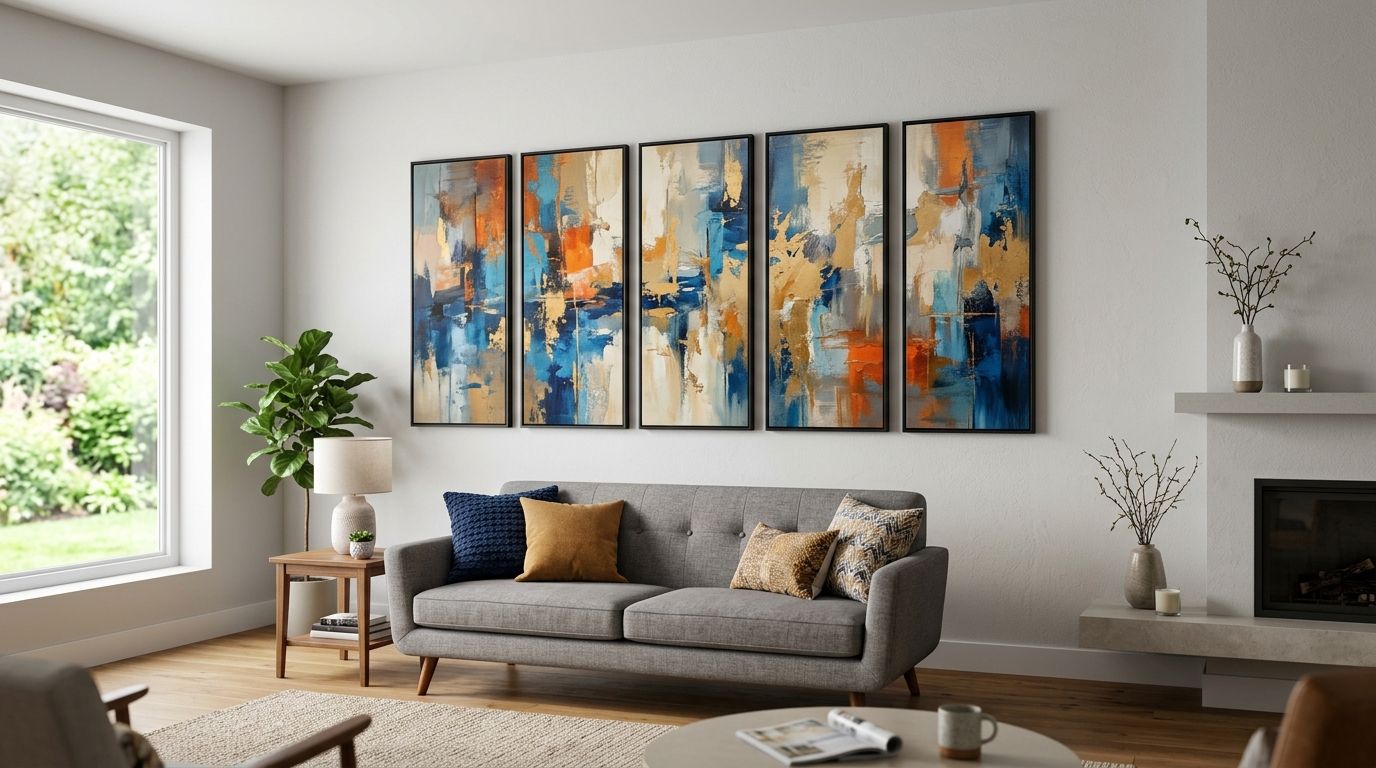
A tall, narrow canvas or a stacked pair of prints does more for a small room than a wide horizontal piece, because it draws the gaze up toward the ceiling line instead of across a cramped floor plan. This matters most in rooms under 2.4m ceiling height, which describes a large share of Australian apartment builds. Portrait-oriented botanical prints, tall abstracts, and vertical diptychs all lean into this trick without needing custom framing.
Light palettes and reflective finishes
Dark, heavy artwork absorbs light and visually pulls a wall closer, which shrinks the room it's meant to open up. Swapping to pale, warm-toned or monochrome pieces — and choosing a satin or glossy finish over deep matte — keeps light bouncing around the space instead of getting soaked up by one wall.
One statement piece vs a gallery wall
Both work, but they solve different problems. A single statement canvas suits a small room that's already busy with furniture, because it gives the eye one place to land. A tight, matching-frame gallery wall suits a narrow hallway or stairwell where the goal is to widen the wall itself rather than calm a cluttered room — treat it as one composition, not a collection of separate frames, and keep the gaps between pieces under 5cm so it reads as a single block.
Why the same wall art makes one room feel bigger than another
The technique matters less than the room it's going into. Before picking a piece, check these:
- Ceiling height — rooms under 2.4m benefit more from vertical pieces than wide ones.
- Natural light — dim rooms need lighter palettes and glossier finishes to bounce what light exists.
- Furniture scale — bulky furniture under an undersized print exaggerates a small room; match art size to furniture size.
- Wall colour — high-contrast art against a pale wall reads bolder and more spacious than low-contrast art that blends in.
- Sightlines from the doorway — the first wall you see entering the room has the biggest impact on perceived size.
- Frame weight — thin or frameless canvas prints feel lighter on the wall than heavy timber or ornate frames.
A minimalist home wall art approach — fewer pieces, more negative space around each one — tends to outperform a busy gallery wall in genuinely tiny rooms, even though gallery walls work well in hallways.


Does hanging art higher make a room look bigger?
Hanging art higher only helps up to a point — the 145-152cm centre-height rule still applies even in a small room, and going above that makes the piece look stranded rather than tall. What actually adds perceived height is choosing a vertical piece within that same height range, not moving the whole hang point upward.
Is one large print better than several small prints in a small room?
One large print reads as more spacious than several small prints in most small rooms, because it gives the eye a single point to focus on instead of scanning multiple frames. The exception is a narrow hallway, where a tight matching-frame gallery wall can widen the space by treating the whole run as one composition.
What colours make a small room feel bigger with wall art?
Light, warm-toned and monochrome palettes make a small room feel bigger because they reflect more ambient light than dark, saturated pieces. High contrast against a pale wall also reads as more open than art that blends into the wall colour around it.
FAQ
What is the best wall art for making a small room look bigger?
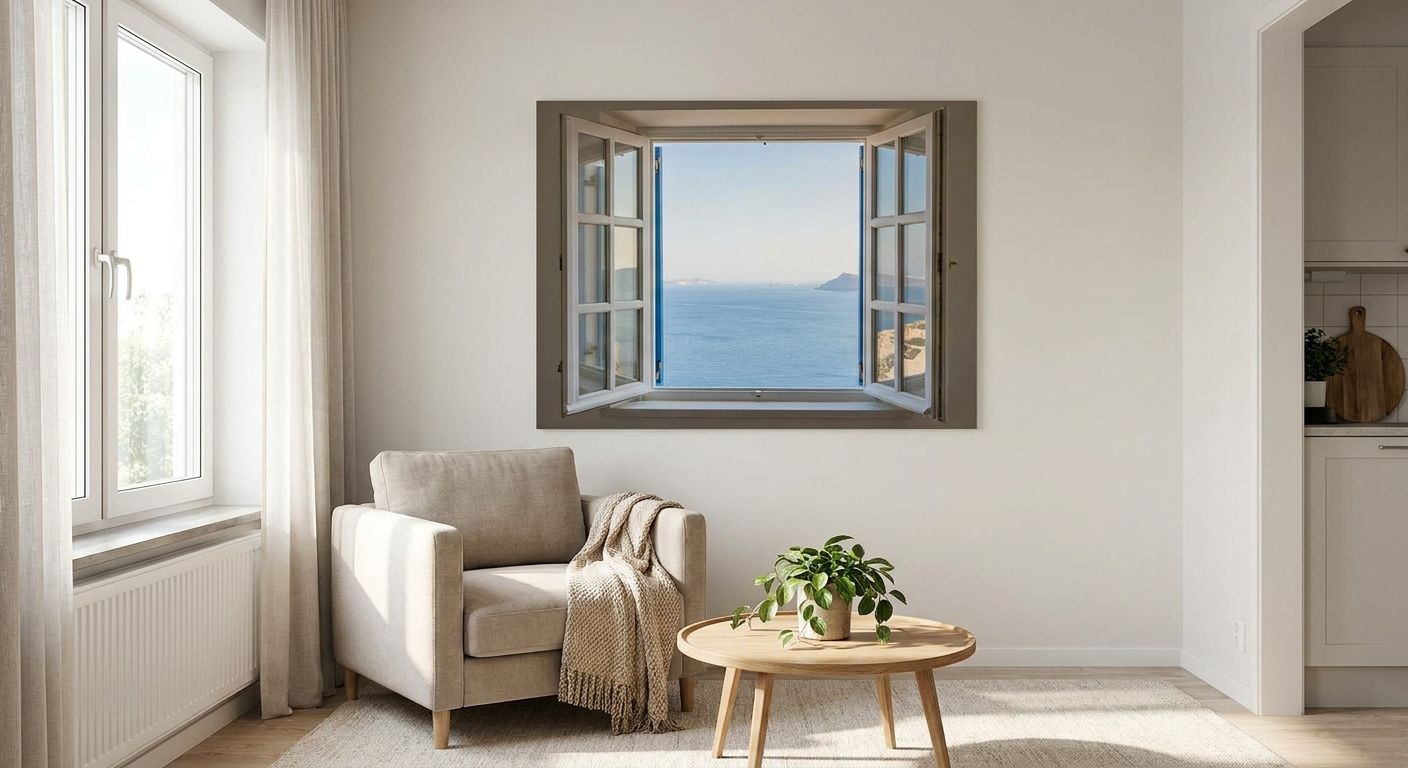
One oversized, vertically-oriented canvas in a light palette is the best wall art for making a small room look bigger in 2026, because it gives the eye one focal point instead of several competing frames. Landscape or abstract pieces with high contrast against a pale wall add the most perceived depth.
Should you hang art higher in a small room?
No — keep the centre of the artwork around 145-152cm even in a small room, since hanging it higher just leaves it looking stranded above the furniture. Height perception comes from choosing a tall, vertical piece within that same range, not from raising the hang point.
Do mirrors work better than wall art for small rooms?
Mirrors and wall art solve different problems: mirrors bounce existing light and reflect the room back, while wall art adds a focal point and personality. Many small rooms benefit from one of each rather than choosing between them.
Is a gallery wall too busy for a small room?
A gallery wall gets busy in a small room only when the frames don't match and the gaps are inconsistent. A tight, matching-frame layout with under 5cm between pieces reads as one large shape and works well in narrow hallways and stairwells.
What size wall art should I buy for a small living room?
Size the art to roughly 60-75% of the width of the sofa or console it's hanging above, which is the standard sizing benchmark for 2026 interiors. Undersized art tends to make a small living room look emptier, not bigger.
Does a big painting make a small room look smaller?
A big painting only makes a small room look smaller when it's placed above furniture that's already too bulky for the wall, or when the frame is heavy and dark. Matched to the right furniture and finished in a light frame, a big painting is one of the fastest ways to open up a small room.
Are horizontal or vertical prints better for small rooms?
Vertical prints work better for small rooms with standard or low ceilings, since they pull the eye upward and exaggerate height. Horizontal prints suit wide, short walls where the goal is to stretch the room sideways instead.
One last thing
The single biggest small-room mistake isn't the art itself — it's hanging multiple mismatched pieces at different heights, which fragments a wall that was already working against you. Pick one wall, commit to one large piece or one tightly matched set, and the rest of the room reads bigger by comparison in 2026 the same way it did a decade ago — the trick is old, it just still works.