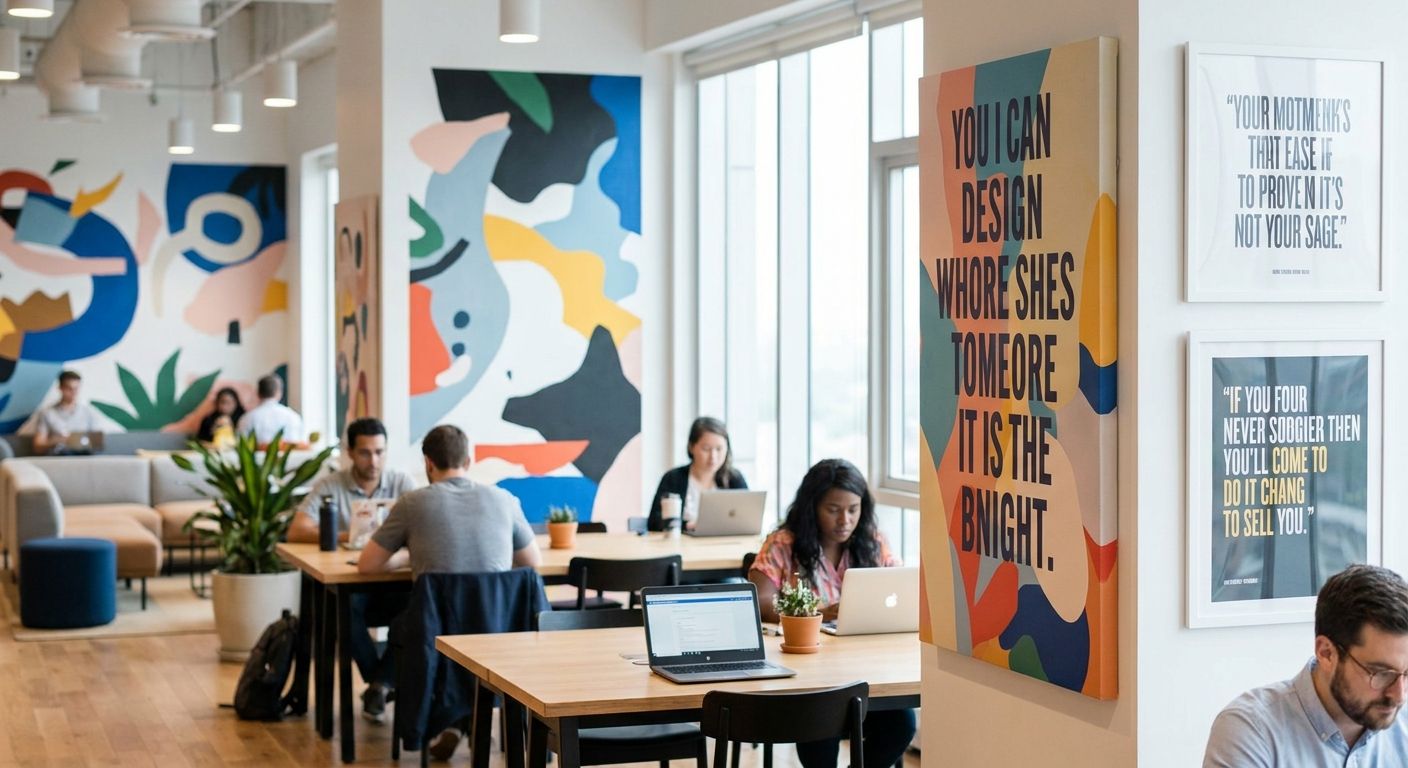
Co-working operators buy wall art differently than homeowners do — the pieces need to survive hundreds of eyes a week, suit dozens of tastes, and still look considered on a video call. Here's what to put on the walls of a shared workspace in 2026 and what to skip.
- Wall art for co-working spaces in 2026 works best as large-format abstract or landscape canvas, not small framed prints — go bigger than feels comfortable.
- Typography and quote prints lift morale in shared work spaces but one per zone beats one per desk — overuse reads as cliché.
- Canvas from an open-plan-friendly series holds up better than glass-framed art under fluorescent light and reads clearly from 40+ square metres away.
- Skip glass-glazed pieces near hot-desk rows in 2026 — glare complaints are the top wall-art issue reported in shared offices.
Why this matters
A co-working floor isn't a lounge room. Fifty different people walk past the same wall every day, and the art either disappears into the background or becomes the thing everyone half-notices on a Zoom call. Get it wrong and you've spent a real budget line on something that looks like an afterthought by month three.
Gioia Wall Art curates canvas, framed prints and posters for exactly this kind of mixed-use, high-traffic interior, and the corporate office wall art guide is a useful starting point if your co-working space leans more towards enterprise clients than freelancers.
Who this is for
This guide is for co-working operators, workspace managers and interior fit-out teams furnishing a shared floor in 2026 — anywhere from a boutique 15-desk studio to a 200-seat flexible office brand. It assumes multiple zones (hot desks, meeting rooms, phone booths, breakout lounges) and a mixed tenant base with no single design brief to please.
What to look for in wall art for co-working spaces
Scale that matches the room, not the wall
A 60cm print on a 4-metre wall looks like it got lost. Co-working floors have high ceilings and open sightlines, so art needs to read from across the room, not just up close. Go one size bracket bigger than you'd choose for a home office.
Glare and glazing under fluorescent light
Glass-framed prints throw hard reflections under LED panel lighting and window banks, which is exactly the lighting setup most co-working fitouts use. Canvas and matte framed prints avoid the glare problem entirely and photograph better for the marketing shots operators post to fill desks.
Neutral enough for a mixed tenant base
A freelance designer and a compliance consultant are sitting ten metres apart. Bold, personal statement art (nudes, aggressive typography, single-artist obsessions) alienates half the floor. Abstract, landscape and restrained typography cross tenant types without anyone objecting.
Durability in high-traffic zones
Corridors, near the coffee machine, behind the reception desk — these walls get bumped, brushed and occasionally leaned on. Canvas on a solid stretcher frame holds up to that in a way that thin poster stock or unframed paper doesn't.
Zoning through art, not just paint
The smartest co-working fitouts use a different visual register per zone: calmer, cooler tones near focus pods, warmer or bolder pieces in social breakout areas. Wall art becomes wayfinding, not just decoration.
Budget across many walls, not one feature wall
Home buyers spend on one hero piece. Co-working operators need to cover 8-15 walls at a workable per-wall cost, which usually means committing to a smaller number of print sizes repeated across zones rather than one-off custom pieces per room.


Top picks for co-working walls
The safe pick: large abstract or landscape canvas
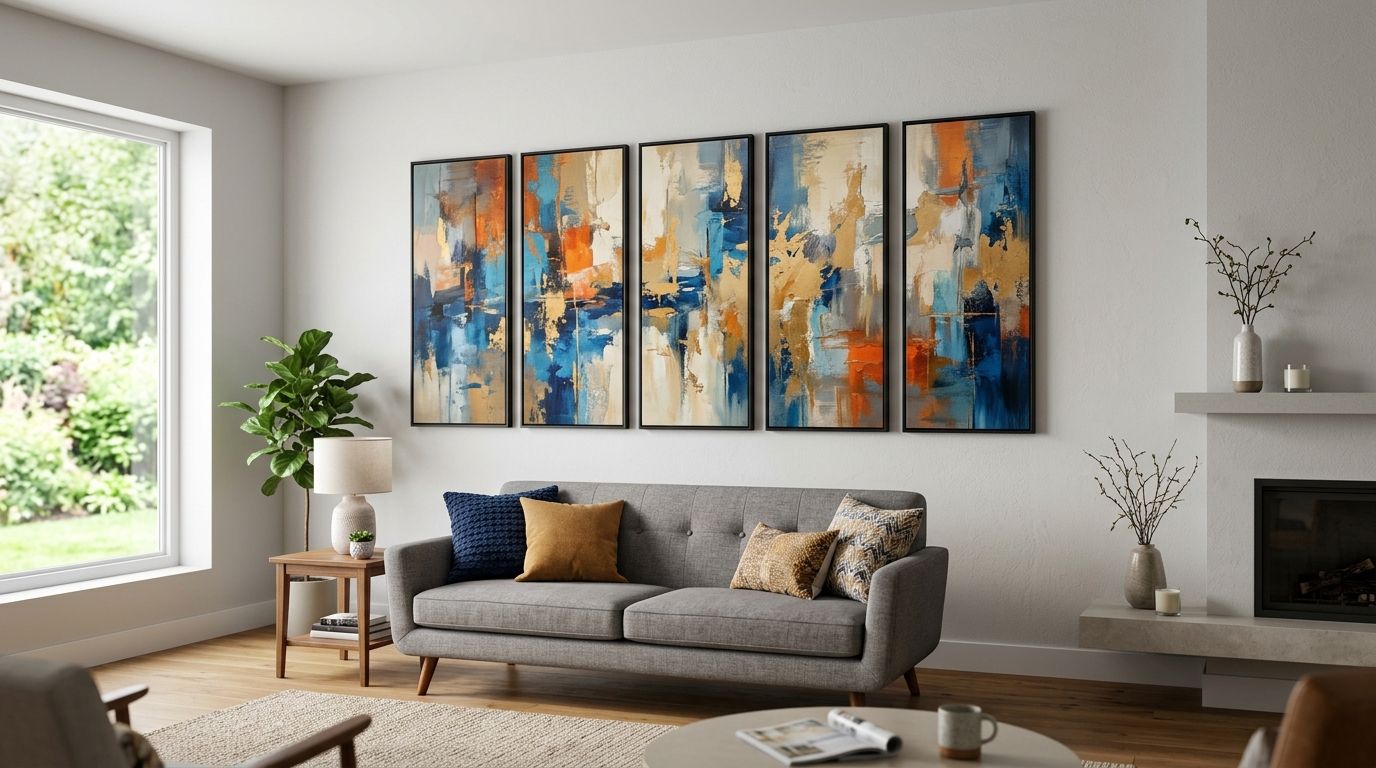
Abstract fields and landscape canvas in the 100cm-plus range are the default for open-plan floors because they hold visual interest without demanding a reaction. The open-plan living space canvas guide covers sizing logic that transfers directly to a co-working floor. One canvas per 6-8 metres of open wall reads as intentional, not sparse. Verdict: Buy for main floor and lounge zones.
The culture pick: typography and quote prints
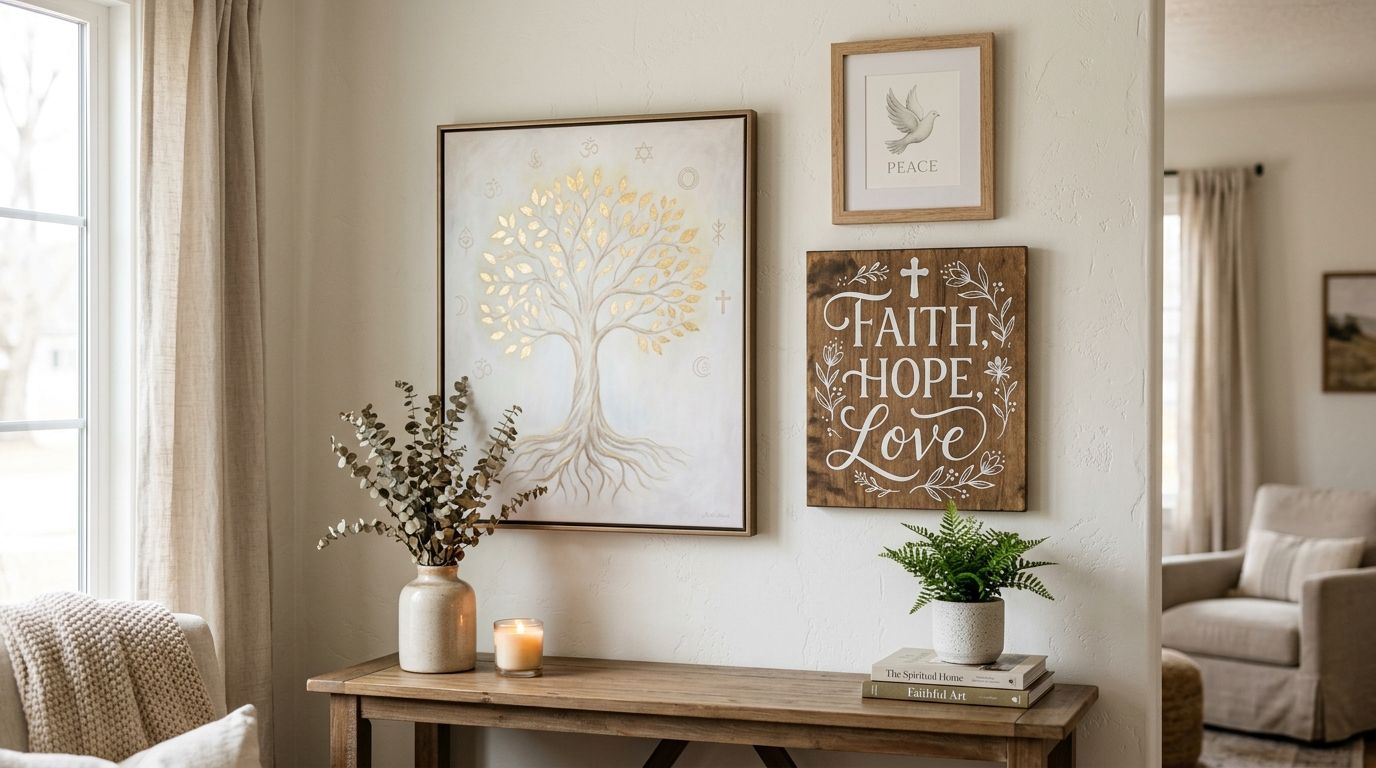
A single well-placed quote print near a meeting room or wellness nook does more for brand feel than five generic motivational posters scattered around desks. Keep it to one statement piece per zone — check the typography and motivational wall art guide for phrasing and layout ideas that don't tip into cliché. Verdict: Buy, sparingly.
The boardroom pick: framed corporate-style art
Meeting rooms and client-facing zones benefit from a more restrained, framed look — the same register used in traditional corporate offices. It signals seriousness without feeling cold. Verdict: Consider for meeting rooms only; it reads as too formal for hot-desk rows.
The phone-booth pick: home-office style prints
Phone booths and single-occupant focus pods are effectively mini home offices, and the sizing and tone advice in the home office wall art guide applies almost unchanged — smaller format, calmer palette, nothing that competes with a video call background. Verdict: Buy for booths and pods.
What to avoid
- Wall-to-wall motivational typography. One quote print reads intentional; six turns the floor into a poster shop and tenants stop noticing any of them.
- Glass-framed pieces beside windows or under panel lighting. The glare shows up in every video call and every listing photo taken after 2026 fit-outs went heavier on LED strip lighting.
- Single-artist obsession walls. A floor dedicated entirely to one aesthetic (all Rothko-style, all pop art) narrows appeal fast in a space meant to suit dozens of unrelated tenants.
Verdict comparison
| Pick | Best zone | Format | Verdict |
|---|---|---|---|
| Large abstract/landscape canvas | Open floor, lounge | Canvas, 100cm+ | Buy |
| Typography/quote print | Wellness nook, single wall | Framed or canvas | Buy, one per zone |
| Corporate-style framed art | Meeting rooms | Framed | Consider |
| Home-office style print | Phone booths, pods | Small canvas | Buy |
| Single-artist statement wall | Anywhere | Mixed | Skip |
“One statement print per zone reads as curated; six of the same style reads as leftover stock.”
FAQ
What's the best wall art for co-working spaces in 2026?
Large-format abstract or landscape canvas in the 100cm-plus range is the best default for co-working spaces in 2026 because it holds up at distance and suits a mixed tenant base. Typography prints work well as accent pieces in specific zones, not repeated across the whole floor.
Should co-working spaces use framed prints or canvas?
Canvas outperforms glass-framed prints in most co-working zones because it avoids glare under panel lighting and photographs better for marketing. Framed prints still suit meeting rooms where a more formal, boardroom feel is the goal.
How much wall art does a co-working floor need?
Most fitouts work off one canvas per 6-8 metres of open wall plus a smaller accent piece per enclosed zone like a phone booth or meeting room. Repeating two or three sizes across the floor keeps the budget workable compared with commissioning a unique piece per wall.
Is typography wall art a good fit for shared offices?
Yes, in small doses — one quote print per zone lifts morale without becoming background noise. Six or more scattered across a floor reads as filler rather than intentional design.
What size wall art suits a co-working meeting room?
Meeting rooms usually need a mid-size framed piece rather than an oversized canvas, since the room is viewed up close rather than across an open floor. A more restrained, corporate-leaning print suits client-facing rooms better than bold abstract work.
Does wall art near windows cause glare problems?
Glass-framed art positioned near windows or under fluorescent panels is the most common glare complaint in shared offices in 2026. Canvas prints and matte-finish framed pieces avoid the issue entirely.
Can the same wall art work for hot desks and private pods?
Not usually — hot desks suit larger, more neutral abstract or landscape pieces viewed at distance, while private pods and phone booths suit smaller, calmer prints similar to a home office setup. Matching the print to the room's viewing distance matters more than matching a single house style.
How often should co-working operators refresh wall art?
There's no fixed schedule, but operators typically refresh accent pieces (typography, seasonal prints) more often than the large canvas anchors, which are chosen to last several years. Canvas holds colour and shape far longer than poster-stock prints in high-traffic corridors.
One last thing
The floors that get compliments aren't the ones with the most expensive single piece — they're the ones where the same two or three print sizes repeat calmly across zones instead of every wall fighting for attention. Pick a size discipline before you pick artwork, and the whole floor reads as designed rather than decorated.