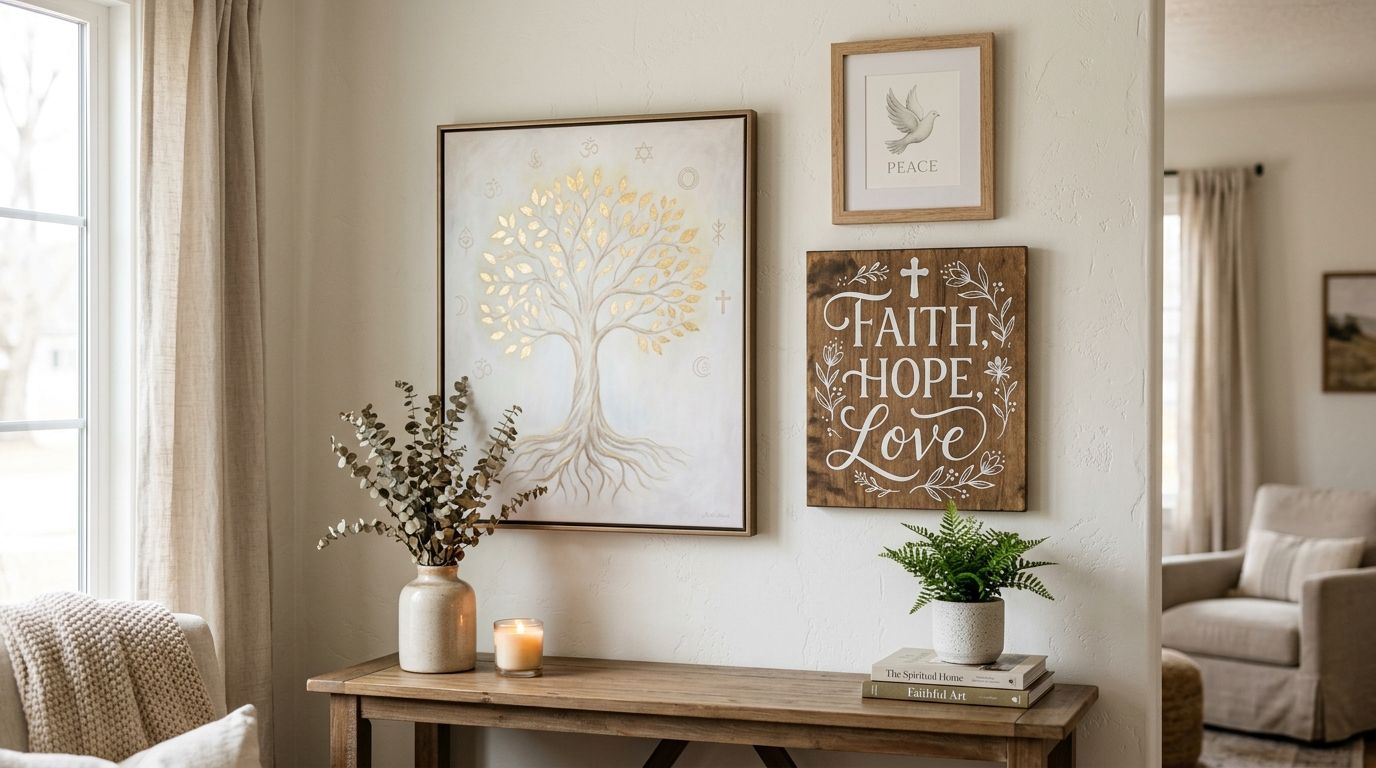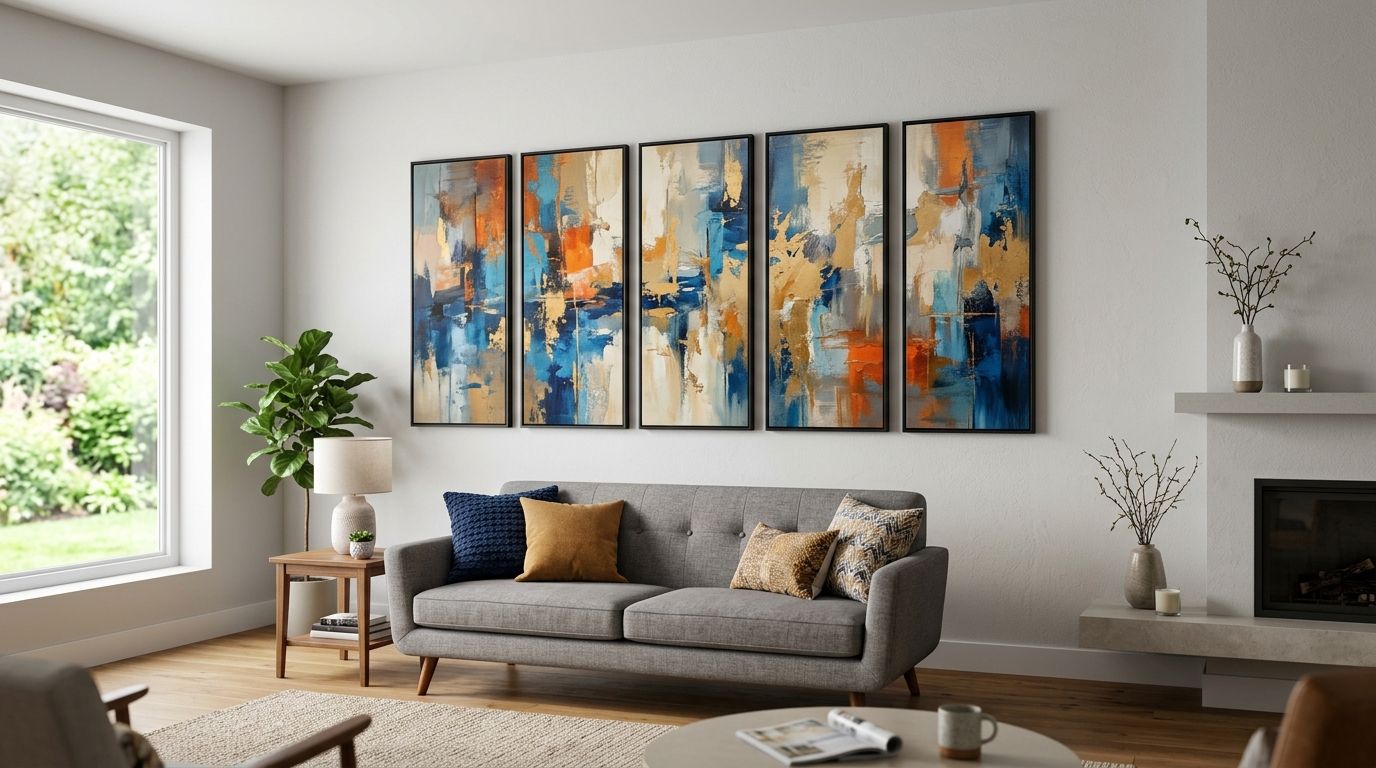
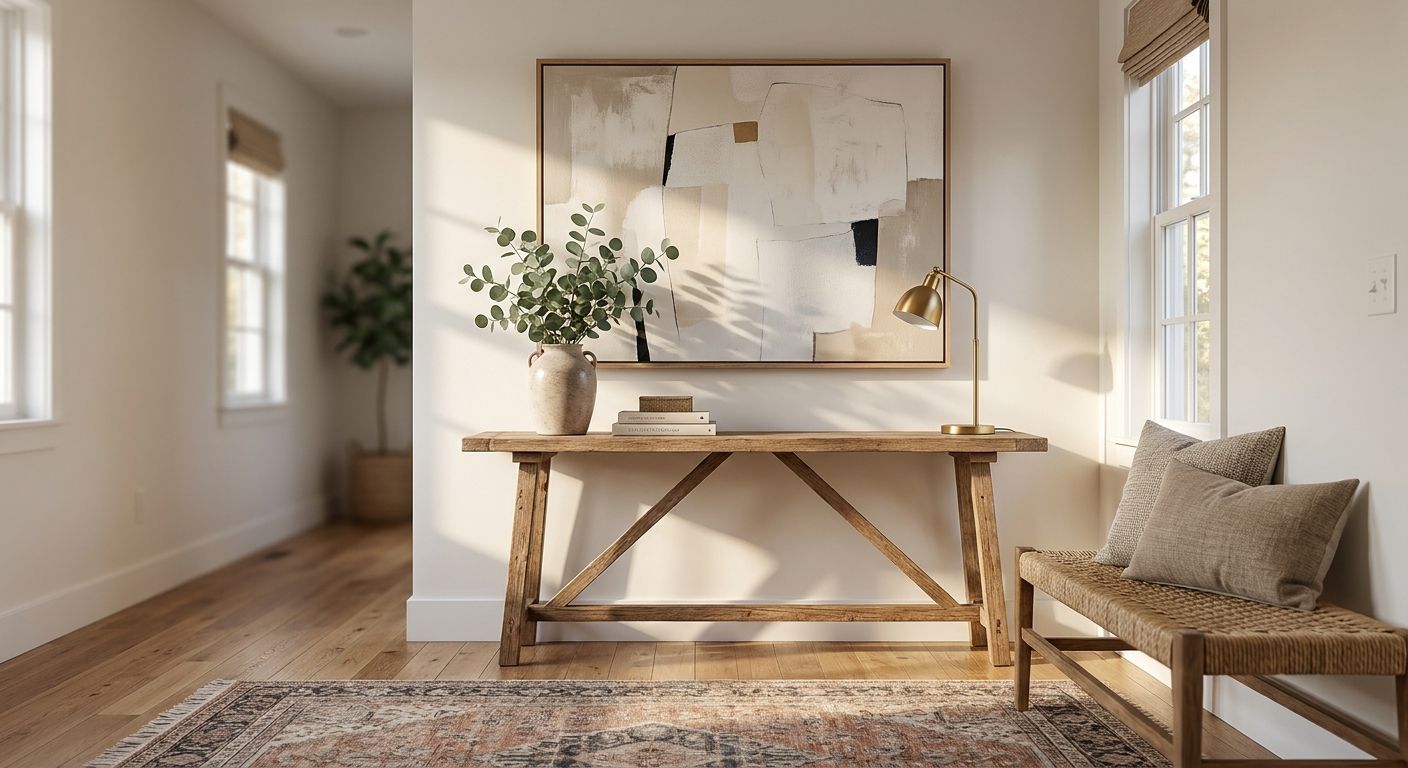
An entryway wall is the first thing guests see and the last thing you look at before you leave the house — yet most hallways are narrow, dim, and full of doorframes eating into your wall space. This guide breaks down what actually works in these tight, high-traffic zones and which styles of wall art for entryway spaces earn their place on the wall in 2026.
- A single statement canvas beats a cluttered gallery wall in narrow entryways in 2026 — buy one large piece, not five small ones.
- Vertical formats read best in hallways under 1 metre wide; wide horizontal canvases crowd the sightline and should wait.
- Hang wall art for entryway consoles 8-10cm above the tabletop, not at standing eye level — measure before you buy.
- Original paintings under $600, like The Road to Home, suit low-traffic entry nooks better than fragile framed glass pieces.
Why This Matters
Entryways get more foot traffic and more temperature swings than almost any other wall in the house — doors swing open, direct sun hits through glass panels, and bags brush past at hip height. Wall art that's perfect for a living room feature wall can warp, glare, or simply look wrong squeezed into a 90cm-wide hall.
Getting it right in 2026 means picking pieces sized for the actual wall you have, not the wall you wish you had. Gioia Wall Art sees the same mistake repeatedly: a piece bought for a showroom-sized wall, then crammed above a console table where it looks oversized and off-center. The fix is choosing by wall dimensions first, style second.
Who This Is For
This guide is for anyone staring at a blank hallway or entry wall — homeowners styling a new build, renters who need art that survives a move, and anyone who's realised their entry looks like an afterthought compared to the rest of the house. If your hallway is under 1.2 metres wide, gets direct sun for part of the day, or sits beside a front door that gets slammed, the picks below are calibrated for exactly that.
Browse the full range of curated wall art before locking in a size, since entry walls vary more than any other room in the house.
What to Look for in Wall Art for Entryway Spaces
Scale for narrow walls
Most entry halls run 80-120cm wide, which rules out the oversized 150cm+ canvases that dominate living room feature walls. A single piece at 60-90cm tall, or a tight vertical diptych, fills the space without swallowing it. Get the proportions wrong and even a beautiful print looks like it wandered in from another room — check how to choose the right size wall art for your wall before ordering.
Orientation — vertical beats horizontal
Hallways are corridors, not galleries, so the eye moves along the wall in a straight line. Vertical or portrait-orientation prints work with that movement; wide horizontal canvases fight it and make a narrow hall feel narrower. If you only remember one rule from this guide, make it this one.
Frame finish and glare control
Entry doors mean direct light at odd angles for part of the day, and glossy glass turns into a mirror the second the front door opens. Matte or non-reflective framing handles this better than gloss acrylic, and unframed canvas avoids the glare problem entirely.
Color continuity with adjoining rooms
An entry hall is a transition space, so the art should bridge the palette of the room before it and the room after — not introduce a third clashing color story. Warm neutrals, terracotta, and muted florals travel well between a Hamptons living room and a Scandinavian kitchen.
Durability and hanging height
Hallway walls get bumped by bags, prams, and shoulders more than any other wall in the house. Canvas holds up better to knocks than framed glass, and hanging the bottom edge 130-140cm off the floor keeps it clear of most passing traffic while staying in easy eye line for anyone standing at a console table.


Top Picks for Entryway and Hallway Walls
The Space Saver — a single vertical canvas under 90cm tall solves the 90% case: a narrow hall with one clear wall segment between doorframes. It costs less to frame than a horizontal equivalent because there's simply less glass and timber involved. Buy if your widest clear wall run is under 100cm.
The Hallway Continuation — if your entry leads straight to a staircase, pick art that echoes tone rather than clashing with it; the same palette running from entry to stairwell reads as one considered space instead of two separate decorating decisions. Check wall art for staircases for pieces designed to run the same visual thread up the stairs. Consider this if your entry opens directly onto a staircase, skip it if the two spaces are visually separated by a door.
The Showstopper — a large-format leaning canvas, propped rather than hung, works in wider entries (120cm+) where you want drama without drilling. It's the pick for new-build homes with double-height entries and no existing gallery wall. Buy if you have floor space to lean it; wait if your entry is under 100cm wide, where it will overwhelm the room.
The Original — an original painting like The Road to Home ($540) suits low-traffic entry nooks where the piece won't get bumped daily, and original works hold value differently than mass-produced prints. Buy if budget allows and the wall sees light foot traffic; hold if kids or pets pass through constantly.
What to Avoid
- Glossy framed glass near a north-facing front door. The glare makes the art unreadable for hours of the day — matte finishes or raw canvas solve this outright.
- A five-piece gallery wall in a sub-100cm hallway. It reads as clutter rather than curation; one strong piece does more work than five small ones crammed together.
- Anything fragile at hip height. Entryways get bag straps, umbrellas, and pram handles brushing past — canvas survives that traffic far better than glass-framed prints hung low.
Verdict Comparison
| Pick | Best Wall Width | Frame Type | Verdict |
|---|---|---|---|
| The Space Saver | Under 100cm | Framed or canvas | Buy |
| The Hallway Continuation | Any, opens to stairs | Canvas | Consider |
| The Showstopper | 120cm+ | Leaning canvas | Buy (wide walls) / Wait (narrow) |
| The Original | Low-traffic nook | Original painting | Buy |
FAQ
What's the best wall art for entryway walls in 2026?
A single vertical canvas sized to the actual width of your hallway wins over multi-piece gallery walls in most Australian entries. Scale to the wall first, then choose style — Gioia Wall Art's 60-90cm vertical canvases fit the standard 90-120cm entry hall.
How high should you hang wall art in a hallway?
Hang the bottom edge of the frame 130-140cm off the floor so it clears passing traffic and bag straps. This sits slightly lower than the standard 145cm eye-line rule used in living rooms, because entry halls are narrower and busier.
Is canvas or framed print better for an entryway?
Canvas handles the knocks and door swings of a hallway better than framed glass, which is prone to glare from front-door sidelights. Choose framed only if the wall is out of direct traffic and light.
Can you hang wall art on a rental hallway wall?
Yes, lightweight canvas and poster-style prints work with removable strips rated for the piece's weight, and leaning larger canvases against the wall avoids drilling entirely. Confirm weight ratings before committing to strips over a nail.
How much does entryway wall art cost in Australia in 2026?
Canvas and framed prints for entry walls typically run from $179 to $300 depending on size, while original paintings for statement nooks start around $300 and climb from there. Budget for slightly smaller sizing than living-room art, which keeps cost down too.
Should entryway art match the living room?
It should complement, not match — pick a palette that bridges the tone of the front door area with whatever room the hallway leads into. Exact matching often looks flat; a shared color family with a different subject works better.
What size wall art fits a narrow hallway?
For hallways under 100cm wide, a single vertical piece between 60-90cm tall is the standard fit. Anything wider than 70% of the wall's width starts to feel cramped rather than considered.
One Last Thing
The detail most people skip: light the piece, not the hallway. A single picture light or a warm downlight angled across the canvas does more for how an entryway feels at night than any extra piece of art would. In 2026, that's the cheapest upgrade in this whole guide — cheaper than another canvas, and it makes whatever you already have on the wall look considered rather than accidental.