Choosing wall art for a retirement village or aged care home is a different brief than decorating a private house — you're furnishing dozens of rooms and shared spaces for residents with varying mobility, vision and cognitive needs, on a fleet-wide budget.
- Canvas prints beat framed glass in aged care corridors and resident rooms — no glare, no breakage risk.
- Botanical and impressionist themes score highest for dementia-friendly wall art for retirement villages in 2026.
- Entry canvas prints start around $179.99; statement originals for lounges run $2,700 to $4,500 — budget both.
- Skip abstract or ambiguous imagery in shared corridors; it confuses residents and slows wayfinding.
Why this matters
A facility with 40 resident rooms plus dining, lounge and corridor walls needs a repeatable art strategy, not one-off picks. Get it wrong and you're either replacing broken glass frames after a fall, or fielding complaints that a corridor's abstract prints confuse residents living with dementia. Gioia Wall Art works through curated canvas, framed and original pieces built for exactly this kind of multi-room decision, not just a single feature wall.
The right wall art for retirement villages does three jobs at once: it makes rooms feel like home, it helps residents orient themselves around the building, and it survives years of cleaning, sunlight and foot traffic without needing a like-for-like replacement in 18 months.
Who this is for
This guide is for facility managers, lifestyle coordinators and interior fit-out contractors furnishing retirement villages, aged care homes, or granny flat additions attached to a family home in 2026. It's also useful for families choosing a single piece to personalise a loved one's room during a move-in. The buying logic differs from a private home: durability, resident wellbeing and consistency across dozens of rooms outrank pure style preference.
What to look for in wall art for retirement villages
Familiar, recognisable imagery
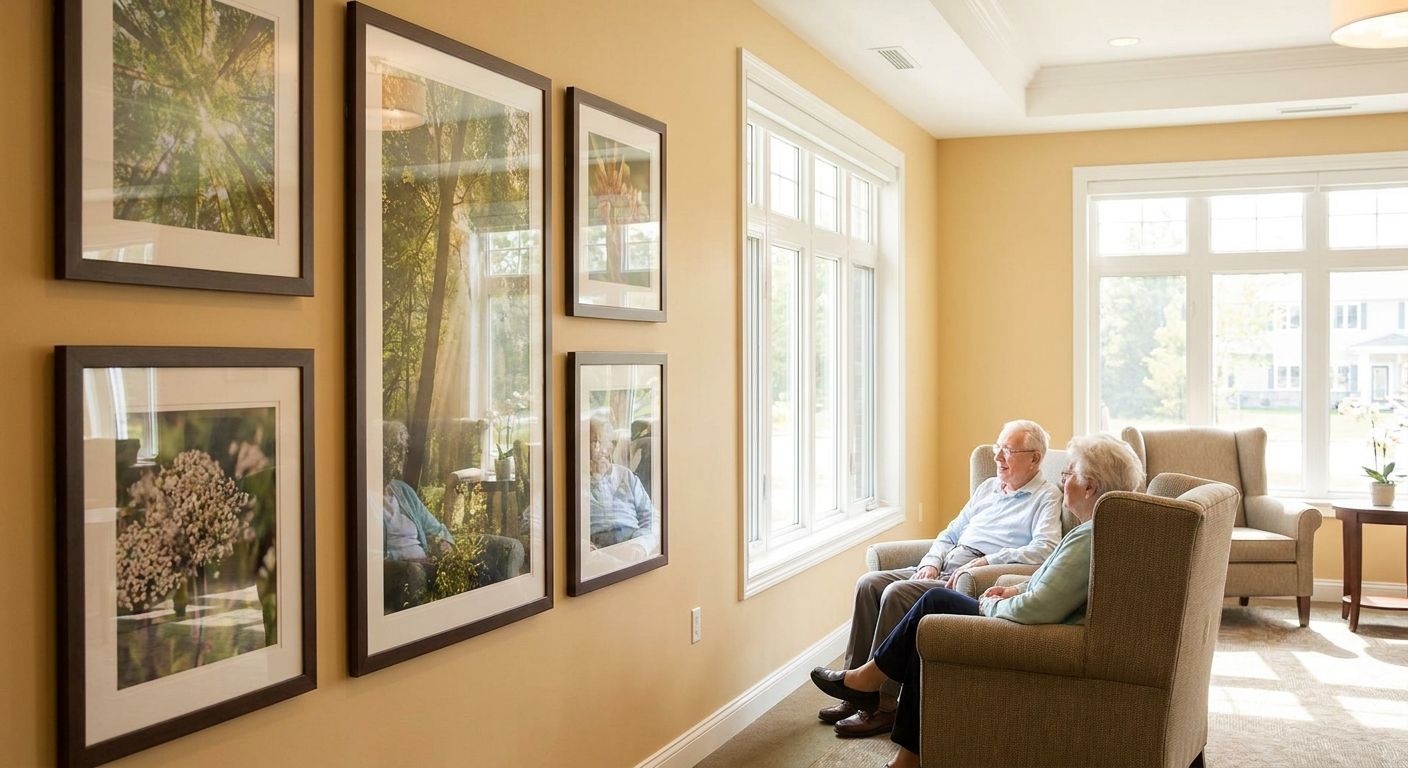
Residents living with dementia respond better to realistic, recognisable subjects — landscapes, native flora, coastal scenes, still life — than to abstract or highly stylised work. Recognisable imagery reduces confusion and can support conversation and reminiscence therapy in shared lounges. Save bold abstraction for staff areas or offices, not resident-facing walls.
Anti-glare, low-breakage surfaces
Glass-framed prints reflect ceiling lights and create glare that's disorienting for residents with reduced vision, and glass poses an obvious risk if a frame is knocked in a high-traffic corridor. Canvas prints solve both problems: no glass, no glare, and they're lighter to hang and replace. This is the single biggest material decision for aged care wall art.
Sizing for shared versus private spaces
A resident's private room needs modest, personal-scale pieces — think 40cm to 60cm wide — while dining rooms and lounges can carry large-format canvas that anchors the space from across the room. Getting proportions wrong either dwarfs a small room or leaves a communal wall looking under-furnished. If you're unsure how to scale pieces to a wall, choosing the right size wall art walks through the ratios room by room.
Colour and contrast for low vision
Higher-contrast palettes help residents with reduced vision distinguish artwork from wall colour and use it as a wayfinding cue between corridors or wings. Muted, low-contrast pastels can disappear against a similarly toned wall, which defeats the purpose of hanging art at all in a navigation-critical corridor.
Low-maintenance mounting
Aged care buildings can't tolerate lengthy reinstallation downtime. Canvas on a stretcher frame hangs on a single hook or D-ring, needs no glass cleaning routine, and swaps out fast if a room is refreshed for a new resident. Heavy framed glass pieces need two people to hang safely and are the first thing damaged during a room changeover.
Budget across the whole fleet
A single village might need 60 to 100 pieces across resident rooms, corridors, dining and lounge areas. Pricing needs to work at that scale — entry canvas prints around $179.99 each keep a full room refresh affordable, while one or two statement originals per wing cover the feature walls that residents and visiting families actually notice.


Top picks for retirement villages and aged care homes
The safe pick — botanical canvas prints
Floral and native botanical canvas is the lowest-risk choice for resident rooms in 2026: recognisable subject matter, no glass, and colour palettes that soften clinical-feeling interiors. A piece like Vibrant Pink Blooms at $179.99 covers one room without stretching the budget across a full wing. Botanical wall art suits nearly every resident room in a facility. Verdict: Buy.
The wayfinding pick — high-contrast black and white
For corridors where residents need visual cues to orient themselves, bold black and white photography or graphic prints give the strongest contrast against a plain wall. This is a deliberate wayfinding tool, not just decoration, and it holds up visually under fluorescent corridor lighting far longer than a muted colour print. Black and white wall art built for a monochrome home translates directly to a corridor scheme. Verdict: Buy.
The nostalgia pick — impressionist and traditional prints
Many residents respond strongly to the softer, classical palettes of impressionist-style work — it reads as familiar rather than trend-driven, and ages well over a five-year furnishing cycle. Impressionist art prints suit dining rooms and lounges where residents spend the most time. Verdict: Buy.
The statement pick — original paintings for reception and lounge
One original painting in reception or the main lounge signals quality to visiting families without needing dozens of them. Memories of the Bush at $2,710 or Through the Visible / Visible Through IV at $4,500 work as a single feature per wing rather than a repeated purchase. Budget for one, not five. Verdict: Consider — one per wing, not per room.
What to avoid
- Heavy framed glass in corridors. It looks premium in a showroom but becomes a breakage and safety liability once trolleys and wheelchairs are moving past it daily.
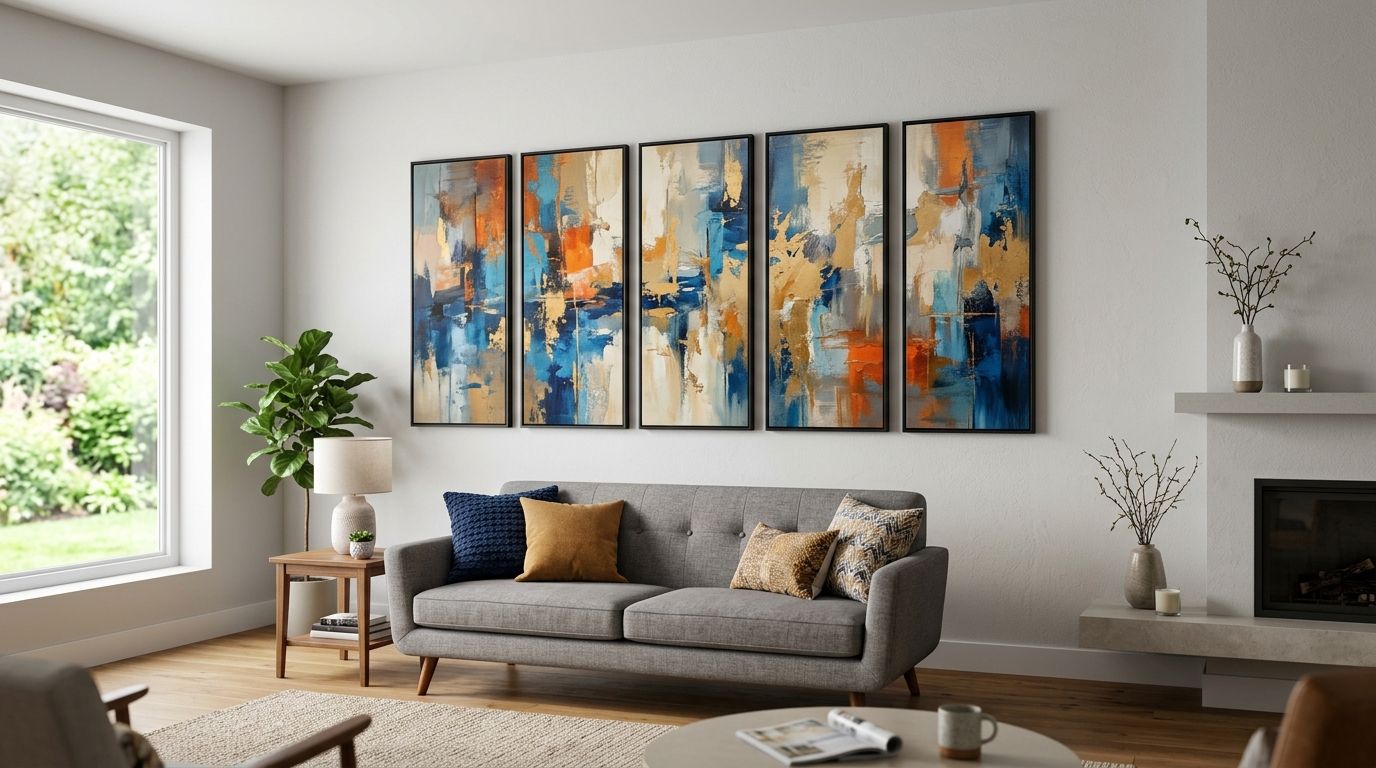
- Abstract or ambiguous imagery in shared spaces. What reads as sophisticated in a private lounge can disorient residents living with dementia in a communal dining room.
- Trend-led pieces bought for one refresh cycle. Bold pop art or novelty prints date fast and don't suit the five-plus year furnishing horizon most facilities plan around.
Verdict comparison
| Pick | Best for | Price from | Verdict |
|---|---|---|---|
| Botanical canvas | Resident private rooms | $179.99 | Buy |
| Black and white contrast prints | Corridors and wayfinding | $179.99 | Buy |
| Impressionist prints | Dining rooms, lounges | $179.99 | Buy |
| Original paintings | Reception, feature walls | $2,710+ | Consider (one per wing) |
FAQ
What's the best wall art for aged care resident rooms?
Canvas prints of recognisable, calming subjects — botanical, landscape or coastal scenes — work best for resident rooms in 2026. They avoid the glare and breakage risk of framed glass while feeling more personal than a bare wall.
Is canvas or framed art better for retirement villages?
Canvas is generally the safer and lower-maintenance choice for retirement villages. It has no glass to break or reflect light, hangs on a single fitting, and is faster to swap during a room changeover.
How much does wall art for a retirement village cost in 2026?
Entry canvas prints for individual resident rooms start around $179.99 each in 2026, while a single statement original painting for a lounge or reception feature wall runs $2,700 to $4,500.
What wall art helps residents with dementia?
Recognisable, realistic imagery like botanicals, landscapes and still life supports residents living with dementia better than abstract art. High-contrast pieces in corridors also aid wayfinding for residents with reduced vision.
Should common areas have different art from private rooms?
Yes. Common areas benefit from larger-format, high-contrast pieces that anchor the space and support navigation, while private rooms suit smaller, personal-scale prints chosen with the resident or family in mind.
Can original paintings work in aged care facilities?
Original paintings work well as single feature pieces in reception or main lounges rather than as a repeated purchase across every room. One statement original per wing typically covers the visual impact families notice on arrival.
How often should retirement village wall art be refreshed?
Most facilities plan around a five-year furnishing cycle for wall art, replacing pieces only when a room changes over or a canvas shows sun fading. Choosing durable, non-trend-led imagery upfront reduces how often replacement is needed.
What size wall art suits a communal lounge?
Communal lounges generally need large-format canvas, often 90cm or wider, to anchor the room from across the space. Resident private rooms suit smaller pieces around 40cm to 60cm wide.
One last thing
The detail most fit-out plans miss: mixing one nostalgia-driven impressionist print with the botanical canvas in each resident room does more for a sense of home than doubling up on the same theme. Gioia Wall Art's range spans exactly that mix — botanical, impressionist and original — without needing five different suppliers to pull a full facility fit-out together in 2026.