An original painting needs different upkeep than a printed canvas or poster: control the humidity around it, keep it off a sun-facing wall, and dust it instead of wiping it. Get those three things right in 2026 and a well-made oil or acrylic piece will outlast the wall it hangs on.
- Knowing how to care for an original painting comes down to three things: humidity, light and gentle handling.
- Keep the room at 45-55% relative humidity and 18-22°C - bigger swings crack paint and warp canvas.
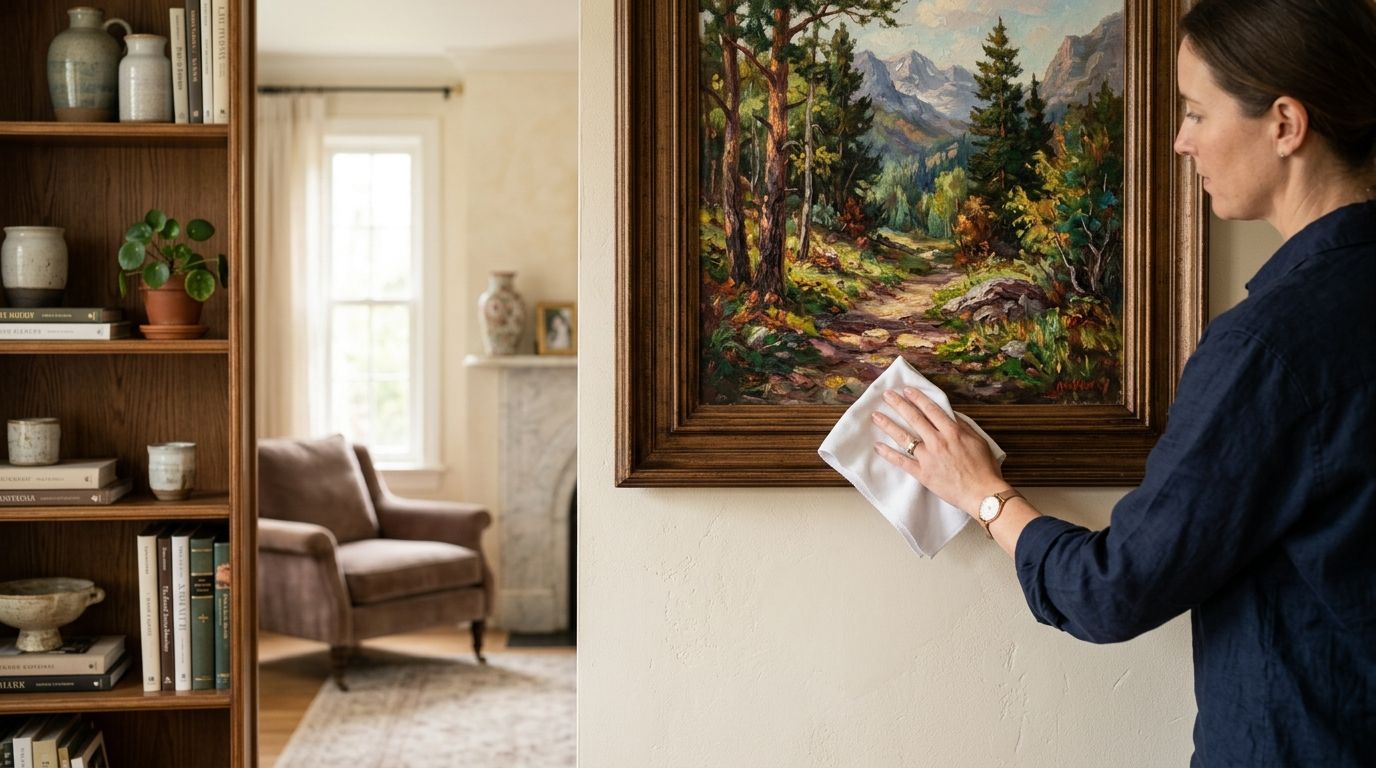
- Dust weekly with a soft, dry brush - skip water, glass cleaner or any wipe-down on unvarnished paint.
- Hang originals away from direct sun, heat vents, bathrooms and kitchens to stop fading and mould.
- Gioia Wall Art suggests a conservator for anything varnished, cracked or older than 20 years, not a DIY clean.
Why this matters
An original painting is a one-of-one object. A canvas print can be reordered if it fades or gets damaged; an original oil, acrylic or watercolour cannot be replaced once the surface cracks or the pigment lifts. That's why care habits that don't matter much for a printed piece - direct sun, a damp bathroom wall, an overzealous wipe with a cloth - matter enormously for something made by hand.
If you're shopping rather than maintaining, it's worth reading how to tell if an original painting is worth the price before you buy, because the medium and support (canvas, board, paper) decide how forgiving the piece will be in an Australian home. Coastal humidity, harsh UV and big daily temperature swings are all part of the 2026 reality for anyone hanging original art here.
How do you care for an original painting at home?
The short version: control the room, not the painting. Wipe nothing, spray nothing, and let the environment do the protecting.
- Stabilise the room at 45-55% relative humidity and 18-22°C. A cheap hygrometer from a hardware store tells you where you actually sit.
- Keep it off any wall that gets direct sun, especially afternoon western light, which is the harshest in most Australian living rooms.
- Dust weekly with a soft, dry, natural-bristle brush, working from the centre out. Never use water, glass cleaner or a damp cloth on unvarnished paint.
- Handle it by the frame, never by pressing on the canvas or touching the paint surface with bare fingers - skin oils mark unvarnished surfaces permanently.
- Check the wall for damp before hanging, particularly on external or garage-adjoining walls, before you drill a single hole.
- Book a conservator, not a cleaner, for anything varnished, visibly grimy, cracked, or more than 20 years old. This is a job for a specialist, not a spray bottle.
Where you hang it matters more than how you clean it
Most damage to an original painting in an Australian home happens passively, from where it's hung, not from anything anyone actively did to it. A painting opposite a north-facing window in Brisbane fades faster over a single summer than one on an internal wall fades in a decade.
Get the placement wrong and no amount of careful dusting saves the piece. Get it right and the painting needs almost nothing beyond the occasional dust. If you're planning a room around a new piece, how to light wall art properly at home covers the difference between a picture light that protects the surface and a downlight that slowly bakes it.
Humidity and temperature: the two things that actually damage paint
Canvas expands and contracts with moisture in the air. Push it outside 45-55% relative humidity repeatedly and the canvas moves enough to crack the paint layer sitting on top of it, which doesn't happen gradually - it shows up as a fine web of cracks (craquelure) that can't be undone at home.
Temperature swings do something similar but faster. A painting near a heat vent, a fireplace, or a window that gets full sun through glass can swing 10-15°C in an afternoon, and that's the kind of stress that ages a piece by years in a single season. Keeping the room at 18-22°C year-round is the single most protective habit for an original painting in 2026.
Why care requirements vary painting to painting
Not every original needs the same level of attention. These factors change how careful you actually need to be:
- Medium - oil is more sensitive to humidity swings than acrylic; watercolour on paper is the most fragile of all and needs UV-protective glass.
- Varnish - a varnished oil painting can handle a light professional clean every few years; unvarnished paint should never be touched with anything but a dry brush.
- Support - canvas moves with humidity, board doesn't, so a board-mounted piece is more forgiving in a fluctuating climate.
- Age - older paint layers are more brittle and less tolerant of vibration, knocks or being moved often.
- Sun exposure - a painting on a north or west wall with no window treatment fades measurably faster than one on an internal wall.
- Room type - bathrooms, kitchens and laundries run the widest humidity swings of any room in the house.
Can you clean an original painting yourself?
You can dust it yourself with a soft, dry brush, but you shouldn't attempt anything beyond that. Water, household cleaners, and even a damp microfibre cloth can lift unvarnished paint or drive grime deeper into the surface, so anything past light dusting goes to a conservator.
Is it OK to hang an original painting in a bathroom?
No - bathrooms run the widest, fastest humidity swings of any room in a typical Australian house, which is exactly the condition that cracks canvas and warps board. Original paintings belong in living areas, hallways and bedrooms where humidity stays closer to that 45-55% band; save the bathroom wall for a printed piece instead.
How often should an original painting be professionally cleaned?
There's no fixed schedule - a painting goes to a conservator when the varnish visibly yellows, grime builds up on the surface, or you notice new cracking, not on a calendar. Checking it under good light once or twice a year is enough to catch the change before it gets worse.
FAQ
How do you care for an original painting at home?
Control the room's humidity (45-55% RH) and temperature (18-22°C), keep the piece out of direct sun, and dust it weekly with a soft, dry brush. Never wipe unvarnished paint with water or cleaning products.
What humidity is best for an original painting?
45-55% relative humidity is the target range for an original painting in 2026. Swings outside that band cause canvas to expand and contract, which cracks the paint layer over time.
Can you hang an original painting above a fireplace?
Only if the mantel keeps it well clear of direct heat, since the temperature swings from an active fireplace stress the canvas and paint faster than almost any other spot in the house. A cold, decorative mantel is fine; a regularly used fireplace isn't.
Do original paintings need UV-protective glass?
Watercolours and works on paper need it, and any piece hung near a window benefits from it. Oil and acrylic on canvas are more forgiving but still fade faster in direct sun.
Is acrylic or oil easier to care for at home?
Acrylic tolerates humidity swings better than oil, which makes it the more forgiving choice for a home without climate control. Oil still holds up fine as long as the room stays close to 45-55% RH and 18-22°C.
How do you dust an original painting safely?
Use a soft, dry, natural-bristle brush and work from the centre outward, once a week. Skip cloths, feather dusters and anything damp - they can drag grime across unvarnished paint.
Can you move an original painting often?
Frequent moving isn't ideal, since handling risk and vibration add up over time, but occasional repositioning is fine if you always carry it by the frame. Avoid pressing on the canvas or touching the paint surface with bare hands.
When should you call a conservator instead of cleaning it yourself?
Call a conservator the moment you see cracking, yellowing varnish or visible grime buildup, rather than attempting to clean it at home. DIY cleaning is the single most common cause of permanent damage to original paintings.
One last thing
If your home doesn't have climate control and the humidity swings with the seasons, an acrylic original is the safer buy in 2026 - it simply tolerates the swings that crack oil paint on canvas. Worth factoring in before you fall for a piece, not after it's already on the wall.