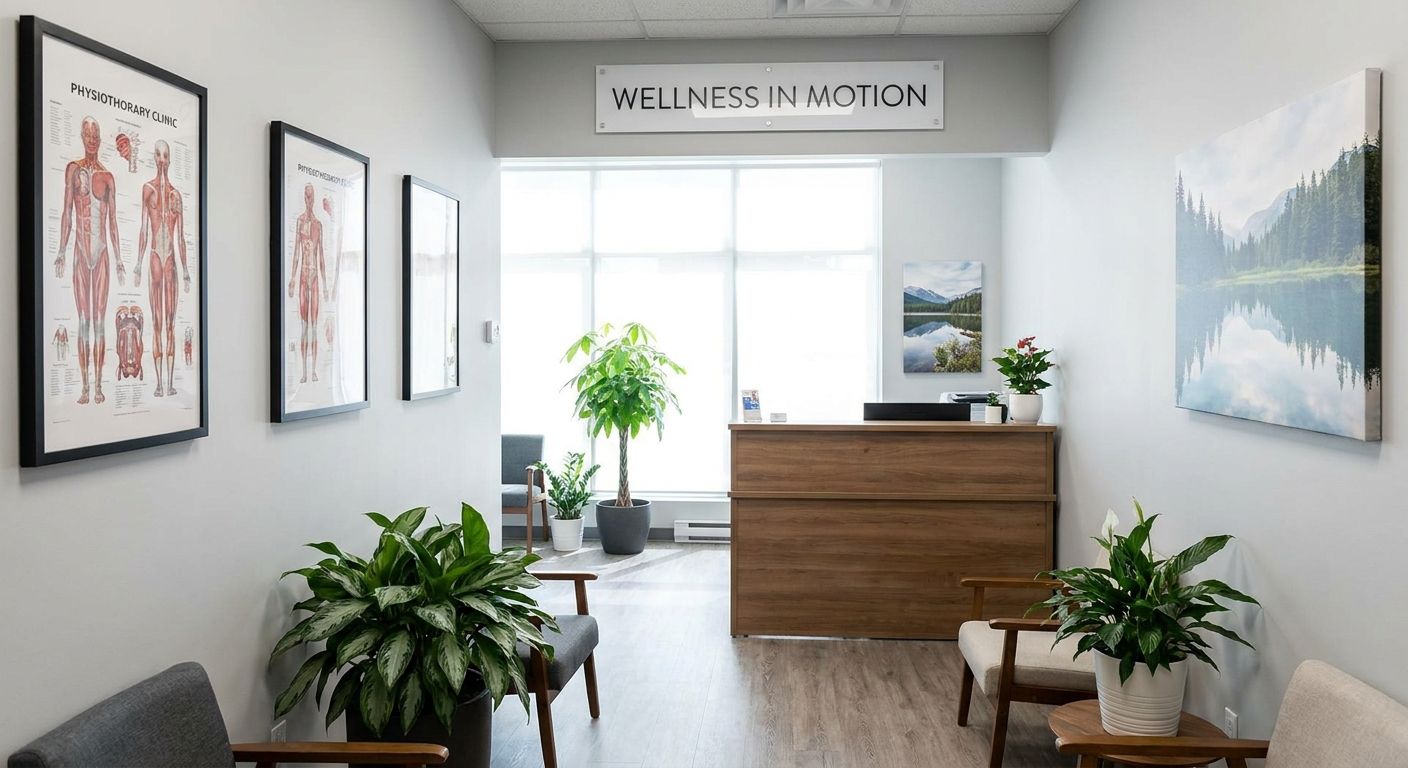
Physiotherapy and allied health clinics live or die on trust, and the walls say most of it before the practitioner does. Wall art for physiotherapy clinic waiting rooms and treatment corridors needs to calm a nervous patient, fill a long hallway, and survive years of foot traffic without ever looking like a hospital brochure.
- Botanical and abstract wall art calms physiotherapy waiting rooms better than generic stock photography in 2026.
- Gioia Wall Art's Through the Veils ($450) suits reception walls; skip aggressive gym-style motivational posters.
- Corridors over 3 metres wide need prints above 60cm wide or the wall reads empty.
- Original paintings from $450 to $2,100 hold their colour under clinic lighting longer than cheap framed posters.
Why this matters
A physiotherapy clinic sells recovery, not spectacle, and the art on the wall either supports that message or fights it. Patients sit in these rooms while in pain, waiting for an appointment that might hurt before it helps, and sterile decor makes that wait feel longer. The same logic that shapes wall art for medical and dental clinics applies here, with one twist: physio and allied health spaces skew more active and body-focused, so the art can lean into movement and nature rather than pure clinical calm.
Getting this wrong is cheap in dollars but expensive in first impressions. A single bad choice — a discount motivational poster or a glossy print that glares under fluorescent lighting — undercuts every other investment the clinic has made in its fitout.
Who this is for
This guide is built for physiotherapy clinic owners, allied health practice managers, myotherapists, exercise physiologists, podiatrists and remedial massage clinics furnishing reception areas, treatment rooms, and corridors in 2026. If you're decorating a single-practitioner suite or a multi-room allied health centre, the same criteria apply — only the scale of the budget changes.
What to look for in wall art for physiotherapy clinics
Calming, non-clinical palettes
Avoid anything that reads like a hospital pamphlet. Muted greens, warm neutrals, and soft blue-greys read as restful without feeling sterile, and they photograph well for the clinic's own marketing shots in 2026.
Size that fills the wall, not just the eyeline
A 40cm print on a 4-metre corridor wall looks like an afterthought. Match scale to the room using how to choose the right size wall art for your wall before ordering — undersized art is the single most common clinic decorating mistake.
Durable materials for high-traffic rooms
Canvas handles bumps from wheelchairs, walking frames, and passing trolleys far better than glass-framed prints. Glass also throws glare under the overhead lighting most treatment rooms run, which matters more here than in a home lounge room.
Neutral enough for a rotating patient base
A physio clinic sees toddlers, tradies, elite athletes, and 80-year-olds recovering from hip replacements in the same week. Art needs to sit comfortably with all of them — which rules out anything overtly political, religious, or niche-hobby specific.
Budget that scales across multiple rooms
A reception area might justify one striking original, but six treatment rooms need consistent, repeatable spend. Plan a per-room budget before you fall in love with a single statement piece.
Practical hanging in shared-tenancy fitouts
Many allied health practices operate in leased medical centres with strict wall requirements. Confirm what fixings are allowed before committing to anything heavy or oversized.
Top picks for physiotherapy and allied health clinics
The safe pick — botanical calm. Nature-led palettes read as restorative rather than decorative, which is exactly the tone a physio waiting room needs. Browsing botanical wall art for plant lovers turns up soft greens and organic forms that suit reception walls without competing with signage. Buy for waiting rooms and reception.
The original statement — Through the Veils. This Kate Hessling original runs 50cm wide by 40cm high and sells for $450, with layered translucent colour forms that read as movement without shouting for attention. It's small enough for a single-practitioner reception nook and priced low enough that one clinic can justify buying an original instead of a print. Buy for boutique reception areas.
The wildlife anchor — Two Zebra Finch. John Graham's oil-on-canvas piece measures 101cm by 76cm and costs $2,100, giving it real presence on a long corridor wall. The nature subject matter keeps it neutral across a mixed patient base, though the price point suits a well-funded multi-room clinic more than a single-suite practice. Consider for large corridors with the budget to match.
The budget-friendly abstract — Glassy Deep. At 50cm by 40cm and $780, this Susan Trudinger original brings a cool, water-toned palette that reads as calming without leaning too literal. It's varnished and ready to hang with no external frame needed, which cuts down on installation fuss. Buy for individual treatment rooms.


The corridor filler — Taking Time. Bianca Slade's 101cm by 101cm acrylic runs $1,400 and works as a single large anchor rather than a cluster, which suits corridors where wall-mounted equipment or signage limits how many pieces fit. It ships unframed, so factor framing into the budget if the clinic prefers a finished edge. Consider for wide, uninterrupted corridor walls.
What to avoid
- Clinical stock photography. Generic images of spines, joints, or anatomy diagrams remind patients why they're in pain instead of calming them. Save the anatomy charts for the treatment room's clinical materials, not the walls.
- Aggressive gym-style motivational posters. "No pain, no gain" typography suits a strength gym, not a rehab clinic where patients are often managing chronic pain or post-surgery recovery. Save bold typographic pieces for staff-only spaces if the clinic wants that energy at all.
- Glossy glass-framed prints under overhead lighting. Treatment rooms run bright, even lighting for clinical work, and glass throws hard glare that ruins the piece and irritates patients lying on a treatment table facing it.
Verdict comparison
| Pick | Size | Price | Best room | Verdict |
|---|---|---|---|---|
| Botanical prints | Varies | From budget prints | Reception | Buy |
| Through the Veils | 50 x 40cm | $450 | Small reception | Buy |
| Two Zebra Finch | 101 x 76cm | $2,100 | Long corridor | Consider |
| Glassy Deep | 50 x 40cm | $780 | Treatment room | Buy |
| Taking Time | 101 x 101cm | $1,400 | Wide corridor | Consider |
FAQ
What's the best wall art for a physiotherapy clinic waiting room?
Botanical and soft abstract pieces work best for physiotherapy waiting rooms in 2026 because they read as calming rather than clinical. Avoid anatomy charts or gym-style motivational posters in this space.
How much does original wall art cost for a clinic?
Original paintings suited to physiotherapy and allied health clinics range from around $450 to $2,100 depending on size and artist. Canvas prints and posters sit below that range for clinics working with a tighter fitout budget.
Is canvas or framed glass better for treatment rooms?
Canvas is better for treatment rooms because it avoids the glare that glass throws under overhead clinical lighting. Canvas also handles bumps from equipment and mobility aids better than a glazed frame.
What size wall art suits a physio clinic corridor?
Corridors wider than 3 metres generally need prints above 60cm wide, or the wall reads empty. A single large anchor piece often works better in a corridor than a small cluster.
Should a physiotherapy clinic use motivational quote art?
Motivational typography suits gyms and active recovery spaces more than a physio waiting room, where patients are often in pain and want calm, not intensity. Reserve bold quote art for staff areas if it's wanted at all.
Does wall art need to match the clinic's branding?
It helps to keep the palette consistent with signage and uniforms, but the art itself doesn't need to carry the logo or brand colours directly. Neutral, calming tones generally outperform branded decor for patient comfort.
Can a small single-practitioner clinic afford original art?
Yes — originals priced from $450, like smaller Kate Hessling pieces, fit a single reception nook without the multi-thousand-dollar spend a larger corridor piece requires.
What should a physiotherapy clinic avoid on its walls?
Avoid clinical stock photography, aggressive motivational posters, and glossy glass-framed prints that glare under treatment lighting. These choices undercut the calming tone the rest of the clinic is trying to build.
One last thing
The detail clinics miss most often isn't the art itself, it's the lighting angle above it. A piece that looks perfect on the store website can glare or wash out completely under a fluorescent treatment-room panel, so check the wall under its actual lighting before committing to a final size and finish in 2026.