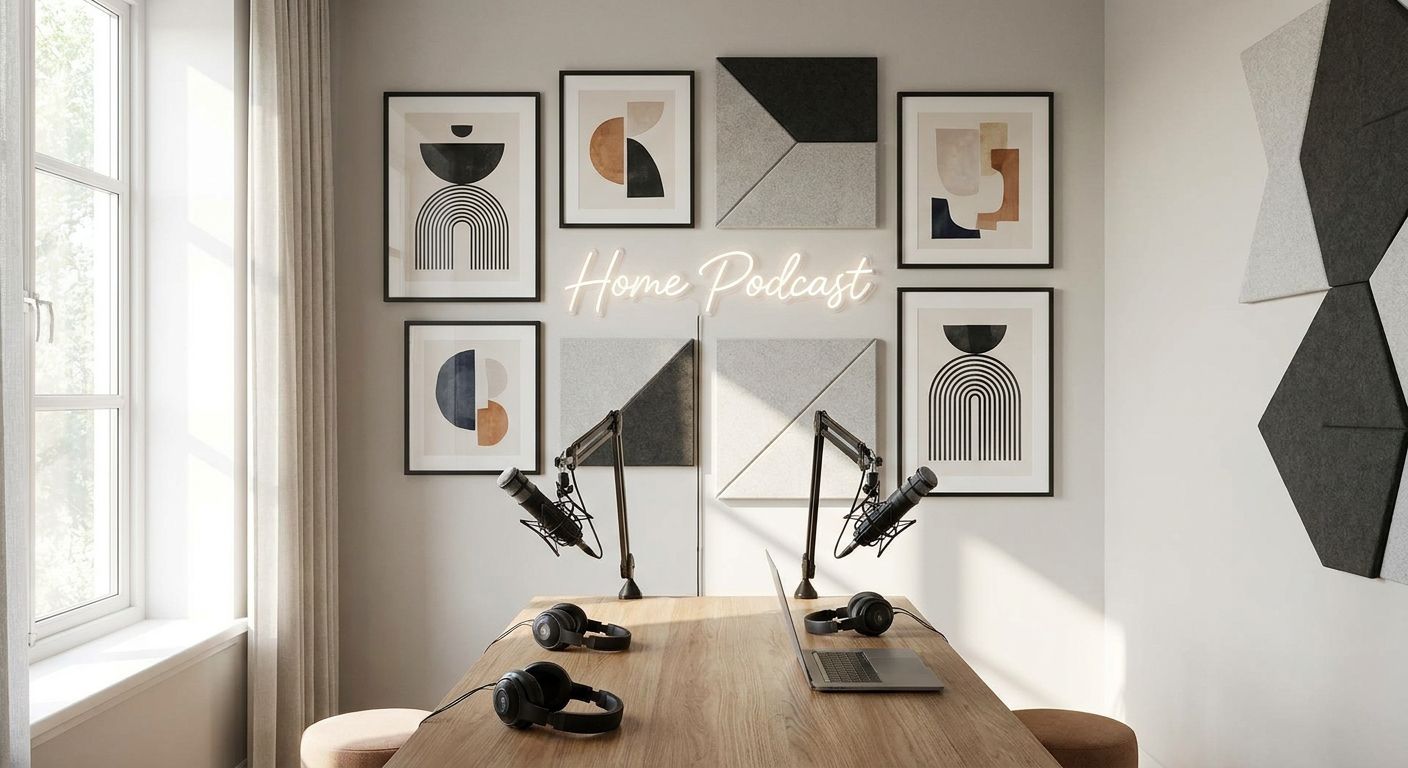
Podcast and content creator studios live or die by what's behind the host's shoulders on camera — and blank walls or the wrong finish can undercut a beautifully lit set in seconds.
- Matte canvas prints beat glossy or glass-framed pieces for wall art for podcast studio backdrops — zero reflections under ring lights.
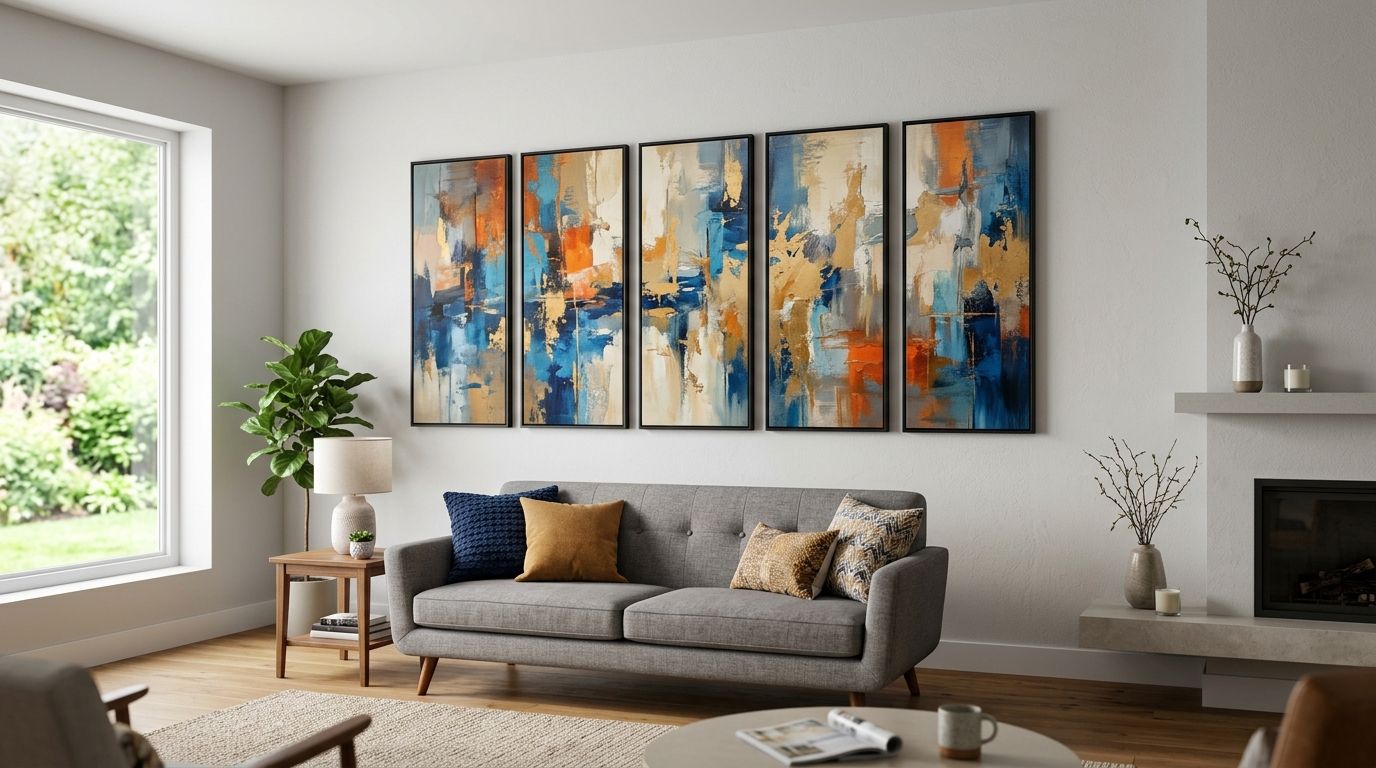
- Bold abstract and pop-art pieces read better on 1080p and 4K webcams than busy gallery walls with lots of small frames.
- Monochrome and black-and-white prints are the safe pick for brand-neutral backdrops that don't date in 2026 or clash with logo colours.
- Typography and quote prints work as a wildcard for personality-led channels but risk looking gimmicky if overused.
- Original paintings from $990 to $2,280 give a one-of-a-kind backdrop no competitor can screenshot and copy.
Why this matters
A podcast or YouTube studio isn't a living room — the wall behind the host is on screen for the entire runtime of every episode, watched frame by frame by an audience that notices repetition fast. Get the wall art wrong and it either disappears into the background (wasted opportunity) or fights with the host for attention (distraction). Get it right and it becomes part of the show's visual identity, the thing viewers screenshot for thumbnails.
Who this is for
This guide is for podcasters, YouTubers, streamers and content creators fitting out a dedicated recording space at home — spare bedroom, converted garage, or a corner of a home office doing double duty as a set. If you're recording on a webcam or a mirrorless camera 1.5 to 2.5 metres from the back wall, the art you choose has to work at that distance, under continuous lighting, for hours at a time — not just look good when you walk past it.
What to look for in wall art for a podcast studio
Camera-safe colour and contrast
Bright ring lights and LED panels wash out subtle tonal gradients, so pieces with strong colour blocking or high contrast read far better on camera than soft watercolour-style prints. Test any piece under the lighting you actually record with, not daylight — colours shift under 5600K studio LEDs.
A non-reflective, matte finish
Glass-framed prints and glossy laminates bounce light straight into the lens whenever a ring light or key light moves. Canvas prints and matte paper finishes solve this outright, which is why most studio-focused creators default to canvas over framed glass.
Scale that fills the frame without crowding it
A single large statement piece reads cleaner on camera than a cluster of small frames, which can create moiré flicker on compressed video and look busy in a thumbnail. One 90cm-plus canvas or a tight two-piece grouping almost always outperforms five small prints.
Personality and brand alignment
The backdrop is part of the show's identity — bold and colourful for high-energy formats, muted and moody for interview-style long-form content. Whatever you pick, it should still make sense as a talking point if a guest asks about it on air.
Longevity without repetition fatigue
If you're filming weekly or daily through 2026, the same three small frames on loop get noticed by regular viewers. A larger, more graphic piece has more visual information for the eye to sit with over dozens of episodes.
Easy to swap without wall damage
Many studios are rented rooms or shared spaces, so hanging systems that don't require heavy drilling matter as much as the art itself — worth checking before committing to a large original.
Top picks for podcast and content creator backdrops
The safe pick — monochrome and black-and-white prints. High-contrast black-and-white pieces hold up under any lighting temperature and never clash with a logo or set colour scheme, which is why they're the most-requested backdrop style for interview podcasts. One large monochrome canvas at 90cm or above reads as intentional, not empty. See the full range in the black and white wall art for a monochrome home guide. Buy.
The bold statement — pop art and saturated colour. For high-energy formats, comedy podcasts and gaming channels, pop-art-style prints with saturated colour blocks give the backdrop energy that a beige wall never will. These pieces are built to be noticed at a glance, which is exactly the job a thumbnail needs done. Browse options in the pop art wall prints for bold, colourful homes collection. Buy if your format leans loud; skip if you're recording calm, long-form interviews.
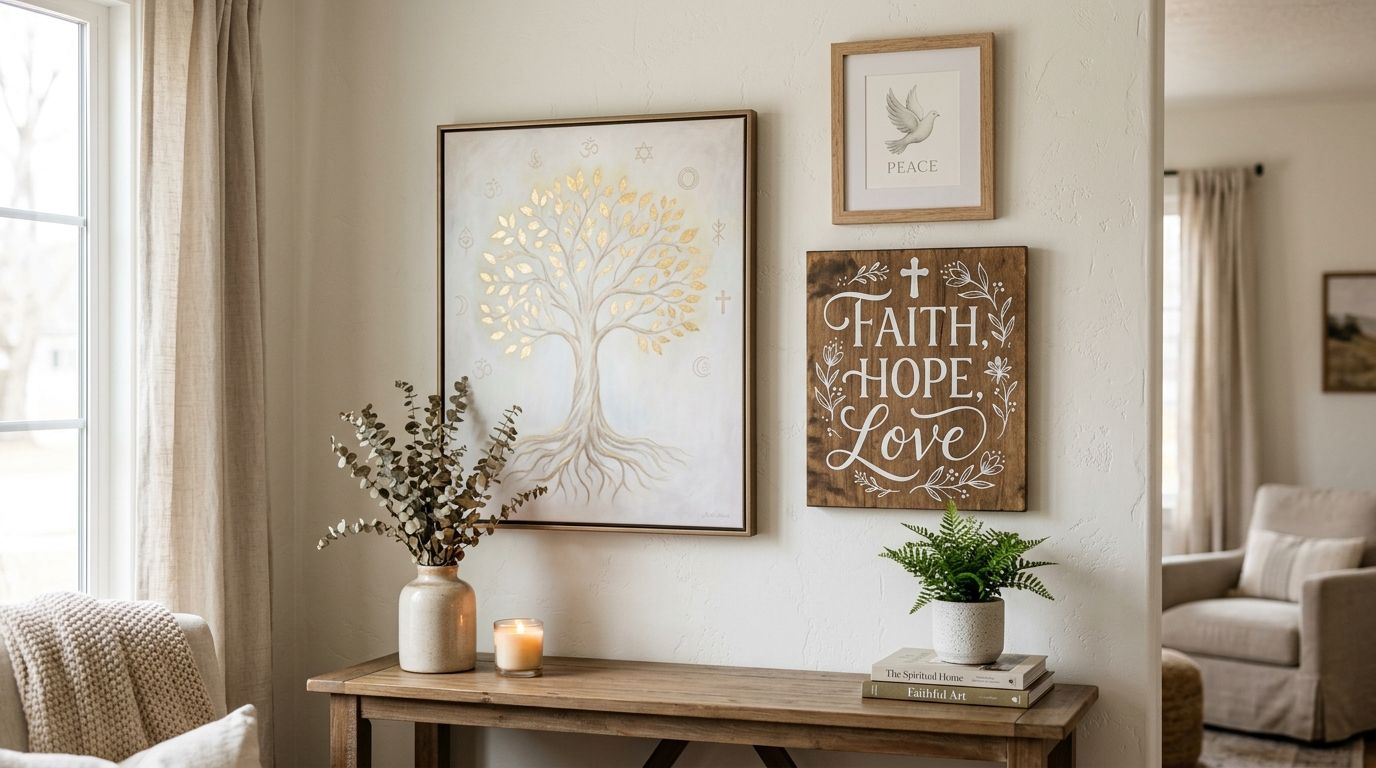
The wildcard — typography and quote prints. A single strong line of type behind the host doubles as a subtle brand statement and gives returning viewers something to read during slow moments. Use sparingly — one typographic piece paired with a graphic canvas works better than a wall of quotes. Check the typography and quote wall art for motivational spaces collection before committing. Consider for personal-brand channels, skip for anything guest-heavy where the art needs to stay neutral.
The premium pick — an original painting. An original signed piece gives a studio a backdrop nobody else can replicate, and prices for originals in this category run from around $990 for a smaller acrylic piece up to $2,280 and beyond for larger statement works. A signed original also photographs with texture that no print can fake, which shows up on 4K cameras. Buy if the studio doubles as a brand asset worth investing in; hold off if you're still testing formats.


What to avoid
- Glass-framed prints. They look sharp in a showroom and turn into a mirror the second a ring light or window catches them on camera.
- Small gallery walls of 6-plus frames. They compress badly on video, can trigger moiré flicker in busy patterns, and read as clutter rather than curation once the camera is 2 metres back.
- Anything text-heavy beyond one piece. A single quote print adds character; three of them behind a host looks like a motivational poster shop, not a studio.
Verdict comparison
| Style | Camera friendliness | Cost tier | Best for | Verdict |
|---|---|---|---|---|
| Black and white / monochrome | Highest — no colour clash | $ to $$ | Interview podcasts, brand-neutral sets | Buy |
| Pop art / bold colour | High — reads well in thumbnails | $ to $$ | Comedy, gaming, high-energy formats | Buy for loud formats |
| Typography / quotes | Medium — works in small doses | $ | Personal-brand channels | Consider |
| Original painting | High — unique texture on 4K | $$$ | Studios treated as long-term brand assets | Buy if budget allows |
FAQ
What's the best wall art for a podcast studio backdrop?
Large matte canvas prints with strong colour blocking or high contrast work best for a podcast studio in 2026 because they don't reflect studio lighting the way glass-framed prints do. Black-and-white pieces are the safest starting point; bold abstract or pop-art canvases suit higher-energy formats.
Is canvas better than framed prints for a content creator studio?
Yes, canvas is better for on-camera use because it has a matte, non-reflective surface, while glass-framed prints bounce light from ring lights and key lights straight into the lens. Canvas also holds colour more consistently under continuous LED lighting.
How big should wall art be behind a podcast host?
One large piece of 90cm or wider, or a tight two-piece grouping, reads better on camera than several small frames. Small gallery walls can flicker or create moiré patterns on compressed video, especially on livestreams.
Does wall art affect podcast studio acoustics?
Canvas prints and framed art have minimal acoustic effect compared to dedicated foam or panelling, so they should be treated as a visual choice, not a sound-treatment substitute. Place acoustic panels first, then add art around them rather than instead of them.
Should podcast studio wall art match the brand colours?
It helps but isn't mandatory — many successful studios use a neutral monochrome backdrop and let the host's branding live in overlays and lower thirds instead. If the show has a strong colour identity, a bold abstract or pop-art piece in those tones reinforces it every episode.
Are original paintings worth it for a content studio backdrop?
An original painting gives a studio a backdrop nobody else can replicate on camera, with pricing in this category typically running from under $1,000 for smaller acrylic works to over $2,000 for larger statement pieces. It's worth it once a channel is established enough that the studio is treated as a long-term brand asset.
What wall art should I avoid in a podcast studio?
Avoid glass-framed prints, dense gallery walls of small frames, and more than one text-heavy quote print in the same shot. All three either reflect light badly or read as visual clutter once compressed for video.
One last thing
The detail most creators miss isn't the art itself — it's testing it under the exact lighting rig they record with, because a piece that looks perfect under a warm lamp can go flat or glare under a 5600K ring light. Hang the piece, run a 30-second test recording before committing to permanent fixings, and adjust light angle before swapping the art.